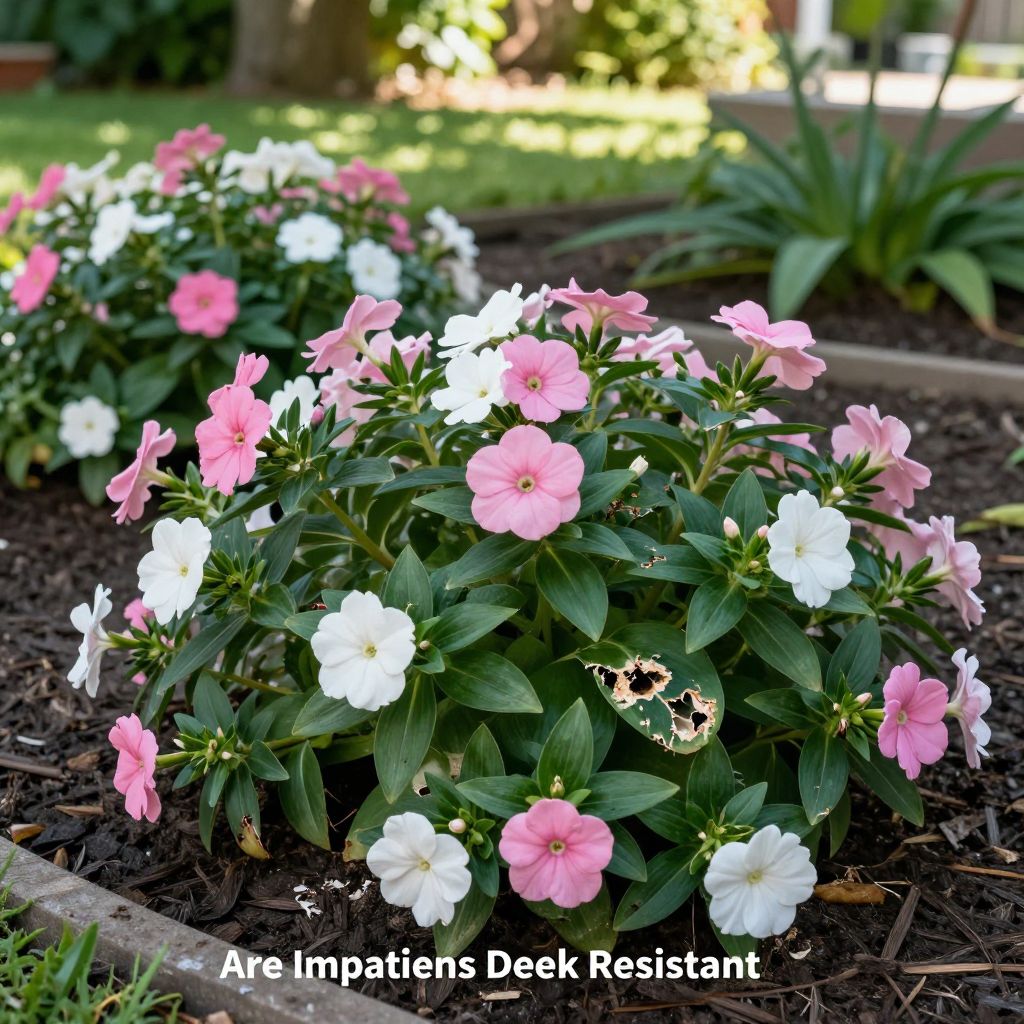
Are impatiens deer resistant? If deer browse your garden, this is an important question before you fill a shady bed or hanging basket with these colorful annuals. The short answer is that impatiens are not reliably deer resistant, even though deer may ignore them in some gardens or seasons.
That means you can grow impatiens successfully, but you should not count on them as a deer-proof plant. If deer pressure is high, you’ll get better results by combining impatiens with protection strategies, smarter placement, and a few backup plants that deer tend to avoid more often.
Are impatiens deer resistant?
Impatiens are generally considered deer susceptible rather than deer resistant. Deer may nibble the flowers, leaves, and tender stems, especially when other food is scarce. In some landscapes they are left alone, but in many gardens they are treated as a snack, so don’t rely on them where deer browse regularly.
Why deer sometimes eat impatiens
Deer feeding is unpredictable. A plant that is ignored in one yard may be damaged in another, depending on local deer pressure, weather, nearby food sources, and how hungry the animals are.
What makes impatiens appealing to deer
- Soft, tender growth that is easy to bite.
- Juicy stems and foliage, especially in well-watered beds.
- Flowers that are accessible at the edge of beds or containers.
- Shade gardens where deer can browse quietly and repeatedly.
When impatiens are most at risk
- In spring, when new growth is lush and tender.
- During dry spells, when deer eat a wider range of plants.
- Near woodlines, hedges, or deer trails.
- In gardens with little fencing or other protection.
How to tell if deer are the problem
Not every missing impatiens bloom is caused by deer. Slugs, rabbits, heat stress, and disease can also damage plants. Deer damage usually looks like clean, torn-off stems and foliage eaten at about the same height across several plants.
Common signs of deer browsing
- Plants clipped back unevenly, often with stems stripped clean.
- Leaves and flowers missing from the top and outer edges.
- Footprints or droppings nearby.
- Damage that appears overnight or over a very short period.
Other problems that can look similar
- Slugs and snails: ragged holes, slime trails, damage near the soil.
- Rabbits: cleaner cuts, usually lower on the plant.
- Heat or drought stress: wilting, leaf drop, and scorched edges.
- Downy mildew or root issues: yellowing, collapse, or poor vigor rather than chewing.
Growing impatiens successfully when deer are around
If you love impatiens, you can still grow them in deer country. The key is to treat them as a high-risk plant and combine good culture with physical protection. Healthy, vigorous plants recover from minor browsing better than stressed ones.
Choose the right site
Impatiens perform best in partial to full shade, especially in climates with hot summers. They prefer shelter from harsh afternoon sun and drying wind, which also helps reduce stress that can make them more attractive to pests.
- Plant in light shade, dappled shade, or morning sun with afternoon shade.
- Avoid very hot, exposed spots unless the variety is known to tolerate more sun.
- Keep them away from obvious deer travel routes when possible.
Prepare soil for strong growth
Impatiens like soil that stays evenly moist but drains well. Work in compost before planting to improve texture and water retention without making the soil soggy.
- Add 1 to 2 inches of compost to the top layer of soil and mix it in.
- Make sure containers have drainage holes.
- Use a quality potting mix for containers rather than garden soil.
Water the right way
Well-watered impatiens are healthier, but overwatering can lead to root problems. Water at the base of the plant so foliage dries quickly, and adjust based on weather, soil type, and whether the plants are in containers or the ground.
- Check soil with your finger before watering.
- Water when the top inch of soil feels dry.
- In containers, water more often during hot or windy weather.
Best ways to protect impatiens from deer
Because impatiens are not reliably deer resistant, protection matters more than plant choice alone. The most dependable approach is to use several methods together rather than depending on one product or one tactic.
1. Use physical barriers first
Fencing is the most reliable deer deterrent. Even a small garden bed can benefit from netting, temporary fencing, or a decorative barrier if deer pressure is moderate.
- Use fencing tall enough to discourage jumping in your area.
- Protect individual containers with wire cages if needed.
- Cover newly planted beds until plants are established.
2. Place impatiens in less exposed spots
Deer often browse the easiest targets first. Tuck impatiens closer to the house, on patios, in enclosed courtyards, or among less palatable plants where access is harder.
3. Rotate or combine with less favored plants
Mixed plantings can reduce the chance that deer will focus on impatiens alone. While no plant is completely deer-proof, gardens with a wider variety of textures and scents are often less heavily browsed.
4. Use repellents carefully
Commercial deer repellents can help, especially when applied early and reapplied after rain. They work best as part of a routine, not as a one-time fix.
- Follow the label directions exactly.
- Reapply after heavy rain or new growth.
- Test on a small area first if you are concerned about leaf spotting.
How to keep impatiens healthy after deer damage
If deer nibble your impatiens, don’t give up too quickly. These plants can often recover if the root system is healthy and the damage is not severe.
What to do right away
- Trim off shredded stems and badly damaged growth with clean pruners.
- Water deeply if the soil is dry, but do not soak the bed.
- Check for further browsing the next night or two.
- Add protection immediately so the plant can regrow undisturbed.
When to replace the plant
If the crown is destroyed, stems are repeatedly eaten, or the plant is declining from stress and disease, replacement may be the best option. In high-deer areas, it is often smarter to replant with a more deer-resistant shade annual or use impatiens only in protected spots.
Common impatiens problems that are easy to confuse with deer damage
Before blaming deer, it helps to rule out other issues. Impatiens can decline quickly if growing conditions are poor, and some problems create symptoms that look like browsing.
Heat and sun scorch
If impatiens are in too much sun, leaves may fade, curl, or scorch. The plant can look ragged even when deer have not touched it. Move containers or provide shade if the site is too bright or hot.
Downy mildew
In some regions, impatiens are vulnerable to downy mildew, which can cause yellowing, leaf drop, and collapse. This is not deer damage, and it usually requires removing infected plants and avoiding susceptible varieties in the future.
Slug feeding
Slugs often leave irregular holes and chew lower leaves, especially in damp shade. Use traps, hand-picking, or other garden-safe slug control methods if you see slime trails or nighttime feeding.
Can you still use impatiens in a deer-prone garden?
Yes, but only with realistic expectations. Impatiens are excellent for shaded beds, borders, and containers, yet they are not a dependable choice if deer regularly roam through your yard without barriers.
Best use cases
- Protected porches, patios, and courtyards.
- Hanging baskets out of easy reach.
- Shady beds behind fencing or netting.
- Seasonal color where you can monitor plants closely.
Least reliable use cases
- Open front-yard plantings with heavy deer traffic.
- Garden edges near woods or fields.
- Unfenced beds with no other protection.
Practical care tips for stronger, less vulnerable impatiens
Healthy plants are easier to maintain and may recover better from minor browsing. Good care also reduces stress, which can make plants less appealing to pests and deer.
- Plant in rich, well-drained soil amended with compost.
- Space plants so air can move around them.
- Pinch or trim lightly if they become leggy.
- Remove spent blooms and damaged growth to encourage fresh flowering.
- Inspect plants regularly so you can catch damage early.
Conclusion
So, are impatiens deer resistant? No, not reliably. They are better described as deer-susceptible, especially in gardens with active browsing pressure. If you want to enjoy them, plant them in protected shade, keep them healthy, and use fencing or repellents as backup. For more help managing deer pressure, you may also want to read what to feed deer so you can better understand their habits and feeding patterns.