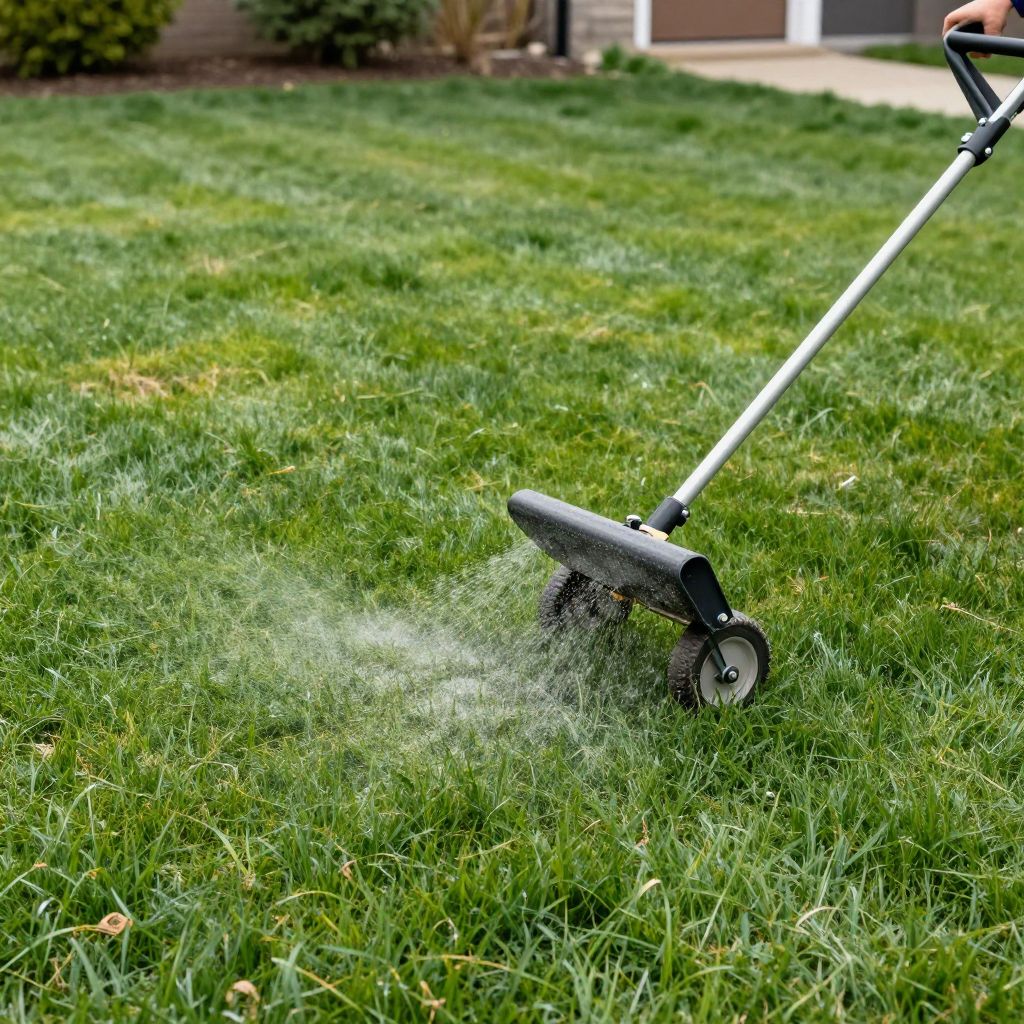
What does fertilizer do for grass? If your lawn looks pale, slow-growing, or thin, fertilizer can help by supplying nutrients the soil may not provide in enough quantity. It supports greener color, stronger roots, and steadier growth, but it is not a cure-all for poor mowing, compacted soil, drought, or pests.
The best results come from matching fertilizer to your grass type, soil condition, and season. Used correctly, it can improve lawn density and resilience; used poorly, it can burn turf, feed weeds, or create weak, overly lush growth.
What does fertilizer do for grass?
Fertilizer feeds grass essential nutrients, especially nitrogen, phosphorus, and potassium, so it can grow thicker, greener, and stronger. It does not “water” grass or fix bad soil structure, but it can correct nutrient shortages, improve recovery after mowing or stress, and help the lawn compete better with weeds.
How fertilizer helps a lawn
Grass uses nutrients to build leaves, roots, and energy reserves. When the soil is short on nutrients, growth slows and color often fades.
Key benefits
- Greener color: Nitrogen is the main nutrient linked to leafy, green growth.
- Thicker turf: Well-fed grass can spread and fill in bare areas more effectively.
- Better root growth: Balanced nutrition supports a stronger root system.
- Improved stress tolerance: Healthy grass usually handles heat, foot traffic, and mowing better.
- Faster recovery: Fertilized lawns often bounce back more quickly after damage.
What fertilizer cannot do
- It will not fix poor drainage.
- It will not revive grass that is already dead.
- It will not replace proper mowing height.
- It will not solve shade problems under trees or buildings.
- It will not control insects, fungal disease, or weeds on its own.
Understanding the nutrients in lawn fertilizer
Most lawn fertilizers list three numbers on the bag, such as 24-0-6. These represent nitrogen, phosphorus, and potassium in that order.
Nitrogen (N)
Nitrogen is the nutrient grass uses most for leaf growth and color. A lawn low in nitrogen often looks yellow-green, thin, and sluggish.
Phosphorus (P)
Phosphorus supports root development, but many established lawns do not need much of it. In many regions, phosphorus use is limited unless a soil test shows a need.
Potassium (K)
Potassium helps with overall plant function and stress tolerance. It can be useful in lawns that face heat, cold, or frequent wear.
Micronutrients
Some fertilizers also include iron, magnesium, or sulfur. These can help in certain soils, but they are usually secondary to the main N-P-K nutrients.
Signs your grass may need fertilizer
A lawn does not always need fertilizer just because it looks tired. First consider watering, mowing, soil compaction, and shade.
- Pale or yellow-green color despite proper watering
- Slow growth during the active growing season
- Thin turf that does not fill in well
- Weak recovery after mowing or light wear
- Uneven growth across the lawn
Tip: If only certain spots look weak, the cause may be drainage, pet urine, shade, or disease rather than a general nutrient shortage.
How to choose the right fertilizer for grass
The best fertilizer depends on your grass type, season, and soil test results. If you do not know your soil’s nutrient levels, a soil test is the most reliable starting point.
Use a soil test when possible
A soil test can tell you whether your lawn actually needs phosphorus, potassium, lime, or other amendments. It helps you avoid overfertilizing and spending money on nutrients your soil already has enough of.
Pick the right formula
- High-nitrogen fertilizers are common for established lawns that need greener growth.
- Starter fertilizers are used when seeding or sodding and often contain more phosphorus, if allowed in your area.
- Slow-release fertilizers feed more gradually and reduce the risk of sudden growth surges.
- Organic fertilizers can improve soil health over time, though they usually act more slowly than synthetic products.
Match fertilizer to grass type and season
Cool-season grasses and warm-season grasses do not need fertilizer at the same times. Cool-season lawns usually grow most in spring and fall, while warm-season lawns grow most in late spring and summer. Apply fertilizer when your grass is actively growing, not when it is stressed or dormant.
How to apply fertilizer safely and effectively
Good application matters as much as the product itself. Uneven spreading can leave stripes, weak spots, or burned patches.
- Read the label carefully. Follow the product instructions for your lawn size and grass type.
- Mow first if needed. A normal mowing height makes spreading easier and more even.
- Use a spreader. A drop or broadcast spreader helps apply fertilizer uniformly.
- Apply to dry grass unless the label says otherwise. This reduces sticking to leaves.
- Water lightly after application if the label recommends it, especially for granular products.
- Clean hard surfaces. Sweep fertilizer off driveways, sidewalks, and patios so it does not wash into drains.
Important: Do not guess at the amount. Overapplication is one of the most common lawn-care mistakes and can damage grass roots and nearby plants.
Common fertilizer mistakes to avoid
Many lawn problems blamed on “bad fertilizer” are actually caused by misuse. A careful approach prevents damage and wasted effort.
- Applying too much: This can scorch grass and encourage weak, fast growth.
- Fertilizing drought-stressed grass: Heat and dry soil increase the risk of burn.
- Feeding dormant grass unnecessarily: Nutrients may be wasted or cause poor timing issues.
- Using the wrong season’s product: A fertilizer meant for spring growth may be a poor fit for late-season use.
- Ignoring mowing height: Cutting grass too short can undo the benefits of fertilizing.
- Skipping soil testing: This can lead to repeated applications that do not solve the real problem.
Fertilizer, watering, and mowing work together
Fertilizer performs best when your lawn also gets proper water, mowing, and airflow. Healthy turf is a system, not a single product.
Watering
Grass needs moisture to use nutrients. If the soil is bone dry, fertilizer can stress the lawn instead of helping it. Water deeply when needed, but avoid keeping the soil constantly soggy.
Mowing
Keep grass at a height suited to its type. Cutting too short weakens the lawn and makes fertilizer less effective. Never remove more than about one-third of the blade at a time.
Soil condition
Compacted soil limits root growth and water movement. If your lawn is compacted, aeration may help more than extra fertilizer alone. Compost topdressing can also improve soil over time.
When fertilizer problems look like lawn disease or pests
Not every yellow or patchy lawn needs feeding. Sometimes the issue is insect damage, fungal disease, or environmental stress.
Look for these clues
- Irregular brown patches that spread quickly may suggest disease.
- Chewed blades or thinning in spots may point to insects.
- Localized dead areas can be caused by pet urine or spilled chemicals.
- Uniform pale color across the lawn is more often a nutrient issue.
If the problem is patchy rather than general, inspect the lawn closely before fertilizing again. Repeated feeding will not fix the wrong diagnosis.
Organic options and soil-building approaches
Fertilizer is only one way to feed grass. You can also support the lawn by improving the soil itself.
- Compost topdressing: A thin layer of screened compost can improve soil texture and microbial activity.
- Mulched grass clippings: Leaving clippings on the lawn returns some nutrients naturally.
- Organic lawn fertilizers: These may feed more gradually and support long-term soil health.
These methods work well as part of a broader lawn-care routine, especially if your soil is sandy, low in organic matter, or compacted.
Seasonal fertilizing basics
The best timing depends on climate and grass type, so local conditions matter. In general, fertilize when the lawn is actively growing and can use the nutrients efficiently.
Cool-season lawns
These grasses typically respond best in spring and fall, when temperatures are moderate and growth is active.
Warm-season lawns
These grasses usually benefit most in late spring and summer, once they are fully growing and the soil has warmed.
Remember: Avoid fertilizing when the lawn is dormant, heat-stressed, or heading into severe weather unless local guidance says otherwise.
Simple troubleshooting guide
- Grass is still pale after fertilizing: Check whether the lawn was watered properly, whether the product was applied evenly, and whether the soil test shows another deficiency.
- Brown tips or streaks appeared: The lawn may have been overfertilized or the spreader may have overlapped too much.
- Lots of leaf growth but weak roots: Too much nitrogen can push top growth without building a balanced lawn.
- Weeds increased after feeding: The lawn may have been thin before fertilizing; thicker turf and proper mowing help reduce weed pressure over time.
Conclusion: use fertilizer as part of a full lawn-care plan
What does fertilizer do for grass? It supplies the nutrients your lawn needs to grow greener, denser, and more resilient, but only when used at the right time and in the right amount. For the best results, pair fertilizing with proper mowing, watering, and soil care.
If you are planning your next lawn treatment, start with a soil test, choose a product suited to your grass type, and apply it evenly so your lawn gets the benefit without the risk. For more practical lawn-care guidance, look for related articles on mowing height, soil testing, and improving compacted turf.