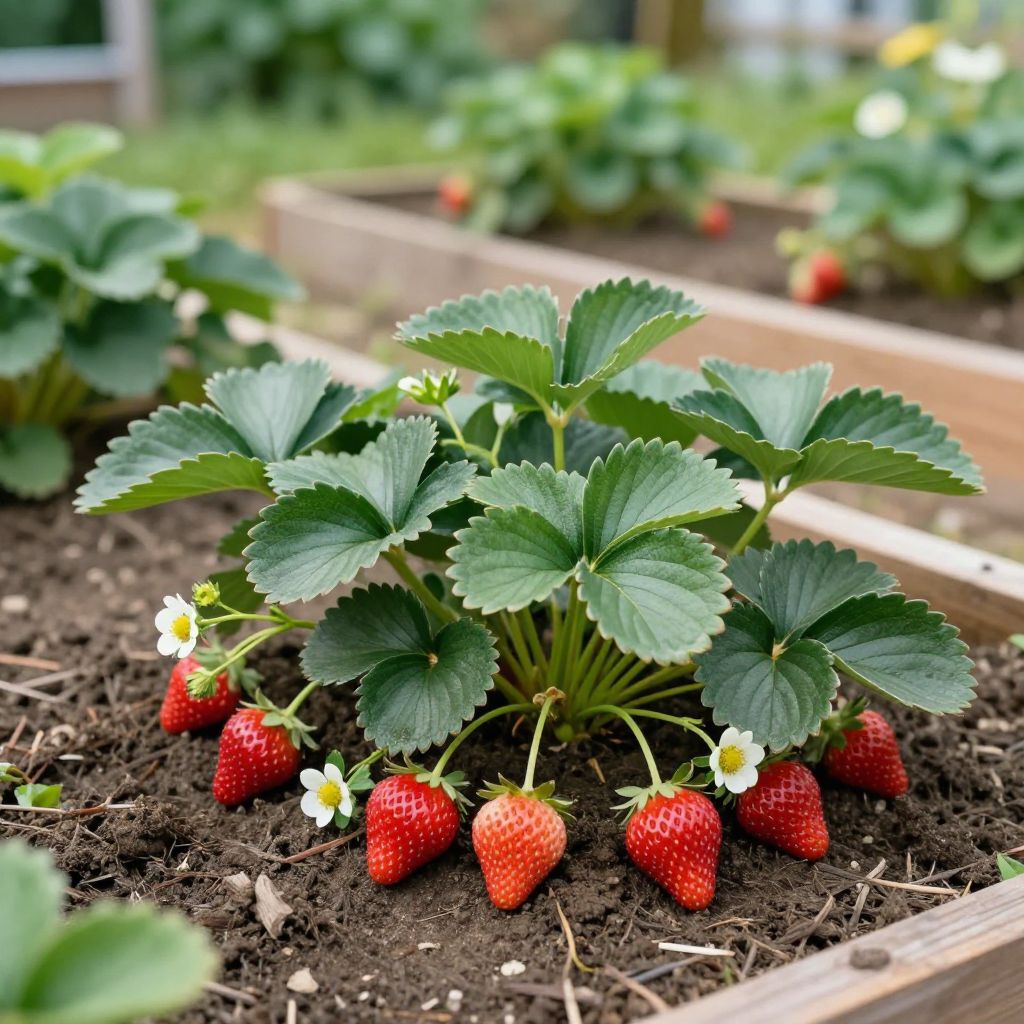
Do strawberries grow on bushes? It’s a common question, especially if you’ve seen berry plants sold in pots and wondered what kind of plant you’re actually growing. The short answer is no: strawberries do not grow on bushes. They grow on low, spreading herbaceous plants that produce runners and crown growth close to the soil.
Once you know how strawberries grow, they’re much easier to plant, prune, and harvest. With the right sun, soil, moisture, and spacing, you can grow healthy strawberry plants in beds, containers, or hanging baskets and avoid the most common mistakes that reduce fruiting.
Do strawberries grow on bushes?
No. Strawberries grow on low-growing perennial plants, not bushes. The visible “plant” is usually a crown with leaves, flowers, and runners, while the fruit develops on short stems above the foliage. Because they stay close to the ground, strawberries need good airflow, clean soil, and protection from rot and pests.
What a strawberry plant actually looks like
Strawberry plants are compact and spreading, with a central crown, trifoliate leaves, white or pink flowers, and long runners that form new baby plants. They may look bushy when mature, but they are not woody shrubs. Understanding this growth habit helps you space them correctly and manage fruit production.
Crown, runners, and fruiting stems
- Crown: The short, thick center where leaves and flower stems emerge.
- Runners: Long stems that make new plantlets and spread the patch.
- Flower stems: Upright stems that carry blossoms and later fruit.
If the crown is buried too deeply, the plant can rot. If it sits too high, roots may dry out. Aim to plant so the crown is level with the soil surface.
Best growing conditions for strawberries
Strawberries perform best in full sun, loose fertile soil, and steady moisture. They need at least 6 hours of direct sunlight daily, and more sun usually means better flowering and sweeter fruit. In very hot climates, a little afternoon shade can help reduce stress.
Soil and drainage
Strawberries prefer well-drained soil rich in organic matter. Heavy clay or soggy ground increases the risk of root and crown problems. Before planting, mix in compost to improve soil structure and water retention without making the bed waterlogged.
- Use soil that drains well after rain or watering.
- Work in compost to improve fertility and texture.
- Avoid low spots where water collects.
Container growing
Containers work well if you don’t have garden space, but they dry out faster than in-ground beds. Use a pot with drainage holes and a quality potting mix, not garden soil. Strawberry pots, window boxes, and hanging baskets can all work if you monitor moisture closely.
How to plant strawberries correctly
Planting depth and spacing matter more than many beginners realize. Strawberries need room for airflow and enough light to reach the center of the plant. Crowded plants are more likely to develop disease and produce smaller fruit.
- Choose a sunny site with well-drained soil.
- Remove weeds and loosen the top 6 to 8 inches of soil.
- Mix in compost if the soil is poor or compacted.
- Set plants so the crown sits at soil level.
- Space plants according to their type and vigor, allowing airflow between crowns.
- Water gently after planting to settle the soil.
Mulch lightly around plants with clean straw, pine needles, or shredded leaves to keep fruit off the soil and conserve moisture. Keep mulch away from the crown itself.
Watering and feeding strawberries
Strawberries like even moisture, especially while flowering and fruiting. Dry spells can reduce berry size and lead to misshapen fruit, while overwatering can cause root problems. Check the soil with your finger; water when the top inch begins to dry, adjusting for weather and soil type.
How to water without causing problems
- Water at the base of the plant, not over the leaves if possible.
- Water deeply enough to moisten the root zone.
- Let the soil dry slightly between waterings, but don’t let plants wilt repeatedly.
For feeding, use compost and balanced soil fertility rather than pushing too much nitrogen. Too much nitrogen can create lush leaves and fewer berries. If your soil is already fertile, a light top-dressing of compost may be enough.
Pruning, runners, and maintenance
Strawberries need simple but regular maintenance to stay productive. Removing damaged leaves, controlling runners, and keeping the patch clean helps direct energy into fruit instead of excess growth.
Should you remove runners?
That depends on your goal. If you want a tidy fruiting bed, remove most runners so the mother plants stay strong. If you want to expand your patch, allow a few healthy runners to root in place or pot them up for transplanting.
- Trim dead or diseased leaves as needed.
- Remove weak runners if plants are overcrowded.
- Keep the planting area weed-free.
In many home gardens, the best balance is to keep the main plants productive and only root runners when you actually want new plants.
Common strawberry pests and diseases
Because strawberries grow close to the ground, they can be vulnerable to slugs, birds, gray mold, leaf spots, and crown rot. Good spacing, clean mulch, and careful watering prevent many of these issues before they start.
Common problems to watch for
- Slugs and snails: Chew holes in leaves and fruit.
- Birds: Peck ripening berries.
- Gray mold: Often appears in damp, crowded plantings.
- Crown rot: Linked to excess moisture and poor drainage.
- Leaf diseases: More common when foliage stays wet and airflow is poor.
To reduce pest pressure, harvest ripe fruit promptly, keep berries off wet soil, and remove rotting fruit right away. Netting can help protect ripening berries from birds if they become a problem in your area.
How to harvest strawberries at the right time
Pick strawberries when they are fully colored and fragrant. They do not continue to ripen much after picking, so harvest only berries that are ready. Gently twist or snip the stem rather than pulling hard, which can damage the plant.
Harvest tips for better flavor
- Pick in the cool part of the day if possible.
- Handle fruit gently to avoid bruising.
- Check plants every couple of days during peak ripening.
Frequent harvesting encourages you to catch ripe berries before pests or rain damage them. It also helps you notice problems early, such as mold or overripe fruit hiding under leaves.
Propagating new strawberry plants
Strawberries are easy to propagate from runners. When a runner forms a small plantlet with roots, you can let it root in place or pot it up. This is one of the simplest ways to expand your patch without buying more plants.
- Choose a healthy runner from a vigorous mother plant.
- Set the plantlet on moist soil or in a small pot.
- Pin it in place lightly if needed until roots form.
- Separate it from the runner once it is established.
Use only healthy parent plants for propagation. If the mother plant shows disease, don’t save runners from it, because you may carry the problem into the new plants.
Best uses in the garden
Because strawberries stay low and spread outward, they work well in raised beds, edging, containers, and dedicated berry patches. They can also be used as a seasonal groundcover in some gardens, though they need more care than ornamental groundcovers.
Raised beds are especially useful if your native soil drains poorly. They make it easier to control soil quality, reduce fruit contact with wet ground, and improve airflow around the plants.
Common mistakes to avoid
- Planting strawberries too deep or too shallow.
- Growing them in heavy, poorly drained soil.
- Overcrowding plants and reducing airflow.
- Letting runners take over the bed unchecked.
- Overwatering, especially in containers.
- Leaving ripe fruit on the plant too long.
These mistakes are easy to fix once you know what strawberries need. Most problems come from excess moisture, poor spacing, or planting in the wrong spot rather than from the plant itself.
Conclusion
So, do strawberries grow on bushes? No—they grow on low, spreading plants with crowns and runners, not woody bushes. If you give them sun, drainage, and consistent care, they’re one of the easiest fruit crops for home gardeners to enjoy.
If you’d like to grow them in a small space, you may also want to read about growing strawberries indoors for container-friendly tips that work well on a sunny windowsill or under grow lights.