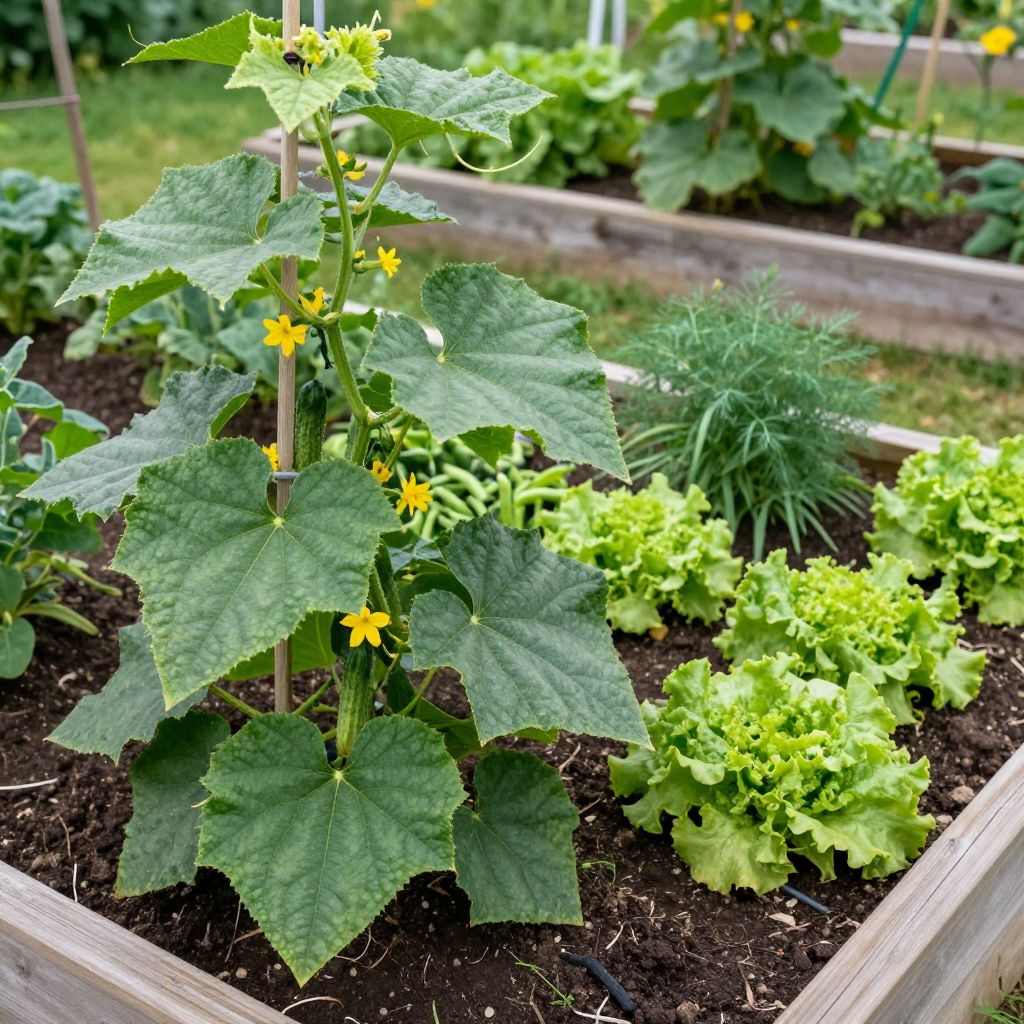
What can I plant with cucumbers? The best companions are plants that share similar growing needs, don’t compete heavily for root space, and help you make better use of the bed. Good choices can also attract pollinators, shade the soil, or help confuse pests.
In practice, the best companion plants for cucumbers are usually beans, peas, lettuce, radishes, dill, nasturtiums, marigolds, and some alliums placed nearby rather than crowded right against the vines. The key is to pair cucumbers with plants that won’t steal too much light, water, or airflow.
What can I plant with cucumbers?
Cucumbers grow well with plants that have shallow roots, finish early, or support pollination and pest control. Good companions include bush beans, peas, lettuce, spinach, radishes, dill, borage, nasturtiums, and marigolds. Avoid pairing cucumbers with aggressive, sprawling crops that crowd the vines or shade them too heavily.
Best companion plants for cucumbers
Beans and peas
Beans and peas are classic companions because they can grow vertically, leaving room around cucumber vines. Bush beans are especially convenient in small beds, while pole beans can share a trellis if spacing is generous.
These legumes do not “feed” cucumbers directly in the short term, but they fit well in a mixed planting because they use space efficiently and can be harvested before cucumbers fully take over the bed.
Lettuce, spinach, and other cool-season greens
Leafy greens are excellent early companions. They grow quickly, tolerate some shade, and can be harvested before cucumber vines spread across the bed.
This is especially useful in spring or in warmer climates where cucumbers are planted after a cool-season crop has already started. Once the cucumbers get large, the greens may need to be removed if they become too shaded.
Radishes
Radishes are one of the easiest plants to tuck near cucumbers. They mature quickly, loosen the soil a little, and are usually gone before cucumber roots and vines need the space.
Because they are short-lived, radishes are a smart “filler” crop between cucumber seedlings or along bed edges.
Dill
Dill can be a helpful companion because its flowers attract beneficial insects such as hoverflies, lacewings, and parasitic wasps. Those insects may help keep aphids and other small pests in check.
Plant dill a little away from the cucumber stems so it does not crowd them. If you want both herbs and cucumbers, choose a few dill plants rather than a dense patch.
Nasturtiums
Nasturtiums are often planted near cucumbers because they trail nicely, cover bare soil, and attract aphids away from more valuable crops. They can also help draw pollinators into the garden.
Use them as a border or at the edge of the bed rather than directly under cucumber vines, where they may compete for light and airflow.
Marigolds
Marigolds are a common companion in vegetable gardens because they add color, attract pollinators, and may help distract certain pests. They are most useful when planted around the perimeter of the cucumber bed.
Choose compact varieties if space is limited. Tall, spreading marigolds can become crowded once cucumber vines begin to run.
Borage
Borage is a strong pollinator plant with blue flowers that bees love. If your cucumber patch has trouble setting fruit because pollinators are scarce, borage can be a useful addition.
It can grow large, so give it room. In smaller gardens, one or two plants are usually enough.
Alliums such as onions and garlic
Onions, garlic, and chives are often used as nearby companions because their scent may help confuse some pests. They are best planted along the edges of the bed or in nearby rows, not packed tightly into the cucumber root zone.
They are a better “border crop” than a main interplant in a dense cucumber bed.
Plants to avoid growing with cucumbers
Not every vegetable is a good neighbor for cucumbers. The biggest problems are crowding, shading, and competition for water and nutrients.
- Potatoes — they are heavy feeders and can compete strongly for space and soil resources.
- Melons and squash — these are in the same plant family and often have similar pest and disease issues.
- Large, sprawling crops — anything that blocks airflow can make mildew and leaf disease worse.
- Very tall shade-casting plants — cucumbers need strong sun to flower and fruit well.
It is not that these plants can never be grown near cucumbers, but they usually require more planning and wider spacing than beginners expect. If your garden is small, simpler combinations work better.
How to plan a cucumber companion planting layout
Good cucumber companion planting is mostly about spacing. Cucumbers need room for vines, airflow, and easy harvesting, so companions should stay at the edges or fill temporary gaps.
- Choose a sunny spot with well-drained soil.
- Decide whether your cucumbers will climb a trellis or sprawl on the ground.
- Plant taller or longer-season companions around the perimeter.
- Use quick crops like radishes and lettuce between young cucumber plants.
- Leave enough space for air to move through the bed as the vines grow.
If you are trellising cucumbers, you can use the ground space underneath for low crops early in the season. If you are letting cucumbers sprawl, keep companion plants farther away so they are not buried by the vines.
Simple spacing tips
- Keep low companions at least several inches from the cucumber crown.
- Give vigorous companions enough room to stay outside the main vine path.
- Use borders and corners for flowers and alliums.
- Reserve the center of the bed for cucumbers and their support structure.
Growing conditions cucumbers and companions share
Most good companion plants for cucumbers like similar conditions: full sun, moderate moisture, and fertile soil. That makes them easier to grow together than plants with very different needs.
Sunlight
Cucumbers perform best in full sun, which means at least 6 to 8 hours of direct light in most gardens. Companion plants should not cast heavy shade over the vines.
Soil and drainage
Use loose, fertile soil with good drainage. Cucumbers dislike waterlogged roots, and companion plants will also struggle if the soil stays soggy after rain or irrigation.
Mix in compost before planting if your soil is poor or compacted. Compost improves moisture retention in sandy soil and helps heavy soil drain more evenly.
Watering
Keep the soil evenly moist, especially while plants are flowering and setting fruit. Irregular watering can lead to bitter fruit, poor growth, or more stress-related pest problems.
Water at the base of the plants rather than overhead when possible. Dry foliage helps reduce disease pressure, especially in humid weather.
Best companion planting combinations by garden style
Small raised bed
For a small raised bed, one trellised cucumber plant or a few plants can share space with lettuce, radishes, and a border of marigolds or nasturtiums. This keeps the bed productive without becoming overcrowded.
In-ground vegetable row
In a longer row, place cucumbers on a trellis and use the front edge for quick crops like radishes or leafy greens. Put dill or alliums a little farther back or at the ends of the row.
Pollinator-friendly patch
If you want more bees and beneficial insects, add borage, dill, and nasturtiums near the cucumber area. This can improve pollination and make the bed more resilient, especially if your garden has few flowering plants nearby.
Common mistakes to avoid
Companion planting works best when you avoid overcrowding. Cucumbers are fast growers, and a bed that looks spacious in spring can become packed by midsummer.
- Planting too close together — poor airflow can encourage powdery mildew and other fungal issues.
- Mixing too many large plants — competition reduces cucumber vigor and harvest quality.
- Ignoring trellises — vertical support saves space and keeps fruit cleaner.
- Forgetting to thin or remove early crops — lettuce and radishes should be cleared before they block the cucumbers.
- Using heavy shade plants — cucumbers need sun to flower and fruit properly.
Pest and disease considerations
Companion planting can help, but it will not replace basic cucumber care. The most common cucumber problems are aphids, cucumber beetles, powdery mildew, and poor fruit set when pollination is weak.
How companions can help
- Flowers like dill, borage, marigolds, and nasturtiums attract beneficial insects.
- Border planting can make it harder for pests to find the crop quickly.
- Mixed planting can reduce bare soil and help moderate moisture loss.
What still matters most
- Good spacing for airflow
- Consistent watering at the root zone
- Removing diseased leaves promptly
- Checking the undersides of leaves for pests
If powdery mildew appears, do not blame the companion plants first. It usually points to crowded growth, poor airflow, or stressed plants. Thin the bed, water carefully, and remove badly affected leaves if needed.
Can you grow cucumbers with herbs?
Yes, but choose herbs carefully. Dill is one of the best options because it supports beneficial insects and fits the same general growing style. Chives and garlic can also work nearby.
Avoid planting aggressive or very large herbs too close to cucumbers if they will shade the vines or compete for moisture. Keep herbs at the edge of the bed if you are unsure.
When to plant companions with cucumbers
Timing depends on your local climate and when your soil warms up. Cucumbers are warm-season crops, so they are usually planted after frost danger has passed and the soil is warm enough for steady growth.
Fast crops like radishes and lettuce can go in earlier, then be harvested before the cucumbers spread. Flowers and herbs can be planted at the same time as cucumbers or slightly before them, depending on your season.
Conclusion
If you are wondering what can I plant with cucumbers, start with easy, compatible companions like beans, lettuce, radishes, dill, nasturtiums, marigolds, and borage. Keep the bed sunny, airy, and not overcrowded, and use quick crops as temporary fillers while the cucumbers are young.
For more practical vegetable-garden planning, you may also want to read about how to grow cucumbers and companion planting in the vegetable garden.