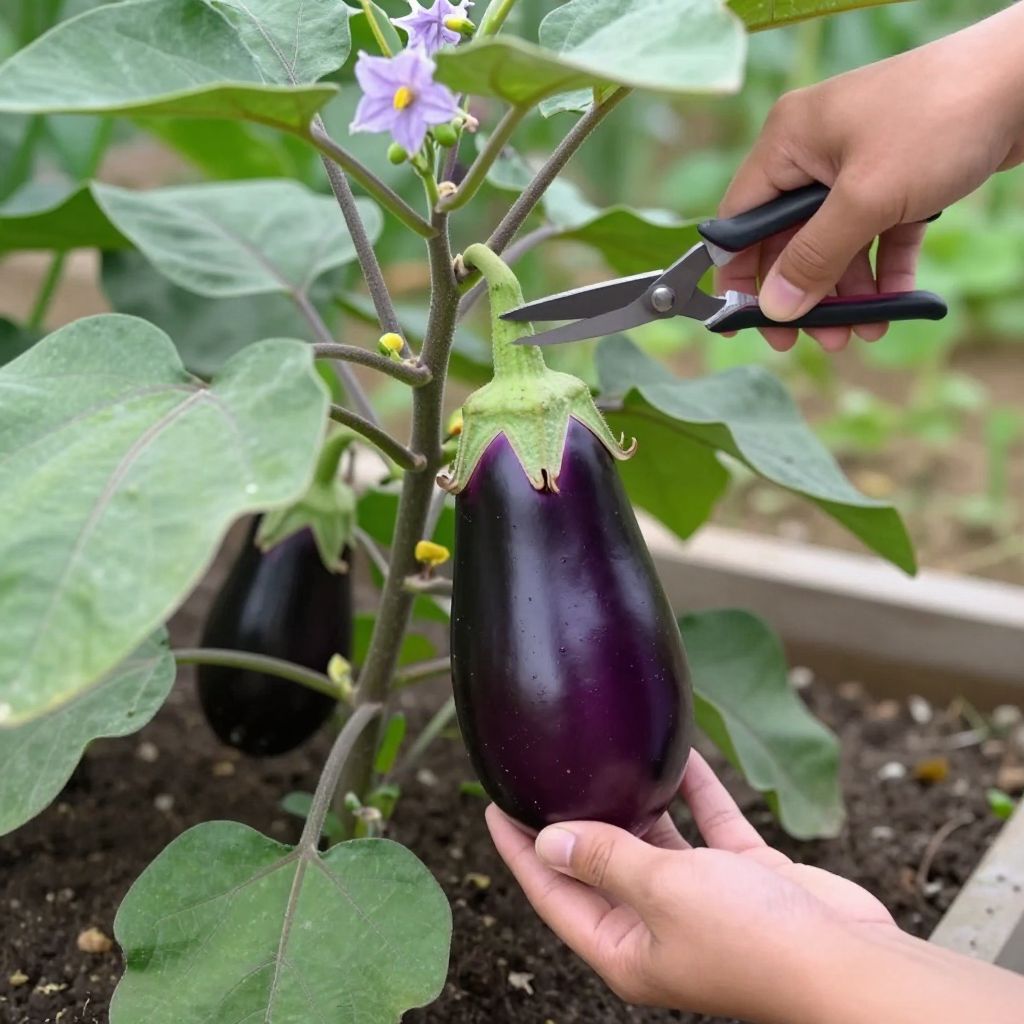
Wondering when to harvest eggplant? The right picking time makes a big difference in flavor, texture, and how long the plant keeps producing. Harvest too early and the fruit can be bitter or underdeveloped; wait too long and it turns dull, seedy, and tough.
The good news is that eggplant is usually easy to judge by sight and touch once you know what to look for. With a few simple checks, you can pick fruit at peak quality and encourage the plant to keep setting more.
When to harvest eggplant?
Harvest eggplant when the fruit is full-sized for its variety, glossy, firm, and springy to the touch. The skin should look smooth and richly colored, and the fruit should give slightly when pressed with a thumb. If the skin turns dull or the fruit feels hard, it is usually past prime.
How to tell eggplant is ready to pick
Eggplant does not ripen much after harvest, so timing matters. The best stage is usually just before full maturity, when the fruit is tender and the seeds are still small.
Look at the skin
- Glossy skin usually means ready.
- Dull, faded, or leathery skin often means overripe fruit.
- Color should be deep and even for the variety you are growing.
For classic purple eggplants, a rich, shiny purple is often the sweet spot. White, green, striped, or specialty types should be judged by the same rule: healthy color and a fresh sheen.
Check the size and shape
Size depends on the cultivar, so do not harvest by length alone. Some eggplants are best small and tender, while others are meant to grow larger before picking.
- Pick when the fruit looks full and well-formed.
- Do not wait for the fruit to become oversized unless the variety is known for large fruit.
- Misshapen or lopsided fruit can still be ready if the skin is glossy and the flesh feels firm but not hard.
Use the thumb test
Gently press the side of the fruit with your thumb. A ripe eggplant should give slightly and then spring back. If it feels rock-hard, it likely needs more time. If the dent stays in, the fruit is probably overripe.
Watch the calyx and stem
The green cap where the fruit meets the stem should still look fresh and firm. A healthy stem and calyx usually support a good harvest window. If the fruit is hanging too long, the stem may become woody and the plant may slow down production.
What happens if you harvest eggplant too early or too late?
Picking at the wrong stage affects both eating quality and future harvests. Eggplant that is too young can be small and underdeveloped, while overripe fruit often becomes bitter, spongy, and full of large seeds.
If you harvest too early
- Fruit may be smaller than expected.
- Texture can be firmer than ideal.
- The plant may still produce more fruit, but the harvest is less efficient.
If you harvest too late
- The skin may lose its shine and become dull.
- Seeds enlarge and the flesh turns tough.
- The plant often slows down because it is putting energy into mature fruit.
If you are unsure, it is usually better to pick slightly early than too late. Eggplant is most enjoyable when harvested at peak tenderness.
How to harvest eggplant correctly
Use a clean, sharp knife, pruners, or scissors to cut the fruit from the plant. Do not twist or pull it off by hand, because that can damage the stem and nearby blossoms.
- Inspect the fruit for gloss, firmness, and size.
- Hold the fruit gently with one hand.
- Cut the stem about 1 to 2 inches above the fruit.
- Handle the fruit carefully to avoid bruising the skin.
Eggplant stems can be prickly, so gloves are helpful. A clean cut also reduces the chance of tearing the plant, which helps it continue producing.
Best time of day to harvest
Morning is often a good time to pick, especially in hot weather. The fruit is cooler, and the plant is under less heat stress. That said, if a fruit is ready, it is better to harvest it promptly than to wait for a perfect hour.
How often should you harvest eggplant?
Check plants every 2 to 3 days once they start producing. In warm weather, fruit can size up quickly, and a nearly ready eggplant can become overripe in a short time.
Frequent harvesting often encourages more flowers and fruit. Leaving mature fruit on the plant too long can slow production, especially on smaller or heavily loaded plants.
Timing harvest by season and growing conditions
Eggplant is a warm-season crop, and harvest timing depends on sunlight, temperatures, and how fast the plant is growing. In cooler weather, fruit may take longer to reach harvest size. In hot, sunny conditions, it can mature much faster.
Outdoor plants
Outdoor eggplants usually ripen best in full sun and consistent warmth. If nights are cool or the season is shortening, fruit may stay smaller and take longer to color up. Watch closely as the weather changes in late summer and early fall.
Container-grown plants
Eggplants in pots can dry out faster and may produce smaller fruit if they are stressed. Because container plants can fluctuate more in moisture and temperature, check them often and harvest promptly when fruit reaches the right stage.
Greenhouse or indoor growing
Protected growing spaces can extend the season, but fruit still needs the same visual and touch cues. Since light levels and airflow may differ indoors, fruit may mature unevenly. Inspect each plant individually rather than relying on a calendar.
Common eggplant harvest mistakes to avoid
- Waiting for the fruit to become very large. Bigger is not always better with eggplant.
- Ignoring skin sheen and harvesting only by size.
- Pulling fruit off instead of cutting it cleanly.
- Letting overripe fruits stay on the plant too long.
- Picking too infrequently during peak season.
A common mistake is assuming all eggplants should be harvested at the same size. Different varieties mature differently, so always compare the fruit to the plant’s expected form and your own observations.
What to do after harvesting
After picking, inspect the plant for more developing fruit. Removing mature eggplants often helps the plant shift energy into the next flush of flowers and fruit.
- Store harvested fruit in a cool place and use it soon for best quality.
- Keep watering consistent so the plant does not stall.
- Continue checking for pests such as flea beetles, aphids, or hornworms if they are common in your garden.
If the plant is still healthy and the weather remains warm, it may continue producing for weeks. Good light, even moisture, and regular harvesting all support a longer season.
Troubleshooting poor fruit quality
Fruit is small and hard
This can happen if the plant is stressed by cool temperatures, poor pollination, inconsistent watering, or low fertility. Make sure the plant is getting enough sun and steady moisture, and avoid letting the soil dry out completely between waterings.
Fruit is bitter or seedy
That usually means it was left on the plant too long. Harvest a little earlier next time, especially once the fruit reaches full color and a glossy finish.
Fruit looks pale or dull
Dull skin often signals overmaturity. Pick promptly and remove any fruit that has become too old so the plant can focus on younger developing fruit.
Fruit is misshapen
Uneven fruit can result from stress during flowering, uneven watering, or incomplete pollination. The fruit may still be usable if it is firm and glossy, but improving growing conditions can help future harvests.
Quick harvest checklist
- The fruit is full-sized for the variety.
- The skin is glossy, not dull.
- The fruit feels firm but gives slightly when pressed.
- The seeds inside are still small and soft.
- You can cut the fruit cleanly with pruners or a knife.
If you can check most of those boxes, it is time to harvest.
Conclusion
When to harvest eggplant comes down to timing, touch, and appearance. Pick while the skin is glossy, the fruit is firm with a little give, and the size matches the variety you are growing. Check plants often, harvest with clean cuts, and you will usually get better flavor and more fruit over the season.
If you want to improve your next crop, it also helps to read more about pruning eggplant for better airflow and production and growing eggplant in containers if space is limited.