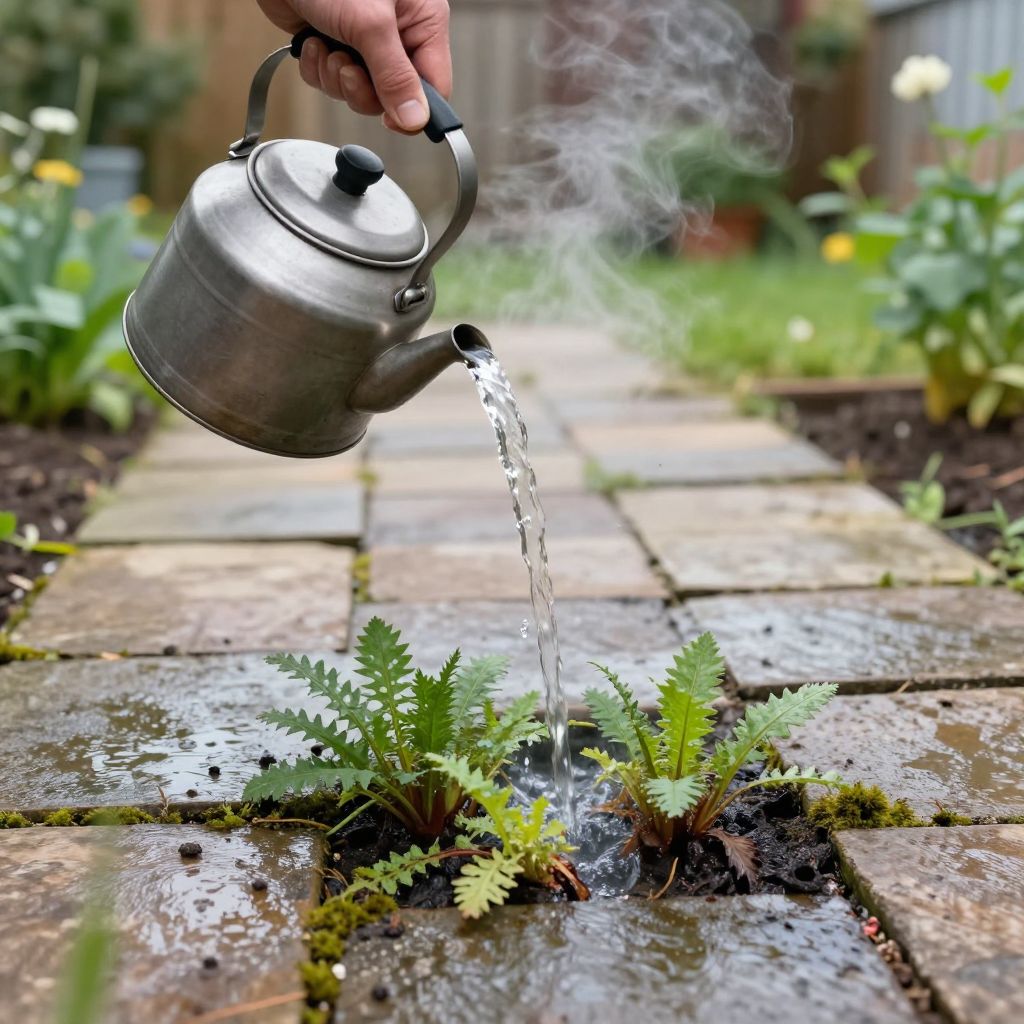
Does boiling water kill weeds? Yes—it can, and it often works fast on small, young weeds growing in cracks, paths, and other spots where you do not want chemicals. The heat damages plant cells almost instantly, causing leaves and stems to wilt, brown, and die back.
It is a simple tool, but it is not a perfect weed control method for every situation. Used carefully, boiling water can help with spot treatment, but it can also harm nearby desirable plants, soil life close to the surface, and even you if it splashes.
Does boiling water kill weeds?
Boiling water does kill many weeds on contact by scalding the top growth and, in some cases, the crown and shallow roots. It works best on small annual weeds and seedlings. Deep-rooted perennial weeds often regrow unless you repeat the treatment several times.
How boiling water works on weeds
Boiling water damages plant tissue by breaking cell structure. The leaves collapse first, then the stem and growing point may die if enough heat reaches them.
This is why boiling water is most effective on:
- Young weeds with shallow roots
- Annual weeds in pavement cracks and gravel
- Small weeds growing away from ornamentals and lawn grass
It is less effective on mature weeds with thick crowns, taproots, rhizomes, or extensive underground storage roots. Weeds such as dandelion, bindweed, thistle, and bermudagrass may be set back, but not always eliminated in one treatment.
What to expect after treatment
Some weeds wilt within minutes. Others look scorched after a few hours and then dry out over the next day or two. If the root survives, new growth can appear later.
Where boiling water works best
Boiling water is most useful in places where precision matters and you do not want to spray herbicides. Good targets include hardscape areas and other isolated spots.
- Driveway cracks
- Sidewalk seams
- Gravel paths
- Patio edges
- Fence lines with no nearby plants
- Between stepping stones
It is usually not a good choice for weed control in garden beds, lawns, or anywhere desirable roots are close to the surface. Hot water does not distinguish between weeds and ornamentals.
How to use boiling water safely and effectively
If you want to try this method, use it as a spot treatment rather than a broad weed-control strategy. The goal is to hit the weed directly and avoid splashing surrounding soil or plants.
- Boil water in a kettle or pot you can carry safely.
- Wear closed-toe shoes, long pants, and gloves.
- Move slowly to the treatment area to avoid spills.
- Pour the water directly onto the weed crown and root zone.
- Use only enough to soak the plant and nearby soil, not flood the area.
- Check the weed again in a few days and repeat if needed.
For narrow cracks, a steady pour works better than a splash. For larger weeds, aim at the base where stems meet the soil, because that is the most vulnerable point.
Best timing for treatment
Warm, dry weather can help weeds dry down faster after scalding, but the water itself does the killing. Treat weeds when they are small, actively growing, and easy to reach.
After rain, weeds may be more resilient, and muddy soil can make it harder to direct the water accurately. If the area is windy or crowded with plants, choose a different method to reduce the risk of accidental damage.
What boiling water will not do well
Boiling water is not a complete solution for every weed problem. Knowing its limits helps you avoid disappointment and repeated regrowth.
- It may not kill deep roots. Many perennial weeds resprout from protected underground parts.
- It does not prevent new seeds from germinating. Fresh weed seedlings can return after the soil cools.
- It can miss hidden growing points. Dense clumps or mat-forming weeds may survive at the center.
- It can damage nearby plants. Roots under the soil surface may be injured even if foliage is not touched.
If a weed patch keeps returning, combine hot water with hand removal, edging, mulching, or repeated spot treatment rather than relying on one application.
Common mistakes to avoid
Boiling water sounds easy, but a few mistakes can make it less effective or more dangerous.
Pouring too little water
A few drops of hot water may scorch leaves without reaching the crown. Aim for a direct soak at the base of the weed.
Using it near valuable plants
Heat travels through soil. Even if you miss the leaves, roots of nearby perennials, bulbs, or vegetables can be harmed.
Treating large, established weeds once
Older weeds often need repeat treatments or a different control method. One scalding may only burn the top growth.
Ignoring safety
Boiling water can cause serious burns. Keep children and pets away while you work, and never carry a full pot over uneven ground if you can avoid it.
Will boiling water hurt the soil?
In a very small, localized area, boiling water usually causes only temporary heat stress near the surface. It is not the same as sterilizing your whole garden bed. However, repeated use in the same spot can disturb soil biology and may affect nearby roots.
If you are using it on a path or crack, that is usually less of a concern than using it in a planted bed. In garden soil, the bigger issue is often collateral damage to desirable plants rather than long-term soil harm.
Better alternatives for different weed problems
Boiling water is just one tool. The best method depends on where the weed is growing and how established it is.
For cracks and gravel
- Boiling water for spot treatment
- Hand-pulling when soil is loose
- Brushing out debris so seedlings do not re-root
For garden beds
- Mulch to block light and reduce germination
- Hand-weeding when soil is moist
- Careful hoeing of tiny seedlings
For lawns
- Improve turf density through proper mowing and overseeding where suitable
- Pull isolated weeds before they spread
- Address drainage, compaction, or shade issues that weaken grass
In most planted areas, prevention is easier than rescue. A healthy, dense planting leaves less room for weeds to establish.
How to reduce weed return after hot-water treatment
Once the weed is dead, the area still needs maintenance. Otherwise, new seedlings can move in quickly.
- Remove dead plant material so you can see regrowth early
- Fill cracks in paving if possible
- Add mulch in beds to suppress new seedlings
- Inspect problem spots every week or two during active growing season
- Pull or treat new weeds while they are still small
For persistent weeds, repeat control is often the key. A single treatment may knock back top growth, but follow-up is what prevents the patch from recovering.
Should you use boiling water on every weed?
No. It is best reserved for specific situations where you can target the weed precisely and where nearby plants will not be harmed. For isolated weeds in cracks or gravel, it can be a practical, low-cost option. For dense infestations, deep-rooted perennials, or planted beds, another approach is usually safer and more effective.
If you are deciding whether to try it, start small. Test one weed patch, watch how it responds over a few days, and then choose the next step based on what you see. For more garden maintenance ideas, you may also want to read about mulching to suppress weeds and safe hand-weeding techniques for garden beds.