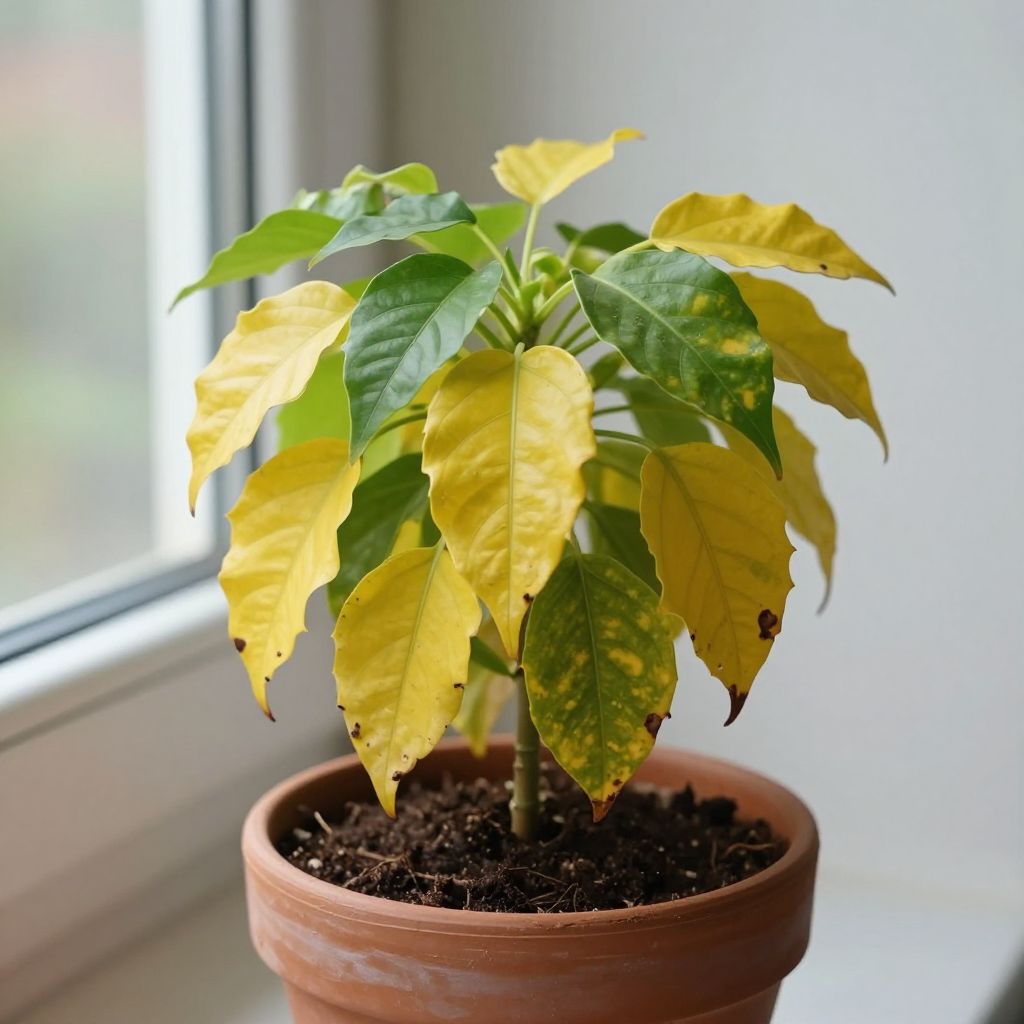
Why is my plant turning yellow? Yellow leaves usually mean the plant is under stress, but the cause can be as simple as normal aging leaves or as serious as root rot, pests, or a nutrient problem. The key is to look at where the yellowing starts, how fast it spreads, and whether the soil, light, and watering habits match the plant’s needs.
Once you identify the pattern, most yellowing can be corrected. In many cases, a small change in watering, drainage, or light is enough to stop the problem and help new growth return to a healthy green.
Why is my plant turning yellow?
Yellow leaves usually signal a care issue rather than a disease by itself. The most common causes are overwatering, poor drainage, underwatering, low light, nutrient deficiencies, temperature stress, pests, or natural aging. Start by checking the soil moisture and leaf pattern, then adjust one factor at a time.
How to tell what is causing yellow leaves
Not all yellowing looks the same. The location of the yellow leaves, the texture of the foliage, and the condition of the soil can tell you a lot about the problem.
Yellowing patterns and what they often mean
- Lower, older leaves turning yellow first: often normal aging, mild nutrient shortage, or a plant that is redirecting energy.
- Whole plant turning pale or yellow: often low light, root problems, or a serious nutrient imbalance.
- Yellow leaves with soft stems or wet soil: usually overwatering or root rot.
- Yellow leaves with dry soil and crispy edges: often underwatering or heat stress.
- Yellowing with spots, webbing, or sticky residue: may point to pests or disease.
Check the soil before you do anything else
Stick your finger 1 to 2 inches into the soil for small houseplants, or 2 to 4 inches for larger containers and many garden plants. If the soil is soggy, the roots may be struggling. If it is bone dry, the plant may simply be thirsty.
Also check whether the pot has drainage holes or whether outdoor soil stays wet after rain. Poor drainage is one of the fastest ways to trigger yellow leaves.
Common causes of yellow leaves and how to fix them
1. Overwatering and poor drainage
This is the most common reason a plant turns yellow, especially indoors and in containers. Roots need oxygen as well as water. When soil stays wet too long, roots can suffocate and begin to rot.
Signs: yellow leaves, soft stems, fungus gnats, moldy soil surface, and a pot that feels heavy for days after watering.
What to do:
- Stop watering until the top layer of soil dries to the depth appropriate for the plant.
- Make sure the pot drains freely and never sits in a saucer of water.
- If the soil is compacted or sour-smelling, repot into a fresh, well-draining mix.
- Trim away badly damaged roots if you find black, mushy sections during repotting.
For outdoor beds, improve drainage by adding organic matter such as compost to heavy soil, or by planting in raised beds if your site stays wet after rain.
2. Underwatering
Dry soil can also cause yellowing, especially during hot weather, windy conditions, or when plants are root-bound in pots. The plant may shed older leaves to reduce water loss.
Signs: dry potting mix, drooping foliage, crispy yellow edges, and leaves that feel thin or papery.
What to do: Water deeply so moisture reaches the root zone, then let the plant dry only as much as its species prefers before watering again. A quick splash on the surface is usually not enough for a stressed plant.
For containers, water until it runs from the drainage holes. For garden plants, water slowly at the base so moisture sinks in rather than running off the surface.
3. Low light
Plants that do not get enough light often become pale, weak, and yellow over time. This is especially common with indoor plants placed too far from a window or outdoor plants shaded by trees, fences, or larger plants.
Signs: slow growth, leggy stems, smaller leaves, and yellowing that develops gradually rather than suddenly.
What to do: Move the plant to brighter light that matches its needs. Indoors, a bright window may help, but direct sun can scorch some plants. Outdoors, gradually increase light exposure so leaves do not burn.
If you are unsure whether the plant wants full sun, partial shade, or bright indirect light, check its specific care needs. Light requirements vary widely by species.
4. Nutrient deficiencies
A lack of nutrients can cause yellow leaves, but it is easy to overcorrect. The most common issues involve nitrogen, iron, or magnesium, though the exact symptom depends on the plant and soil conditions.
Signs: pale new growth, yellowing between leaf veins, or older leaves yellowing first while the veins stay greener.
What to do:
- Use compost to improve soil health in garden beds.
- Feed container plants with a balanced fertilizer suited to the plant type, following label directions.
- Do not fertilize a plant that is already stressed by dry soil, root rot, or extreme heat.
Sometimes yellowing is not from a true shortage but from roots that cannot absorb nutrients because the soil is too wet, too dry, or too alkaline for the plant.
5. Soil pH problems
Some plants cannot take up nutrients properly if the soil pH is too high or too low. This can cause yellow leaves even when fertilizer is present.
Common example: gardenias, azaleas, and blueberries prefer acidic soil, while many other plants do not.
What to do: If a plant keeps yellowing despite proper watering and feeding, test the soil pH. Then choose a soil amendment or fertilizer that fits the plant’s needs rather than guessing.
6. Temperature stress and drafts
Sudden cold, heat waves, or drafts can shock a plant and trigger yellowing. Indoor plants are especially sensitive near air conditioners, heaters, and drafty windows.
Signs: yellow leaves after a weather shift, leaf drop, or browning along edges and tips.
What to do: Move the plant away from direct blasts of hot or cold air. Outdoors, protect tender plants from frost, intense afternoon sun, or reflected heat from walls and pavement.
7. Pests
Insects that feed on sap can weaken a plant and cause yellow leaves. Common culprits include aphids, spider mites, thrips, whiteflies, and scale.
Signs: stippling, sticky honeydew, distorted leaves, fine webbing, tiny moving insects, or clusters on stems and leaf undersides.
What to do:
- Inspect the undersides of leaves and stem joints.
- Rinse pests off with a strong spray of water when appropriate.
- Remove heavily infested leaves or stems.
- Use insecticidal soap or horticultural oil if the plant tolerates it and the label allows.
Always test any treatment on a small section first, especially on delicate foliage.
8. Disease and root rot
Fungal or bacterial problems can also lead to yellowing, especially when leaves have spots, wilting, or mushy stems. Root rot is a common follow-up to overwatering and can be difficult to reverse if caught late.
Signs: yellow leaves with brown spots, collapsing stems, foul-smelling soil, or a plant that wilts even when the soil is wet.
What to do: Remove affected leaves, improve airflow, and avoid wetting the foliage when watering. If roots are rotting, repot into fresh, well-draining soil and trim damaged roots with clean tools.
Indoor plants vs. outdoor plants
Indoor plant yellowing
Indoor plants usually turn yellow because of watering mistakes, low light, poor drainage, or dry indoor air. Since pots are small and conditions are stable, problems can build up quickly.
Check the pot size, drainage holes, and how quickly the soil dries. If the plant has been in the same container for a long time, it may be root-bound and need repotting into a slightly larger pot with fresh mix.
Outdoor plant yellowing
Outdoor plants face more variable conditions, so yellowing often relates to weather, soil drainage, seasonal changes, or pest pressure. Newly planted shrubs and perennials may yellow while establishing roots, especially if watering is inconsistent.
For garden plants, look at recent rainfall, irrigation patterns, mulch depth, and whether nearby plants are competing for water and nutrients.
What to do right now if your plant is turning yellow
If you want a quick troubleshooting plan, use this simple order:
- Check the soil moisture. Wet, dry, or in-between?
- Inspect the drainage. Does water escape freely from the pot or bed?
- Look at the light. Has the plant been moved, shaded, or exposed to harsh sun?
- Examine the leaves and stems. Look for pests, spots, webbing, or soft tissue.
- Review recent changes. Repotting, cold snaps, heat, fertilizer changes, or transplant shock can all trigger yellowing.
Only change one thing at a time when possible. That makes it much easier to tell what helped.
How to prevent yellow leaves in the future
- Water based on soil, not habit. Check moisture before watering.
- Use the right potting mix. Match the mix to the plant’s drainage needs.
- Choose the right light. Place plants where they can actually thrive.
- Feed lightly and appropriately. Overfertilizing can stress roots and worsen yellowing.
- Inspect regularly. Catch pests and disease early.
- Refresh container soil. Repot when roots fill the container or the mix breaks down.
Yellowing is often a sign that the plant is telling you something important. The sooner you read the clue, the easier it is to correct.
When yellow leaves are normal
Sometimes yellow leaves are not a crisis. Many plants naturally shed older leaves as they grow, especially after seasonal changes, flowering, fruiting, or transplanting. A few yellow lower leaves on an otherwise healthy plant can be perfectly normal.
What matters is the trend. If new growth is healthy and the plant is otherwise vigorous, you may only need to remove the old yellow leaves and continue normal care.
If you are still unsure why your plant is turning yellow, start with the soil and roots first, then adjust light and watering. For more plant care guidance, read about plant care basics and how to improve soil drainage.
Leave a Reply