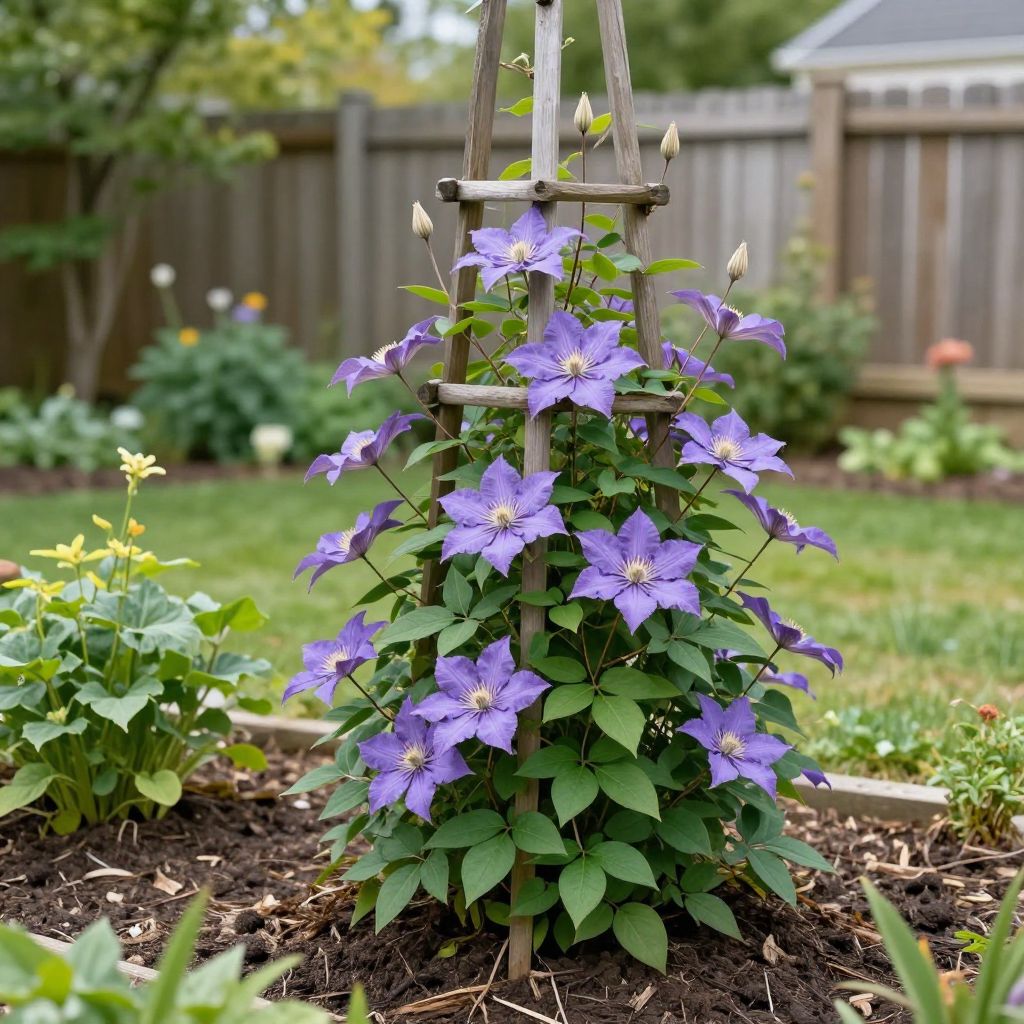
If you’re wondering, “Are clematis perennials?” the short answer is yes—most clematis are perennial climbing plants that return year after year in the right conditions. They may die back in winter depending on the type and your climate, but the root system remains alive and will usually resprout in spring.
That said, clematis are not all the same. Their pruning group, bloom time, and winter behavior can vary, so understanding the kind you’re growing helps you keep it healthy, flowering well, and coming back reliably.
Are clematis perennials?
Yes, clematis are generally perennial vines, meaning they live for multiple years and regrow from established roots each season. Most garden clematis are hardy woody or semi-woody climbers that return annually, though some may die back to the ground in cold weather and reshoot from the base in spring.
What makes clematis come back year after year?
Clematis survive as perennials because their root systems remain alive underground even when top growth looks bare or damaged. In many gardens, the stems are the part most affected by frost, pruning, or stress, while the crown and roots keep the plant going.
Perennial growth habits you may see
- Evergreen or semi-evergreen types keep some foliage in mild climates.
- Herbaceous clematis die back completely in winter and regrow from the base.
- Large-flowered garden clematis often lose leaves in cold seasons but return from woody stems or buds.
So if your clematis looks dead in late winter, don’t rush to remove it. Wait for spring warmth and check for new buds near the base before deciding it has failed.
How to grow clematis as a long-lived perennial
Clematis usually perform best when their roots stay cool, their tops get enough sun, and the soil drains well. A healthy planting site is the biggest factor in whether your plant thrives for many years.
Best planting conditions
- Sunlight: Most clematis flower best with at least 6 hours of sun, though many appreciate afternoon shade in hot climates.
- Soil: Rich, moisture-retentive soil that drains freely is ideal.
- pH: Slightly alkaline to neutral soil often works well, but clematis are more sensitive to drainage and root health than to exact pH.
- Support: Provide a trellis, fence, obelisk, or other structure for climbing types.
A good rule is “sun on top, shade at the roots.” You can achieve this by mulching the base, planting low-growing companions nearby, or shading the root zone with stones or groundcovers.
Planting tips for stronger perennial growth
- Dig a hole wider than the root ball so roots can spread easily.
- Mix in compost if your soil is poor, but avoid making the planting hole overly rich and soggy.
- Set the plant so the crown is slightly deeper than it was in the pot, especially in colder areas.
- Water thoroughly after planting to settle the soil.
- Mulch around the base, keeping mulch a little away from the stems.
Deep planting can help protect the crown and encourage strong regrowth, especially if a clematis dies back in winter or suffers from wilt.
Watering, feeding, and mulching for healthy clematis
Clematis are perennial plants, but they do not like drying out repeatedly. Young plants need more regular moisture than established vines, while mature plants still benefit from consistent watering during dry spells.
Watering guidance
- Water deeply when the top layer of soil begins to dry.
- Focus on steady moisture rather than frequent shallow watering.
- Reduce watering in cool, wet periods when the soil stays damp longer.
Overwatering is just as risky as drought if the soil is heavy or poorly drained. If roots sit in waterlogged soil, clematis may decline, yellow, or fail to flower well.
Feeding and mulch
- Top-dress with compost in spring to improve soil structure and add gentle nutrition.
- Use a light organic mulch to conserve moisture and cool the roots.
- Avoid overfeeding with high-nitrogen fertilizer, which can push leafy growth at the expense of flowers.
If your clematis is growing in a container, it will usually need more attention than one in the ground. Pots dry out faster, so check moisture often and make sure the container has excellent drainage holes.
Pruning clematis without harming a perennial plant
Pruning is one of the most confusing parts of clematis care, but it matters because the wrong cut at the wrong time can remove flower buds. The correct approach depends on the clematis type, not just the season.
Why pruning groups matter
- Group 1: Flowers on old wood; prune lightly after flowering if needed.
- Group 2: Often bloom on both old and new growth; prune lightly in late winter or early spring.
- Group 3: Flower on new growth; cut back more hard in late winter or early spring.
If you are unsure which group your clematis belongs to, observe when it blooms. That timing is often the best clue for how much to prune.
Simple pruning mistakes to avoid
- Cutting all stems to the ground on a variety that flowers on old wood.
- Pruning too late and removing forming buds.
- Leaving tangled, dead, or weak stems that crowd the plant.
When in doubt, start conservatively. Remove dead or damaged stems first, then shape lightly until you know how your plant responds.
Common problems that affect perennial clematis
Although clematis are perennial, they can still struggle with pests, diseases, and environmental stress. Catching problems early helps the plant recover and continue returning each year.
Clematis wilt
Clematis wilt can cause stems to collapse suddenly, often with blackened or shriveled tissue. It is more common on some large-flowered types and can be alarming, but many plants recover from the roots if the crown is healthy.
If wilt appears, cut affected stems down to healthy growth and dispose of the damaged material. Keep the plant evenly watered and avoid stressing it further.
Pests and disease issues
- Aphids may cluster on tender growth and buds.
- Slugs and snails can damage new shoots near the ground.
- Poor airflow can encourage fungal problems on dense growth.
Spacing, pruning, and keeping the base clear of debris all help reduce disease pressure. Healthy soil and even moisture also make clematis more resilient over time.
Signs your perennial clematis is unhappy
- Few or no flowers
- Yellowing leaves from the base upward
- Stems that die back repeatedly in warm weather
- Weak growth after winter
These symptoms often point to drainage problems, too much shade, root stress, or incorrect pruning rather than a plant that is truly annual. In many cases, the fix is environmental, not replacement.
How to propagate clematis
If you want more clematis, propagation is possible, though it takes patience. Because clematis are perennial, you can often propagate from established plants once they are healthy and actively growing.
Common propagation methods
- Layering: Bend a flexible stem to the soil, pin it down, and let it root before separating it from the parent plant.
- Softwood cuttings: Take young stem pieces in active growth and root them in a moist, well-drained medium.
- Division: This is less common and not ideal for every clematis, since many dislike root disturbance.
Layering is often the easiest method for home gardeners because it is low-risk and does not disturb the main plant much.
Using clematis in the landscape
Because clematis are perennial climbers, they are useful for adding height and long-term structure to a garden. They work well on fences, arches, pergolas, obelisks, and even through shrubs or small trees with the right support.
Good companion planting ideas
- Low-growing perennials that shade the root zone
- Roses, if both plants have enough space and light
- Shrubs that provide a living support without overwhelming the vine
Choose companions that won’t crowd the clematis crown. Good airflow around the base helps reduce disease and makes maintenance easier.
Indoor versus outdoor growing
Most clematis are best grown outdoors, where they can receive strong light, seasonal chill, and the space they need to climb. Indoor growing is usually only practical for short-term display or very specific container situations with excellent light.
If you grow clematis in a pot on a patio, balcony, or terrace, treat it as an outdoor perennial container plant. It will need a large container, regular moisture checks, winter protection where necessary, and a sturdy support.
Quick checklist for keeping clematis perennial
- Plant in well-drained soil enriched with compost.
- Give the vine enough sun for flowering.
- Keep roots cool with mulch or companion plants.
- Water deeply during dry spells.
- Prune according to the plant’s flowering group.
- Watch for wilt, aphids, and slug damage.
Conclusion
So, are clematis perennials? Yes—most are long-lived perennial vines that return each year when planted in the right spot and cared for properly. Focus on drainage, light, support, and correct pruning, and your clematis can become a reliable garden feature for many seasons.
If you’re planning your next planting or troubleshooting an established vine, you may also want to read more about pruning flowering vines correctly and choosing the best climbing plants for your garden.