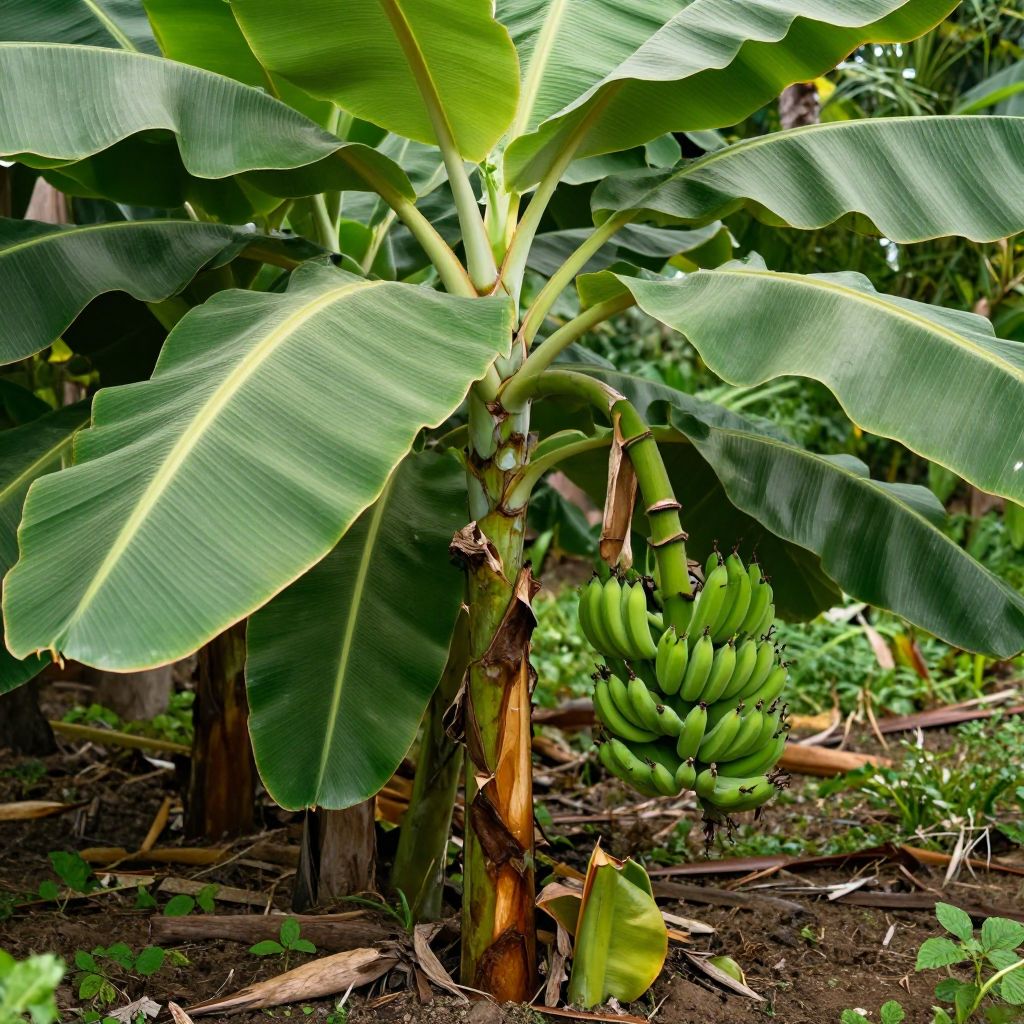
Do banana trees only fruit once? If you’ve watched a banana plant grow tall, flower, and then seem to decline, the answer can be confusing. The short version is yes: the main stem of a banana plant produces fruit one time, then that stem dies back.
But the plant itself usually does not die. Most bananas send up new shoots, called pups or suckers, that replace the old stem and keep the clump producing over time.
Do banana trees only fruit once?
Yes, each individual banana pseudostem fruits only once. After it flowers and the bananas mature, that stem will stop growing and gradually die back. The plant’s underground corm, however, often produces new pups, so the banana clump can keep growing and fruiting for years.
Why a banana “tree” fruits once
Bananas are not true trees. What looks like a trunk is a pseudostem made from tightly wrapped leaf bases. That stem stores energy, pushes up the flower, and supports the fruiting bunch.
Once the bunch has formed and the fruit has developed, the pseudostem has done its job. It will not produce another bunch, so you should expect that stem to senesce and die back after harvest.
What keeps the plant going
The living base of the plant is the corm underground. It sends up new shoots that can replace the old fruiting stem. In a healthy planting, you usually keep one mature fruiting stem, one younger replacement, and one small pup for future growth.
How banana plants produce fruit over time
Bananas are best thought of as a rotating clump rather than a single long-lived trunk. If conditions are warm, moist, and fertile enough, the clump can keep producing new stems that fruit in sequence.
- Mother plant: the stem that is currently fruiting or has already fruited.
- Daughter plant: a stronger pup that will replace the mother stem.
- Granddaughter plant: a younger pup kept for the next cycle.
This cycle is why banana growers often remove extra pups and keep only a few well-placed shoots. Too many stems compete for light, water, and nutrients, which can reduce bunch size and plant vigor.
What happens after the banana bunch is harvested
After harvest, the fruiting stem will not produce again. You can cut it down once the bunch is removed and the stem begins to yellow or collapse. The cut stem can be chopped and left as mulch if disease is not present.
Do not remove all the green growth around it. Leave healthy pups in place so the clump can continue. If you have more than one banana stem in a small space, thin them carefully rather than letting the clump become overcrowded.
Simple post-harvest cleanup
- Cut the harvested pseudostem near ground level.
- Remove any rotting or heavily damaged tissue.
- Keep one strong replacement pup and, if needed, one smaller backup pup.
- Mulch around the base, but keep mulch a few inches away from the crown.
Growing conditions that help banana plants fruit well
Bananas need steady warmth, moisture, and rich soil to build enough energy for fruiting. If the plant is stressed, it may take much longer to flower or may produce a small bunch.
Sunlight
Most bananas grow best in full sun, though very hot climates may benefit from light afternoon shade. Indirect light indoors is usually not enough for fruiting unless you have a very bright conservatory or greenhouse.
Soil and drainage
Bananas like fertile, moisture-retentive soil that still drains well. Heavy, waterlogged ground can rot the corm and roots, while very sandy soil may dry too quickly unless amended with compost and mulch.
If your soil is poor, mix in plenty of well-rotted compost before planting. Good organic matter helps hold moisture and feeds the plant as it grows.
Watering
Bananas use a lot of water, especially during active growth and fruit development. Keep soil evenly moist, but never soggy. In cooler weather or slow growth periods, reduce watering so the roots do not stay wet for long stretches.
A simple rule is to water when the top layer of soil starts to dry, then soak deeply. Container-grown bananas usually need more frequent checks than in-ground plants.
Feeding
Bananas are heavy feeders. Compost, aged manure, and balanced organic fertilizers can support strong leaf growth and bunch development, but avoid overfeeding with nitrogen alone. Too much nitrogen can give you lush leaves and weak fruiting.
How to encourage a banana plant to fruit again through new shoots
You cannot make the same stem fruit twice, but you can manage the clump so new stems replace it efficiently. The goal is to keep the plant healthy enough to cycle from one fruiting stem to the next.
Choose the right pups
Not every sucker should be kept. The best replacement is usually a strong, upright pup with a healthy base. Very small or weak shoots can be removed so the plant’s energy goes into one or two good stems.
- Keep one strong replacement pup close to the mother stem.
- Leave a second smaller pup only if you want a backup.
- Remove crowded, damaged, or far-off shoots.
Support the plant during fruiting
When a bunch forms, the plant needs consistent moisture and nutrition. Dry spells, poor soil, or root disturbance can reduce fruit quality. In windy areas, staking may help prevent the heavy bunch from snapping the pseudostem.
Container growing vs. in-ground growing
Bananas can be grown in large containers, but potted plants dry out and run out of nutrients faster than garden plants. If you are growing one in a pot, expect more frequent watering, feeding, and repotting.
Container tips
- Use a large pot with drainage holes.
- Choose a rich, well-draining potting mix with compost added.
- Water when the top inch or two of mix dries.
- Repot or divide when roots crowd the container.
In the ground, bananas usually grow larger and recover more quickly from stress. In pots, they may still fruit, but the plant’s size and yield are often more limited by root space and light.
Common problems that delay fruiting
If your banana plant keeps growing leaves but never flowers, the issue is often environmental rather than the plant’s age alone. Bananas need enough time, heat, and stored energy before they can bloom.
Common causes
- Too little sun — the plant stays leafy and weak.
- Cold temperatures — growth slows or stalls.
- Poor soil fertility — the plant cannot build reserves.
- Overcrowding — too many pups compete for resources.
- Root stress — from waterlogging, drought, or container crowding.
What to do
Improve light, enrich the soil, thin extra pups, and keep watering consistent. If you are in a climate with cool seasons, understand that banana growth may pause for part of the year and fruiting may take longer than expected.
Pests and diseases to watch for
Healthy banana plants are more likely to fruit well and replace themselves with strong pups. Watch for pests and diseases that weaken leaves, stems, or roots.
Common issues
- Aphids and mites: can stress new growth.
- Banana weevil: may damage the corm and pseudostem in some regions.
- Fungal leaf spots: reduce leaf function and slow growth.
- Root rot: often linked to poor drainage or overwatering.
Remove badly damaged leaves, keep the area clean, and avoid letting water stand around the base. If disease is suspected, do not compost infected material unless you know your compost system gets hot enough to break it down safely.
Propagation: how banana plants keep producing
Most home gardeners propagate bananas from pups rather than seed. This is the easiest way to keep a productive clump going after the original fruiting stem dies back.
Dividing pups
Wait until a pup is large enough to stand on its own and has some roots attached. Separate it carefully with a clean, sharp tool if needed, then replant in rich, moist soil.
Water the new division well and protect it from harsh sun or wind until it settles in. A newly planted pup may take time to establish before it starts vigorous growth.
Practical mistakes to avoid
- Expecting one stem to fruit more than once.
- Leaving too many pups in a small space.
- Letting the soil dry out completely for long periods.
- Planting in heavy, poorly drained ground without improvement.
- Removing all new shoots after harvest and losing the next crop cycle.
Bottom line
So, do banana trees only fruit once? Yes, each stem fruits one time, but the plant usually keeps going by producing new shoots. If you manage the clump well with sun, moisture, rich soil, and sensible thinning, you can keep bananas productive for a long time.
If you want to improve your banana patch next, read more about banana plant care basics and using compost to build better garden soil.