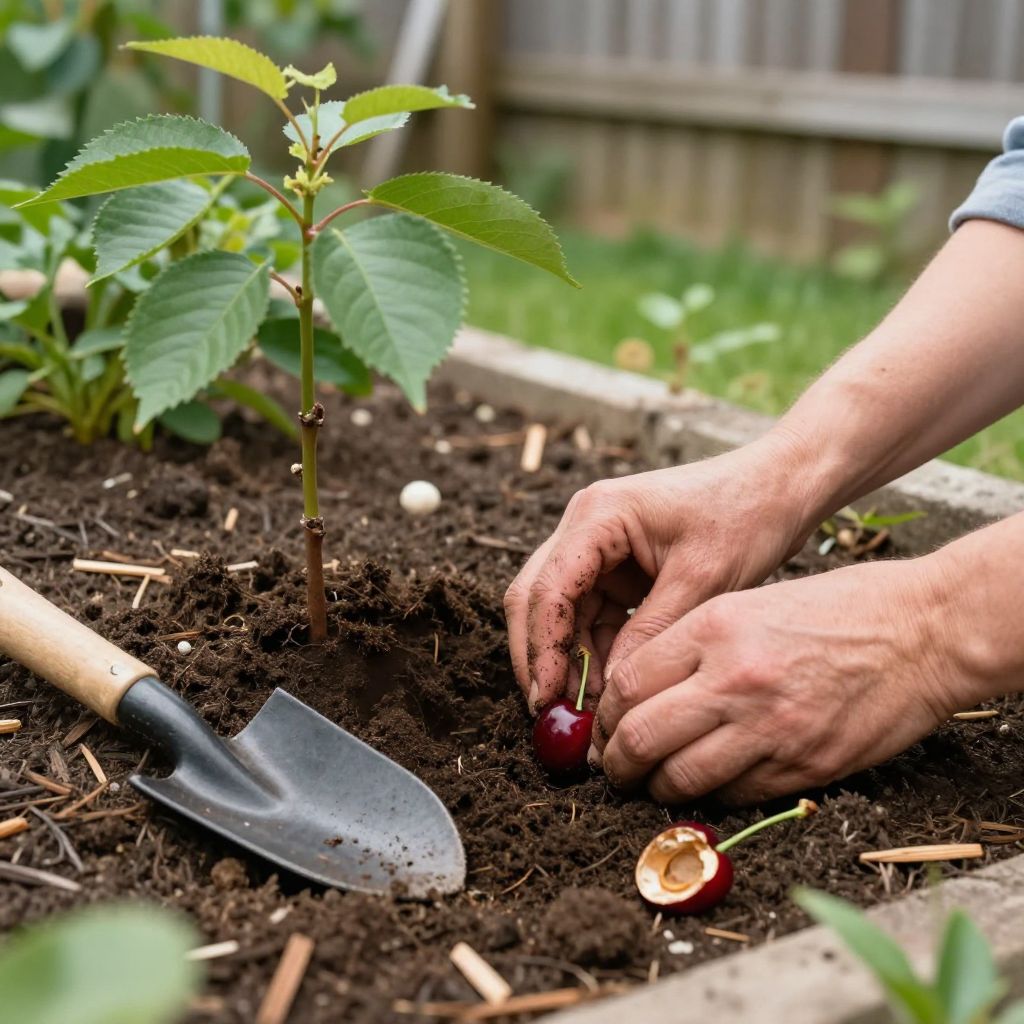
Can you grow a cherry tree from a pit? Yes, you can, and it can be a rewarding project for patient gardeners. The result is not a guaranteed copy of the parent tree, though, so the fruit quality, size, and ripening time may differ from the cherry you ate.
If you want the best chance of success, treat the pit as a seed that needs cleaning, cold treatment, and careful planting. With the right conditions, you can grow a healthy cherry seedling and eventually a tree, but it may take several years before it flowers or fruits.
Can you grow a cherry tree from a pit?
Yes. A cherry pit can germinate into a cherry seedling if it is cleaned, given a cold, moist period, and planted in well-drained soil. Keep in mind that seed-grown cherry trees are genetically variable, so the fruit may not match the original cherry, and some trees may never produce worthwhile fruit.
How cherry pits germinate
Cherry pits contain a seed inside a hard shell. In nature, winter cold breaks dormancy, which is why many pits need a period of chilling before they sprout. Without that cold period, germination is often slow, uneven, or unsuccessful.
Why cold stratification matters
Most cherry seeds need cold, moist stratification to wake up. This mimics winter and tells the seed it is safe to germinate when conditions improve in spring.
Some cherries are easier to sprout than others, but the process is similar for sweet cherries and sour cherries. The biggest difference is not the sprouting method—it is what happens later, because seed-grown trees are unpredictable.
How to grow a cherry tree from a pit
Start with fresh pits from ripe cherries, clean them thoroughly, cold-stratify them, then plant them in a pot or prepared outdoor bed. Use a free-draining growing medium, keep the seed evenly moist, and give the young plant plenty of light once it emerges.
- Collect pits from ripe fruit. Choose cherries that are fully ripe and healthy. Avoid pits from fruit that is moldy or damaged.
- Clean off all fruit flesh. Rinse the pits well and remove every trace of pulp, which can cause mold.
- Dry briefly. Let the pits air-dry for a day or two, not long enough to desiccate them completely.
- Cold-stratify the pits. Place them in a slightly moist medium such as damp peat-free seed mix, vermiculite, or paper towel inside a sealed bag or container.
- Refrigerate. Keep them cold, not frozen, for several weeks. Check occasionally for mold and for signs of sprouting.
- Plant when roots appear or after chilling. Sow the pit about 1 to 2 inches deep in a pot with drainage holes, or in a protected outdoor spot if your climate suits it.
- Keep evenly moist. Do not let the mix dry out completely, but avoid soggy conditions.
- Move seedlings into stronger light. Once the seedling emerges, give it full sun or the brightest possible site.
Cold-stratifying cherry pits indoors
For most home gardeners, refrigeration is the simplest method. Use a labeled bag or container so you can track the pits, and check them every week or two for mold, excess moisture, or early sprouting.
If mold appears, rinse the pits and replace the medium. If the medium is dripping wet, it is too wet; it should feel like a wrung-out sponge.
Planting cherry pits in pots
Pots are useful because they let you control moisture and protect the seedling from pests. Choose a deep container with drainage holes and use a loose seed-starting mix or a light potting mix blended with grit or perlite for drainage.
After planting, place the pot where temperatures are cool but not freezing until germination begins. Once the seedling has emerged, move it to bright light and gradually acclimate it to outdoor conditions if you plan to grow it outside.
Best growing conditions for cherry seedlings
Cherry trees need full sun, well-drained soil, and enough space to develop a healthy root system. Seedlings are more sensitive than established trees, so consistent moisture and protection from extremes matter in the first year.
- Sunlight: Aim for at least 6 to 8 hours of direct sun once the tree is outdoors.
- Soil: Cherry trees prefer fertile, well-drained soil rather than heavy, waterlogged ground.
- Drainage: Poor drainage is one of the fastest ways to lose a young cherry tree.
- Airflow: Good air movement helps reduce fungal disease pressure.
- Protection: Young seedlings benefit from shelter from strong wind, rabbits, deer, and lawn equipment.
Soil and compost tips
Work in a modest amount of compost if your soil is poor, but do not overdo it. Rich, loose soil is helpful; dense, constantly wet soil is not. If your native soil is heavy clay, consider planting in a raised bed or mound to improve drainage.
For container growing, use a high-quality potting mix rather than garden soil. Garden soil in pots compacts easily and can suffocate roots.
Common problems when growing cherry trees from pits
Seed-grown cherry trees are often slower and less predictable than grafted trees. The most common issues are poor germination, mold during stratification, weak growth, and later disappointment with fruit quality.
Pit does not sprout
This often happens when the seed did not get enough cold treatment, dried out too much, or was not viable to begin with. Some pits simply are not viable, even when they look fine.
To improve your odds, start with several pits rather than just one. That way, you are not relying on a single seed.
Mold or rot develops
Mold usually means too much moisture or poor sanitation. Clean the pits thoroughly before chilling, and use a slightly damp—not wet—medium. If a pit smells rotten or turns soft, discard it.
Seedling grows weak and leggy
Low light is the usual cause. Move the seedling to stronger light as soon as it emerges. If it is indoors, a bright south-facing window or grow light can help prevent stretched, weak stems.
Leaves yellow or wilt
Yellowing can come from overwatering, poor drainage, nutrient imbalance, or root stress. Check the potting mix first. If it stays wet for too long, let it dry slightly and improve drainage before adding fertilizer.
What to expect from a cherry tree grown from seed
A cherry tree grown from a pit may take several years to mature, and the fruit may be different from the parent cherry. Some seedlings produce small, tart, or poor-quality fruit, while others may be ornamental but not especially productive.
This is why many gardeners grow cherry trees from pits as a fun experiment, then later graft or buy a named variety if they want dependable fruit. If your goal is reliable harvests, a grafted tree is usually the better choice.
Will it be sweet cherry or sour cherry?
You cannot count on the seedling to match the fruit you ate. If the original cherry was from a named cultivar, the seedling will not be identical. That is one reason the fruit may differ in sweetness, size, or ripening time.
Pruning and long-term care
Once your seedling is established, treat it like a young fruit tree. Light pruning helps shape the tree, improve structure, and remove damaged growth, but avoid heavy pruning on a very young plant.
- Remove dead, broken, or crossing branches.
- Encourage a strong central leader or an open structure, depending on the tree’s natural form and your training style.
- Keep grass and weeds away from the trunk.
- Mulch lightly, but keep mulch a few inches away from the stem.
- Water deeply during dry spells, especially in the first few years.
Use clean, sharp pruners for small branches and a pruning saw for larger wood. Sanitize tools if you are cutting diseased tissue to avoid spreading problems.
Pests and diseases to watch for
Cherry trees can be affected by aphids, caterpillars, scale insects, leaf spot, canker, brown rot, and other fungal issues depending on climate and local pressure. Seedlings are not immune, so early observation matters.
Simple prevention steps
- Keep the tree in full sun with good airflow.
- Avoid overhead watering late in the day.
- Remove fallen leaves and rotting fruit.
- Do not let mulch touch the trunk.
- Inspect leaves and stems regularly for pests or spotting.
If you notice serious disease, identify the problem before treating it. Many cherry issues are easier to manage when caught early, especially in wet or humid climates.
Should you grow a cherry tree from a pit or buy a tree?
If you enjoy experimenting, growing from a pit is a satisfying project. If you want dependable fruit, earlier harvests, and a known tree size or disease resistance, a grafted nursery tree is usually the smarter choice.
- Grow from a pit if you want a low-cost experiment and do not mind surprises.
- Buy a grafted tree if you want predictable fruit and growth habit.
- Use both if you want to learn while also planting a reliable fruiting tree.
Conclusion
So, can you grow a cherry tree from a pit? Yes, and the process is straightforward if you clean the pit, cold-stratify it, and give the seedling sun, drainage, and steady care. Start with several pits, be patient, and remember that the tree you grow may be unique.
If you want to keep building your fruit-tree skills, you may also want to read more about fruit tree pruning basics and how to improve garden soil drainage.