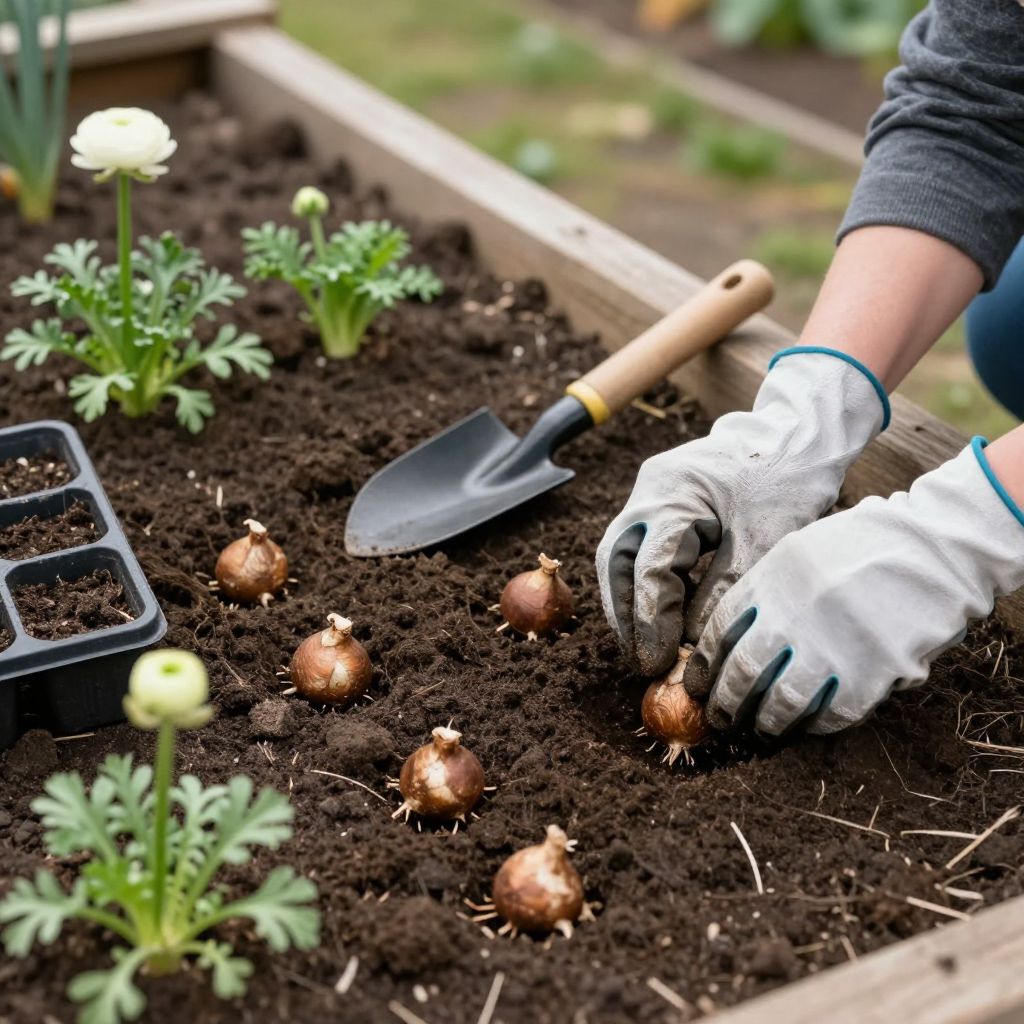
Wondering when to plant ranunculus bulbs so they bloom well and don’t rot before they start? The timing matters a lot with ranunculus because these corms prefer cool conditions, excellent drainage, and a long, mild growing season.
In most climates, plant ranunculus corms in fall for spring blooms, or in late winter to early spring in colder areas once hard frost has passed. The best timing depends on your local temperatures: ranunculus grow best when they can root in cool soil and then flower before hot weather arrives.
When To Plant Ranunculus Bulbs?
Plant ranunculus corms when the soil is cool but workable and the worst cold has eased. In mild climates, that usually means fall planting for spring flowers; in colder regions, plant in late winter or early spring after frost risk drops. The goal is to give them a cool rooting period before heat arrives.
Understanding Ranunculus Corms and Timing
Ranunculus are usually sold as corms, not true bulbs. They store energy for growth, but they need the right temperature and moisture balance to perform well.
If you plant too early in cold, wet soil, the corms may rot. If you plant too late, they may produce fewer flowers before warm weather slows them down.
Best planting window by climate
- Mild-winter climates: Plant in fall, often from early autumn through mid-fall, so roots establish before winter and blooms arrive in spring.
- Cold-winter climates: Start corms indoors or plant outdoors in late winter to early spring after severe frost danger passes.
- Warm climates with short cool seasons: Plant during the coolest part of the year so plants can flower before temperatures climb.
Because local weather varies, use soil temperature and frost risk as your guide rather than a fixed calendar date.
How To Plant Ranunculus Corms for the Best Results
Ranunculus reward careful planting. Pre-soaking, proper spacing, and good drainage make a big difference in whether they sprout strongly.
- Soak the corms first. Place them in room-temperature water for a few hours, usually 3 to 4 hours, until they plump up. Do not soak them overnight.
- Prepare loose, well-drained soil. Mix in compost if your soil is poor, but avoid heavy, waterlogged beds.
- Plant with the claws down. The corm has a small “octopus-like” shape. The pointed or clawed side should face downward.
- Set the depth correctly. Plant about 1 to 2 inches deep in most gardens.
- Space them well. Leave roughly 4 to 6 inches between corms so air can move around the plants.
- Water lightly after planting. Moisten the soil, but do not saturate it.
If you are planting in containers, choose pots with drainage holes and use a high-quality potting mix that drains quickly. Containers warm and dry faster than garden beds, so they can be a good choice in wet climates.
Soil, Sunlight, and Drainage Needs
Ranunculus do best in full sun in cool climates, though they appreciate light afternoon shade where spring turns warm quickly. They need rich but airy soil, not heavy clay that stays wet.
Ideal growing conditions
- Sun: Full sun is best, with some protection from intense afternoon heat if needed.
- Soil: Fertile, loose, and well-drained soil.
- pH: Slightly acidic to neutral soil is generally suitable.
- Drainage: Essential. Standing water is one of the quickest ways to lose corms.
If your soil is heavy, plant in raised beds or mound the planting area to improve drainage. A little compost helps with fertility, but too much rich, wet organic matter can hold excess moisture.
Should You Plant Ranunculus in Fall or Spring?
The answer depends on your winters. Fall planting usually gives the strongest spring display in mild climates because the corms can root slowly in cool soil. Spring planting works better where winter freezes would damage newly planted corms.
Fall planting advantages
- Better root development before bloom time
- Earlier spring flowers
- Often stronger, taller stems in mild regions
Spring planting advantages
- Safer in freezing climates
- Less risk of winter rot
- Better control if you start corms indoors first
In very cold regions, many gardeners pre-sprout ranunculus in trays or pots and transplant them once outdoor conditions improve. That can give you a head start without exposing the corms to hard freezes.
Watering Ranunculus the Right Way
Ranunculus like consistent moisture while they are actively growing, but they do not tolerate soggy soil. The trick is to keep the root zone evenly moist without flooding it.
After planting, water lightly and then check soil moisture regularly. If the top inch feels dry and the weather is mild, water again. In cool, rainy weather, you may not need much supplemental water at all.
Overwatering is one of the most common mistakes with ranunculus. If stems collapse, corms fail to sprout, or the planting site smells sour, drainage is likely the problem.
Growing Ranunculus in Containers
Containers are a smart option if your garden soil is heavy or you want to move plants to protect them from extreme weather. They also let you control drainage more easily.
- Use a pot at least 8 to 10 inches deep for a small group of corms.
- Choose a free-draining potting mix, not garden soil.
- Make sure the container has several drainage holes.
- Water when the top layer of mix begins to dry.
Container-grown ranunculus may need more frequent watering than in-ground plants, especially in windy or sunny spots. Check them often, but never let the pot sit in a saucer of water.
Common Problems and How To Avoid Them
Most ranunculus problems trace back to timing, moisture, or soil conditions. Catching issues early can save the planting.
1. Corm rot
This usually happens when corms sit in wet soil before they root. Prevent it by planting in well-drained ground, avoiding overwatering, and waiting for suitable conditions.
2. Weak or no sprouting
Possible causes include old corms, planting too deeply, or soil that is too cold and wet. Fresh corms and proper pre-soaking help improve success.
3. Short stems and fewer flowers
Too little sun, warm weather, or overcrowding can reduce bloom quality. Give plants enough light and space, and avoid planting too late in the season.
4. Fungal issues
Good airflow and careful watering help prevent mildew and other fungal problems. Remove any damaged foliage promptly and avoid wetting the leaves late in the day.
Caring for Ranunculus as They Grow
Once growth begins, keep the plants evenly watered and watch for rapid changes in weather. Cool temperatures support the best flowering, while sudden heat can shorten the bloom period.
If you feed plants, use a light, balanced approach rather than overdoing it. Excess nitrogen can encourage leafy growth at the expense of flowers.
- Remove weeds so they do not compete for moisture and nutrients.
- Stake taller stems if your site is windy.
- Deadhead spent blooms to keep the display neat.
- Cut flowers regularly if you want bouquets; this can also encourage more stems.
When To Cut, Lift, or Leave the Corms
After flowering, ranunculus naturally begin to decline as temperatures rise. In many climates, they are treated as cool-season annuals.
If you want to save the corms, wait until the foliage yellows and dies back, then lift them carefully and dry them in a cool, airy place. Store them in a dry medium such as paper or dry peat substitute if appropriate for your storage method. In mild regions, some gardeners leave them in the ground, but success depends on drainage and summer heat.
Practical Planting Tips for Better Blooms
A few small adjustments can make a big difference in flower quality and plant health.
- Plant in a spot that gets morning sun and good air movement.
- Avoid low areas where water collects after rain.
- Use fresh corms from a reliable source.
- Do not plant into frozen or saturated soil.
- Mark the planting area so you do not disturb corms while weeding.
If you are unsure about timing, start with a small batch. That lets you learn how your local climate affects sprouting and bloom time before planting a larger display.
Conclusion
The best time to plant ranunculus bulbs, or more accurately corms, is when the weather is cool, the soil drains well, and the risk of damaging frost or heat is low for your area. In mild climates, fall planting is often ideal; in colder regions, wait for late winter or early spring, or start them indoors.
For more seasonal bulb advice and flower-growing guidance, you may also want to read related gardening articles on planting spring-flowering bulbs and caring for cut-flower plants.