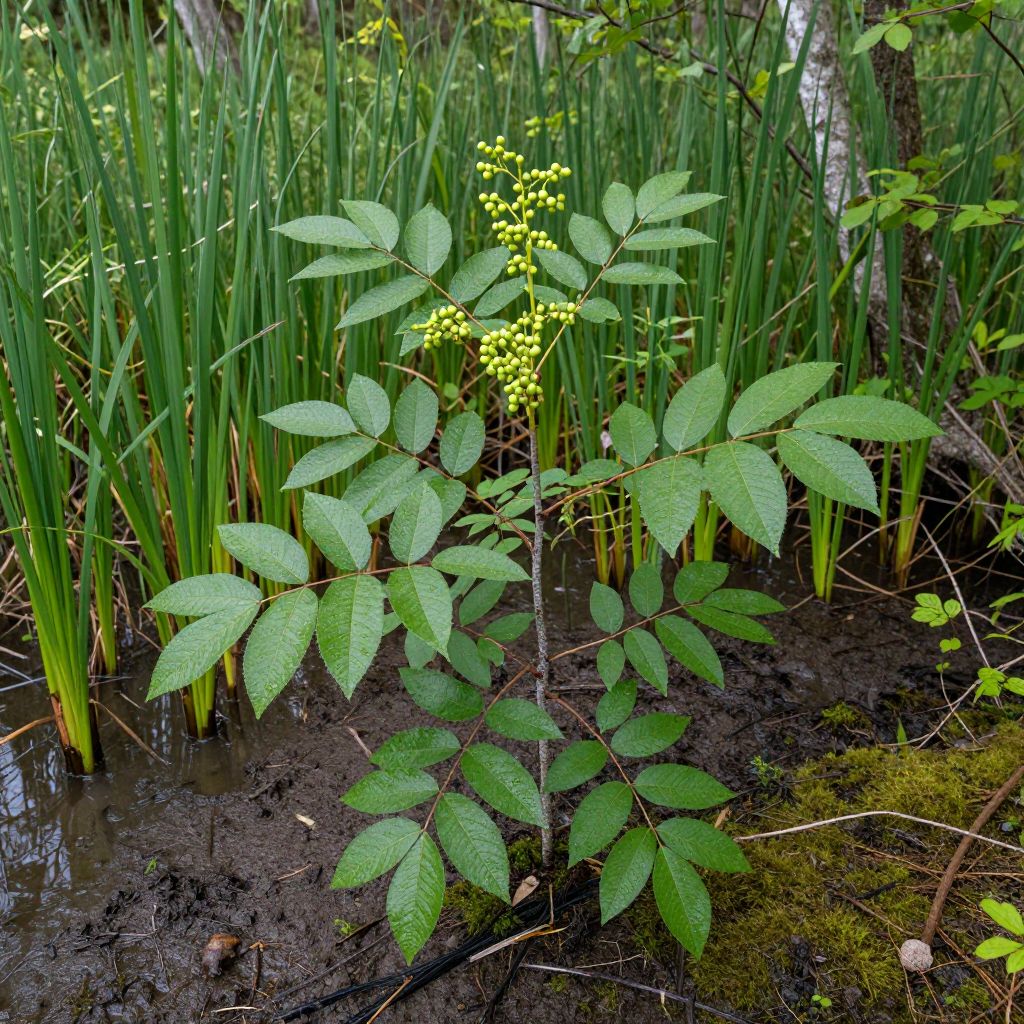
If you’re asking, “Where does poison sumac grow?” the short answer is: in very wet, acidic places, usually in swamps, bogs, marsh edges, and floodplains. It is not a typical garden plant, but knowing its preferred habitat helps you identify and avoid it on your property or while landscaping near natural areas.
Poison sumac (Toxicodendron vernix) is a native woody shrub or small tree that thrives where the soil stays saturated for long periods. It is most often found in the eastern United States, especially in low, poorly drained sites that many ornamental plants would struggle to tolerate.
Where does poison sumac grow?
Poison sumac grows in wetland habitats with consistently moist to saturated soil, especially swamps, bogs, marshes, wet woods, and stream or pond margins. It prefers acidic, low-oxygen soils and partial sun to light shade, and it is most common in the eastern U.S. rather than dry upland gardens.
Best habitats and growing conditions
Poison sumac is adapted to places where water lingers after rain or seasonal flooding. If your site drains slowly or stays soggy for days, that is the kind of environment where this plant may appear naturally.
Typical locations
- Swamps and swamp forests
- Bogs and peaty wetlands
- Marsh edges and wet thickets
- Floodplains and low riparian areas
- Roadside ditches or depressions that hold water
- Shallow margins of ponds, streams, and slow-moving drains
Soil and moisture preferences
Poison sumac does best in constantly moist to wet, acidic soil. It tolerates poorly aerated ground better than many shrubs, which is why it often occupies areas with standing water or heavy seasonal saturation.
It is not a plant that needs rich garden soil or regular fertilizing. In fact, improving a naturally wet habitat with compost or extra irrigation can encourage unwanted growth if it is already established nearby.
Light conditions
You will often find poison sumac in partial shade, but it can also grow in open wet areas with more sunlight. Light levels vary by site, so moisture is usually the more important clue than sun exposure.
How to identify poison sumac in the landscape
Correct identification matters because poison sumac is hazardous to touch. The plant contains urushiol, the same skin-irritating oil found in poison ivy and poison oak, and contact can cause a severe rash in sensitive people.
Key identifying features
- Compound leaves with multiple leaflets arranged along a central stem
- Leaflets that are smooth-edged or only slightly toothed near the tip
- Reddish stems or leaf stalks on many plants
- Clusters of pale berries, often hanging in loose bunches
- A shrub-like or small tree form in wet habitats
Do not rely on one feature alone. Look at the whole plant and the habitat together. Wetland location is one of the strongest clues that you may be dealing with poison sumac rather than a harmless sumac species.
Common look-alikes
Several non-poisonous sumacs can grow in similar regions, and some have similar leaf structure. The safest approach is to avoid handling any unfamiliar sumac-like plant growing in wet ground unless you are completely sure of the identification.
Should you try to grow poison sumac?
For home gardeners, the answer is almost always no. Poison sumac is not an ornamental plant you should introduce into a yard, and it creates a serious safety risk for people, pets, and anyone doing maintenance nearby.
If it appears naturally on your property, the goal is usually management or removal, not cultivation. In many cases, the best long-term strategy is to leave it undisturbed in a remote wet area if it is away from paths, play spaces, and work zones.
What to do if poison sumac is growing on your property
If you suspect poison sumac is present, do not brush against it, mow through it, or burn it. Urushiol can spread on tools, clothing, and smoke, making exposure much worse.
Safe first steps
- Keep people and pets away from the area.
- Mark the site so no one accidentally enters it.
- Confirm identification from a safe distance using a field guide or local extension resource.
- Plan removal only if the plant is in a high-traffic or high-risk location.
- Wear protective clothing and gloves if you must work nearby.
If the plant is large, dense, or growing in difficult wet ground, hiring a professional with experience in hazardous plant removal is often the safest option.
Removal cautions
- Never burn poison sumac debris.
- Do not compost it unless you are certain all contaminated material will be handled safely and fully contained.
- Clean tools, boots, and gloves after use.
- Wash skin promptly if exposure may have occurred.
Important: Even dead stems and roots can still carry urushiol for a long time. Treat all parts of the plant as potentially irritating.
Why poison sumac favors wet sites
Poison sumac is a wetland specialist. Its root system and growth habits are suited to soils with low oxygen and frequent waterlogging, conditions that stress many other woody plants.
That specialization explains why you usually do not see it in ordinary garden beds, lawns, or well-drained foundation plantings. If a site is dry, sunny, and regularly cultivated, poison sumac is much less likely to establish there.
Seasonal patterns to watch for
- Spring: New growth appears in wet thickets and along flooded edges.
- Summer: Dense foliage makes identification easier from a distance.
- Late summer to fall: Berries may be visible, and foliage can change color.
- Winter: Leafless stems are harder to identify, so habitat clues become especially important.
How to reduce the chance of poison sumac spreading near gardens
You cannot change a wetland into a dry border without major site alteration, but you can make your garden less inviting to unwanted woody growth around the edges.
Practical prevention tips
- Keep garden beds out of chronically wet low spots when possible.
- Improve drainage in ornamental areas with grading or raised beds.
- Maintain clear, mowed buffers between landscaped spaces and wild wet areas.
- Monitor ditch lines, pond margins, and fence lines after rainy seasons.
- Remove small seedlings early only if you can do so safely and confidently.
If you are landscaping near a wet area, choose plants that suit moisture rather than trying to force a dry-garden design into a swampy site. That reduces maintenance and helps you avoid accidental contact with hazardous native shrubs.
Common mistakes to avoid
Most problems with poison sumac come from misidentification or unsafe handling, not from gardening care. Avoid these common errors:
- Touching unknown wetland shrubs bare-handed.
- Burning brush piles that may contain poison sumac.
- Using the same gloves or tools on other plants without cleaning them.
- Assuming all sumacs are poisonous.
- Trying to “trim it back” without a removal plan.
If you are unsure, stop and verify before you work. A cautious pause is far better than a painful rash or contaminated tools spread across the rest of your garden.
When to get help
Call a local extension office, arborist, or land management professional if the plant is large, growing in standing water, or mixed into a dense thicket you cannot safely access. Professional help is also wise if the area is near a path, children’s play space, or shared property line.
For smaller suspected plants, a clear photo from a safe distance can help with identification before you decide whether removal is necessary.
Conclusion
So, where does poison sumac grow? Look for it in wet, acidic, poorly drained places such as swamps, bogs, marshes, floodplains, and pond edges, especially in the eastern United States. If you find it on your property, keep your distance, confirm the identification, and manage it safely rather than treating it like a normal landscape shrub.
For more help identifying risky plants and managing tricky sites, you may also want to read related gardening guides on wetland shrubs and safe plant identification.