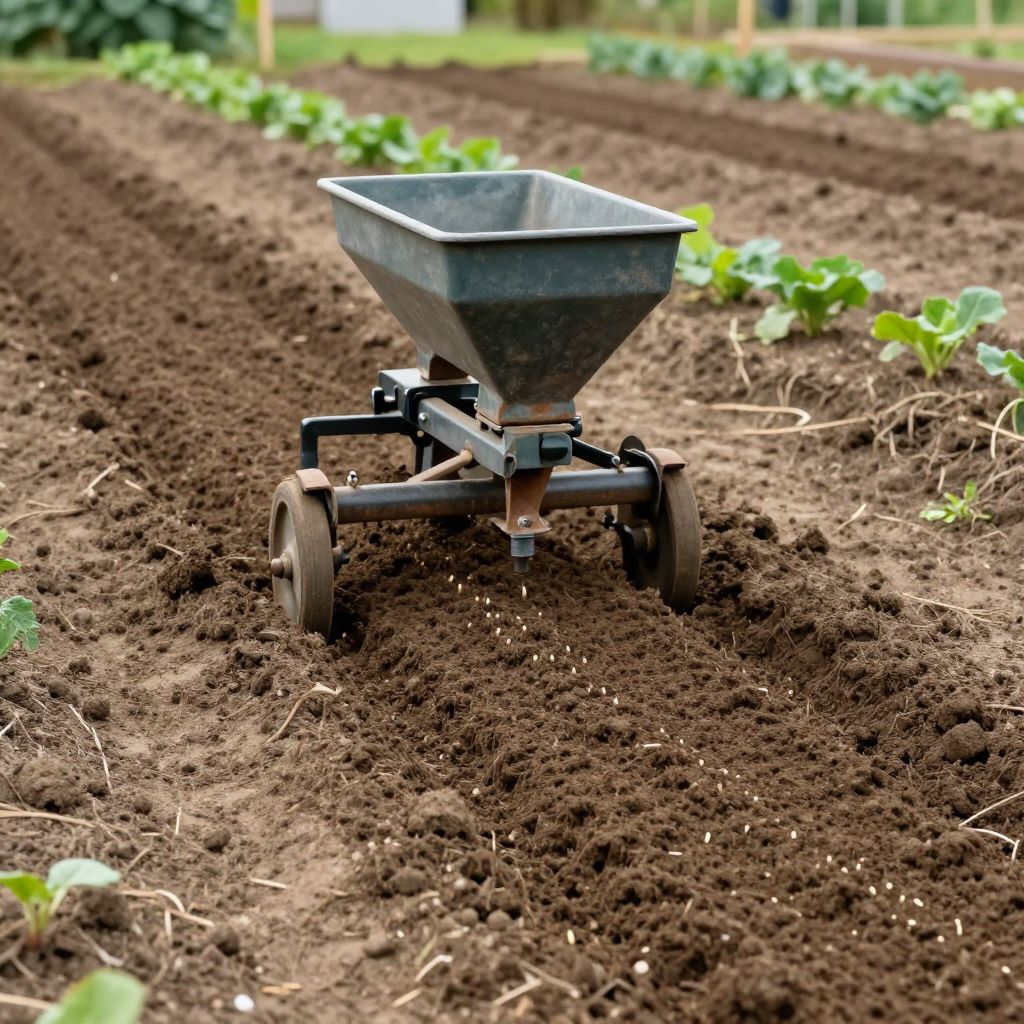
What is a seed drill, and how does it help in the garden? If you’ve seen neat rows of seedlings and wondered how growers get such even spacing, a seed drill is often the tool behind it. It places seeds at a controlled depth and distance, which improves germination consistency and makes later thinning easier.
For home gardeners, that matters whether you’re sowing vegetables, herbs, or cover crops. Understanding how a seed drill works can help you choose the right tool, avoid common sowing mistakes, and get better results from direct seeding.
What Is A Seed Drill?
A seed drill is a planting tool or machine that opens a shallow furrow, drops seeds at a set depth and spacing, and then covers them with soil. It helps create uniform rows, reduces wasted seed, and improves seed-to-soil contact, which can lead to more even germination.
How a Seed Drill Works
At its simplest, a seed drill does three jobs in one pass: it cuts a groove in the soil, meters out seed, and covers the seed again. Some models are hand-pushed, some attach to a walk-behind tractor, and larger versions are pulled behind a tractor.
Basic parts of a seed drill
- Seed hopper or container: holds the seed.
- Metering mechanism: controls how many seeds drop.
- Furrow opener: makes the planting groove.
- Covering device: closes soil over the seed.
- Depth control: helps keep planting depth consistent.
In a garden setting, the main advantage is precision. Instead of broadcasting seed by hand and thinning heavily later, you can place seed in a more controlled row.
Seed Drill vs. Other Sowing Methods
Not every garden needs a seed drill, but it can be very useful for direct sowing. The right method depends on the crop, the size of your space, and how even you want the spacing to be.
Broadcast sowing
Broadcasting means scattering seed over the soil surface. It works well for some flowers, greens, and cover crops, but it usually leads to uneven spacing and more thinning.
Hand sowing in drills
You can also make shallow rows with a hoe or trowel and sow by hand. This is not a seed drill tool, but it creates a similar row pattern on a smaller scale.
Transplanting
Some crops are started indoors and transplanted later. That method is often better for slow-growing or heat-loving plants, while a seed drill is most useful for crops that germinate well when sown directly outdoors.
When to Use a Seed Drill in the Garden
A seed drill is most helpful when you want straight rows, consistent depth, and efficient sowing over a larger bed or plot. It is especially useful for small grains, legumes, salad greens, and some cover crops, depending on the drill’s settings and seed size.
Good candidates for drill sowing
- Beans and peas
- Carrots and beets, if the drill is precise enough
- Lettuce and other leafy greens
- Radishes
- Cover crops such as clover, oats, or rye
Very tiny seed may be difficult to meter accurately with a basic drill. In that case, hand sowing, seed tape, or mixing seed with dry sand may work better, depending on the crop.
How to Use a Seed Drill Properly
Whether you are using a small garden drill or a larger field-style model, the goal is the same: even seed placement in prepared soil. Good soil preparation matters as much as the tool itself.
- Prepare the bed so the soil is loose, level, and free of large clods, stones, and debris.
- Check soil moisture; it should be moist but not sticky or waterlogged.
- Set the depth according to the crop’s seed size and planting needs.
- Adjust the seed rate so the drill drops an appropriate amount of seed.
- Test on a short section before sowing the full bed.
- Cover and firm lightly so seed has good contact with the soil.
- Water gently if the soil is dry, using a fine spray or light irrigation.
Why test first?
Different seed sizes flow differently. A quick test run helps you catch problems such as clogging, over-seeding, or planting too deep before you waste seed across the whole area.
Soil Conditions That Improve Drill Sowing
A seed drill works best in soil that is reasonably fine-textured and well prepared. Large clods, heavy surface crusting, or uneven beds can interfere with depth control and seed coverage.
- Drainage: Soil should drain well enough that seed does not rot.
- Texture: Fine, crumbly soil helps small seeds settle evenly.
- Organic matter: Compost improves structure, but it should be fully finished and mixed in well.
- Level surface: A fairly even bed helps the drill maintain consistent depth.
If your soil is heavy clay, wait until it is workable and avoid drilling when it is wet. If it is very sandy, make sure the seed bed is firm enough that seed does not dry out too quickly.
Common Mistakes to Avoid
Most seed drill problems come from poor setup or unsuitable soil conditions, not from the tool itself. A few simple checks can save a lot of frustration.
- Planting too deep: Small seed often fails to emerge if buried too far.
- Skipping calibration: Incorrect seed settings can cause overcrowding or bare patches.
- Using rough soil: Clods and stones disrupt spacing and depth.
- Ignoring seed size: One setting does not suit every crop.
- Overwatering after sowing: Saturated soil can rot seed or crust over.
As a general rule, seed should be planted at a depth about two to three times its diameter, though some species need light to germinate and should be barely covered or surface-sown. Always check the crop’s sowing needs before setting the drill.
Troubleshooting Poor Germination After Drill Sowing
If your rows are patchy, the issue may be with the seed drill, the seed, or the growing conditions. Start by checking the simplest causes first.
Possible causes
- Seed was planted too deep or too shallow
- Soil dried out before germination
- Seed was old or stored poorly
- Birds, slugs, or rodents ate the seed
- The drill dropped seed unevenly or clogged
- Soil crust formed after heavy rain or overhead watering
Practical fixes
- Gently scratch the soil surface to break crusting if seedlings are struggling to emerge.
- Reseed thin patches rather than redoing the whole bed.
- Use a light mulch only after seedlings are established, if appropriate for the crop.
- Protect newly sown rows with netting or row cover where birds are a problem.
Maintenance and Care for a Seed Drill
Keeping the tool clean and adjusted helps it work accurately season after season. Soil residue, rust, and worn parts can affect seed flow and depth control.
- Brush off soil after use.
- Dry the tool before storing it.
- Check moving parts for wear or stiffness.
- Lubricate parts only as recommended by the manufacturer.
- Store in a dry place to prevent rust.
If the drill has openings or tubes for seed flow, inspect them before each use. Even a small blockage can change spacing or stop seed delivery altogether.
Is a Seed Drill Worth It for Home Gardeners?
For a small raised bed, a seed drill may be more tool than you need. But if you grow a lot from seed, manage long rows, or want cleaner spacing and less thinning, it can be a useful investment.
For many gardeners, the best approach is to start with simple hand-sowing tools and move up to a seed drill if you find yourself sowing the same crops repeatedly and want more consistency.
Conclusion
A seed drill is a sowing tool that places seed at a controlled depth and spacing, helping you create more even rows and improve germination results. If you want better seed placement, start by preparing a fine, level seed bed, calibrating the drill carefully, and testing it on a short row before sowing the whole area.
If you’d like to compare sowing tools and techniques, you may also find related gardening guides on direct sowing vegetables and preparing a seed bed for germination helpful.