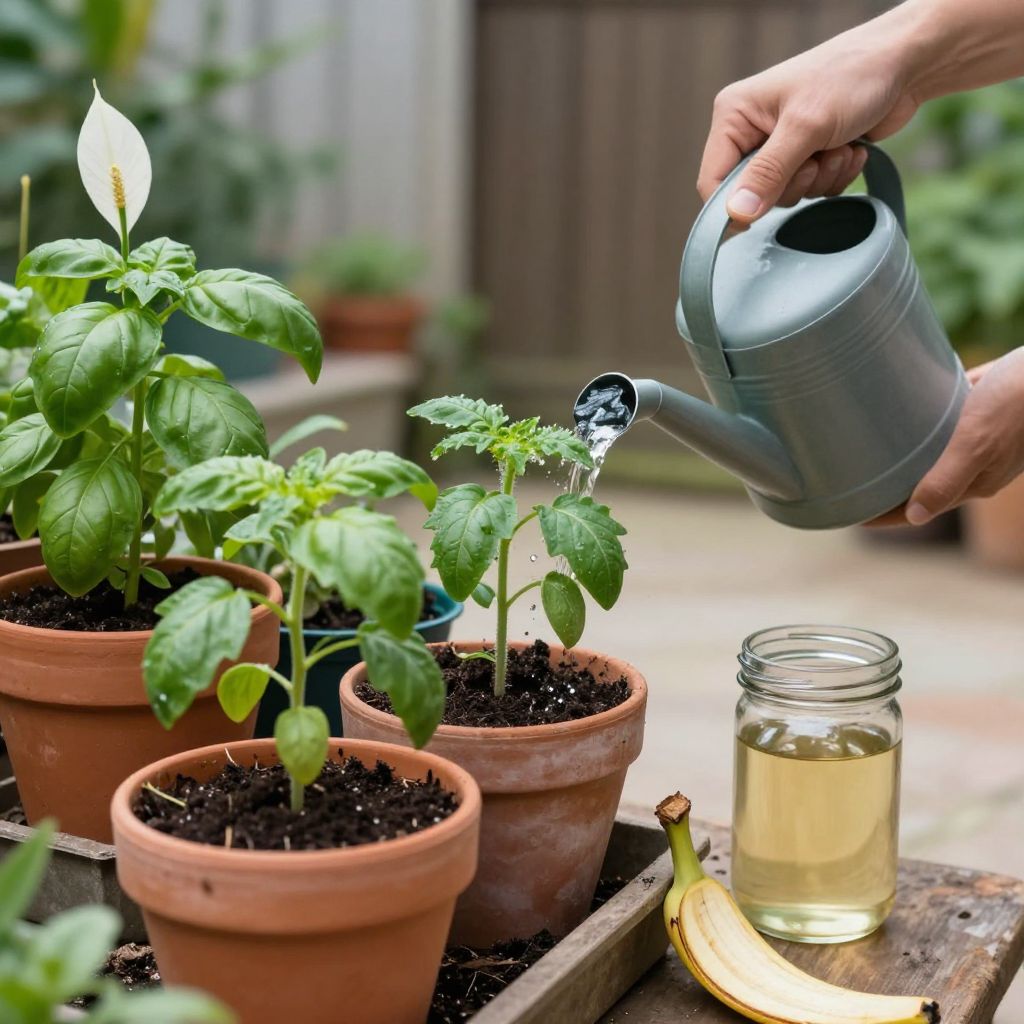
Wondering which plants like banana water and whether it’s actually worth using in your garden? Banana water is a mild homemade liquid made by soaking banana peels in water, and it can offer a small boost of potassium and other trace nutrients.
Used correctly, it may help some hungry, actively growing plants, but it is not a complete fertilizer. The best results come from using it as an occasional supplement for plants that already have good soil, regular watering, and proper light.
Which plants like banana water?
Plants that may benefit most from banana water are fruiting and flowering plants that appreciate extra potassium, such as tomatoes, peppers, roses, flowering annuals, and some houseplants in active growth. It works best as a light supplement, not a replacement for balanced feeding, compost, or good soil.
What banana water can and cannot do
Banana peels contain potassium, plus small amounts of phosphorus, magnesium, and calcium. Those nutrients are useful, but the amount that actually ends up in water is usually modest and inconsistent.
Important: banana water is not a strong fertilizer. If your plant is pale, stunted, or struggling because of poor soil, pests, root problems, or too little light, banana water will not fix the real issue.
Best use cases
- Supporting flowering and fruiting plants during active growth
- Giving container plants a light, occasional nutrient boost
- Using with compost-rich soil as part of a broader care routine
- Helping gardeners reuse kitchen scraps in a simple, low-cost way
When not to rely on it
- As the only fertilizer for heavy feeders
- For seedlings that need a very gentle, balanced start
- On plants with root rot, overwatering, or compacted soil
- On plants already showing nutrient deficiencies without diagnosing the cause
Plants that are most likely to respond well
Vegetable crops
Fruiting vegetables often need more potassium than leafy greens once they start flowering and setting fruit. Banana water can be a mild supplement for:
- Tomatoes
- Peppers
- Eggplants
- Cucumbers
- Squash and zucchini
- Beans and peas during flowering
These crops still need a balanced soil mix and steady moisture. If you grow them in containers, they usually need more frequent feeding than plants in the ground.
Flowering ornamentals
Many flowering plants appreciate a little extra potassium when they are forming buds and blooms. Banana water may be helpful for:
- Roses
- Geraniums
- Petunias
- Marigolds
- Hibiscus
- Orchids, if used very sparingly and only when the plant is otherwise healthy
For orchids and other sensitive houseplants, use caution. Too much organic residue can encourage fungus gnats or sour the potting mix if drainage is poor.
Houseplants and foliage plants
Some houseplants can handle a diluted banana water treatment occasionally, especially during spring and summer growth. Good candidates include:
- Peace lily (Spathiphyllum)
- Philodendron
- Pothos
- Spider plant
- Snake plant, but only rarely and lightly
For foliage plants, the main goal is healthy root growth and stable moisture. If the potting mix stays wet too long, skip banana water and focus on drainage.
Plants that usually do not need banana water
Some plants do not benefit much from banana water, or they may be harmed by extra organic residue in the soil.
- Succulents and cacti: they prefer lean, fast-draining conditions.
- Seedlings: they need very gentle feeding and can be stressed by excess organic matter.
- Plants with root rot: extra moisture and residue can make the problem worse.
- Acid-loving plants: such as blueberries and azaleas, which do best with specific soil conditions and targeted fertilizers.
- Lawns: banana water is too weak and uneven to be useful.
How to make and use banana water safely
Simple method
- Use clean banana peels from ripe bananas.
- Cut the peels into small pieces to increase surface area.
- Soak them in water for a short period, then strain out the solids.
- Use the liquid soon after making it so it does not ferment or smell sour.
If you leave peels soaking too long, the mixture can attract pests or develop an unpleasant odor. That is a sign to discard it and start fresh.
How to apply it
- Water the soil, not the leaves.
- Apply only to moist soil, not bone-dry or soggy pots.
- Use it occasionally, not every watering.
- Watch how the plant responds over the next 2 to 3 weeks.
Tip: If you are unsure, start with one application on one plant and compare it with a similar plant that gets only regular water. That makes it easier to judge whether banana water is helping.
Growing conditions that matter more than banana water
Healthy growth depends far more on light, soil, drainage, and overall feeding than on any homemade tonic. Banana water can only support a plant that already has the basics right.
Soil and drainage
Use a well-draining potting mix for containers and enrich garden beds with compost before planting. If water sits around roots, nutrients cannot be used properly and disease risk rises.
Sunlight
Fruiting and flowering plants usually need strong light to make use of extra nutrients. Tomato, pepper, and many bloom-producing plants perform best with the amount of sun recommended for their species and your local climate.
Watering
Banana water should never replace regular watering based on soil moisture. Check the top layer of soil with your finger and water when the plant actually needs it.
Feeding balance
A balanced fertilizer or compost is usually more reliable than banana water alone. If your plant needs a real nutrient program, use a product designed for that crop and follow the label directions.
Common mistakes to avoid
- Using banana water too often: overuse can create sticky residue, odors, and pest problems.
- Feeding weak or diseased plants first: diagnose the real issue before adding anything extra.
- Leaving peels in the soil: buried scraps can attract flies and mold.
- Applying it to dry roots: this can stress the plant rather than help it.
- Expecting dramatic results: banana water is a small supplement, not a miracle cure.
Troubleshooting banana water problems
Plant looks unchanged
That usually means the plant did not need banana water, or the issue is something else such as low light, poor drainage, or insufficient overall nutrition. Recheck the basics before trying again.
Soil smells sour or moldy
Too much organic residue or old banana water in a warm pot can cause odor. Flush the pot lightly with plain water if needed, improve drainage, and stop using banana water for a while.
Fungus gnats appear
Gnats are often drawn to damp, organic-rich potting mix. Let the top layer dry a bit more between waterings, remove any leftover peel pieces, and avoid repeated banana water use indoors.
Leaves yellow or curl
Yellowing leaves are often caused by overwatering, root stress, poor light, or a nutrient imbalance unrelated to potassium. Check the plant’s environment before assuming it needs more banana water.
Best practices by plant type
For vegetables
Use banana water only after plants are established and beginning to flower. Pair it with compost, mulch, and consistent watering for better fruit set and overall vigor.
For flowering plants
Apply sparingly during bud formation and bloom cycles. Too much nitrogen from other fertilizers can reduce flowers, so keep the feeding program balanced.
For houseplants
Use it rarely and only on healthy, actively growing plants in pots with drainage holes. If you already struggle with overwatering, skip it and focus on potting mix and watering habits.
Better alternatives if your plant needs more than a mild boost
If your plant is truly nutrient-hungry, banana water is usually not enough. Better options include well-finished compost, worm castings, or a complete fertilizer matched to the plant type.
For containers, a slow-release fertilizer can be more dependable than homemade liquids. For garden beds, top-dressing with compost often improves both nutrition and soil structure at the same time.
Conclusion
Which plants like banana water? Mostly flowering and fruiting plants, plus a few healthy houseplants, can benefit from it as a light, occasional supplement. Use it sparingly, keep the soil well drained, and pay more attention to sunlight, watering, and balanced feeding than to the banana water itself.
For more practical plant care guidance, you may also want to read about how to make compost and container gardening basics.