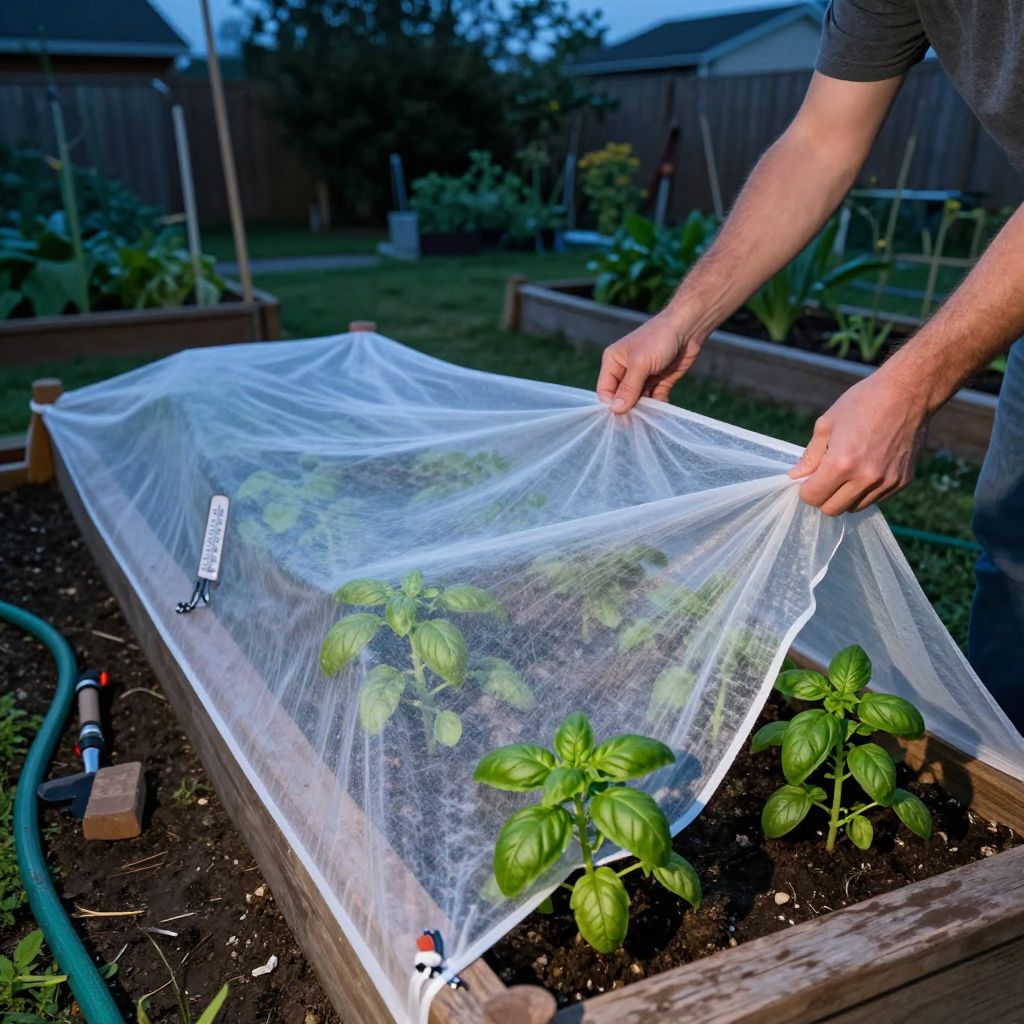
At what temperature should you cover your plants at night? The short answer is: cover tender plants when nighttime temperatures are expected to dip near 32°F (0°C), and protect especially sensitive plants sooner if frost is likely. Some warm-season crops and tropical ornamentals can be damaged well above freezing, so the right time depends on the plant, its maturity, and how cold your local nights get.
The goal is not just to “make it warmer,” but to reduce heat loss and prevent frost from settling on leaves. A good cover can buy you a few critical degrees and help plants ride out a brief cold snap without damage.
At what temperature should you cover your plants at night?
Cover plants when the forecast calls for temperatures at or below 32°F (0°C), and consider covering tender plants earlier if they are cold-sensitive, newly planted, or exposed to wind. Many vegetables and ornamentals benefit from protection when nights fall into the mid-30s°F, especially if frost, clear skies, or a hard freeze is expected.
Why temperature alone is not the whole story
Air temperature matters, but frost damage depends on more than the number on the thermometer. Clear skies, calm winds, low humidity, and exposed garden beds can all increase the risk of freezing injury even before the air reaches 32°F.
That is why gardeners often cover plants when the forecast says 34°F to 36°F, especially for tender growth. A cover is a preventive measure, not a rescue after damage has already started.
Factors that raise frost risk
- Clear, calm nights that allow heat to radiate away from the soil and plants.
- Low-lying areas where cold air settles.
- Young transplants with shallow roots and less stored energy.
- Wind exposure that dries leaves and increases stress.
- Wet soil followed by a cold snap, which can chill roots quickly.
Which plants need covering first?
Not every plant needs protection at the same temperature. Hardy perennials and cool-season vegetables can tolerate light frost, while warm-season crops and tropical plants may be damaged by temperatures that are merely cool.
Usually more frost-tolerant
- Kale, spinach, collards, and other brassicas
- Carrots, beets, and many root crops
- Pansies and some cool-season annuals
- Established woody shrubs and many perennials
Usually more sensitive
- Tomatoes, peppers, basil, and beans
- Cucumbers, squash, and melons
- Young bedding plants and fresh transplants
- Tropical houseplants moved outdoors for summer
If you are unsure, treat the plant as tender until you know how it responds in your climate. A single cold night can set back growth for weeks.
How to cover plants correctly
A cover works best when it traps the day’s stored ground heat and keeps frost off the foliage. The material, timing, and installation all matter.
- Water the soil earlier in the day if conditions are dry. Moist soil holds more heat than dry soil.
- Choose the right cover. Use frost cloth, row cover, burlap, old sheets, blankets, or lightweight fabric. Avoid plastic touching leaves.
- Set the cover over the entire plant and extend it to the ground so warm air is trapped underneath.
- Anchor the edges with stones, boards, or soil so cold air cannot leak in.
- Remove or vent the cover in the morning once temperatures rise and frost risk passes.
Best materials for night protection
- Frost cloth or floating row cover: Best for repeated use and lightweight protection.
- Old sheets or thin blankets: Good for a sudden cold night.
- Burlap: Useful for shrubs and wind protection.
- Cardboard boxes or buckets: Helpful for small plants in emergencies.
Use supports such as stakes, tomato cages, or hoops if the cover might press directly on delicate foliage. A little air space improves protection and reduces breakage.
When to cover plants based on forecast temperatures
Use the forecast as a guide, then adjust for the plant and your site conditions. These ranges are practical starting points for most home gardens.
- 38°F to 40°F (3°C to 4°C): Usually safe for hardy plants, but tender transplants may benefit from protection if the night is clear and still.
- 34°F to 37°F (1°C to 3°C): Cover tender vegetables, annuals, and new plantings.
- 32°F to 33°F (0°C to 1°C): Cover most frost-sensitive plants.
- Below 32°F (0°C): Use protection for nearly all tender plants and consider extra insulation for potted specimens.
For container plants, be more cautious. Pots cool faster than in-ground soil, so roots can be damaged sooner than the air temperature suggests.
Special care for potted plants and containers
Container plants are more exposed because roots are above ground and surrounded by air on all sides. Even a light frost can injure roots in small pots.
What to do with containers
- Move pots against a house wall, under an overhang, or into a garage or shed if possible.
- Group containers together to reduce heat loss.
- Wrap pots with burlap, bubble wrap, or frost cloth for added insulation.
- Raise pots off cold concrete with pot feet or wood blocks.
If you cannot move a container plant, cover both the top growth and the pot. The root zone often needs as much help as the leaves.
Common mistakes to avoid
Many frost protection problems come from using the wrong material or leaving covers on too long. A few simple habits can prevent damage.
- Do not use plastic directly on leaves. It can conduct cold and cause tissue damage where it touches the plant.
- Do not seal the cover too tightly around heat-producing materials or vents if daytime temperatures will rise quickly.
- Do not leave covers on during the day unless the weather stays cold. Plants can overheat fast in sunlight.
- Do not wait until frost is already visible. By then, some damage may already be done.
- Do not forget low spots in the garden, which often freeze first.
How to tell if your plants were damaged
Cold injury may not show up immediately. Some plants look fine at dawn and wilt later in the day as damaged tissues collapse.
Signs of frost damage
- Darkened, water-soaked, or limp leaves
- Blackened tips or stems
- Collapsed seedlings
- Softened growth on tender vegetables
Wait until the plant warms up before pruning anything. Sometimes only the outer growth is damaged, and the plant can recover from healthy stems and buds.
What to do after a cold night
After a frost event, give plants a little time before making decisions. Rushing to prune or fertilize can add stress.
- Remove covers once the sun is up and temperatures are rising.
- Inspect leaves and stems after they thaw.
- Water lightly if the soil is dry, but do not soak cold, saturated ground.
- Wait a few days before pruning damaged tissue on many plants.
- Replace severely damaged annuals if they do not recover.
For vegetables, harvest what you can from undamaged portions. Some crops, like kale and carrots, can improve in flavor after light cold, while tender crops may need immediate protection or harvest.
Seasonal tips for better frost protection
Good cold protection starts before the first freeze. Healthy, well-sited plants handle temperature swings better than stressed ones.
Before cold weather arrives
- Choose planting spots with morning sun and some wind protection.
- Mulch around the root zone, but keep mulch from touching tender stems.
- Keep plants evenly watered through dry periods, since drought stress makes cold damage worse.
- Use row covers or hoops early if your area has unpredictable spring or fall weather.
If you garden in a region with frequent temperature swings, keep a few covers and stakes ready so you can act quickly when the forecast changes.
Simple rule of thumb for home gardeners
If you want one easy guideline, use this: cover tender plants when temperatures are forecast to drop to 36°F or lower, and definitely cover them at 32°F or below. For hardy plants, protection is usually only needed when a hard freeze or prolonged cold spell is expected.
When in doubt, protect the plant for one night. It is far easier to remove a cover in the morning than to repair frost damage later.
For more practical planting and seasonal care advice, you may also want to read how to protect vegetables from frost and guides to using row covers in the garden.