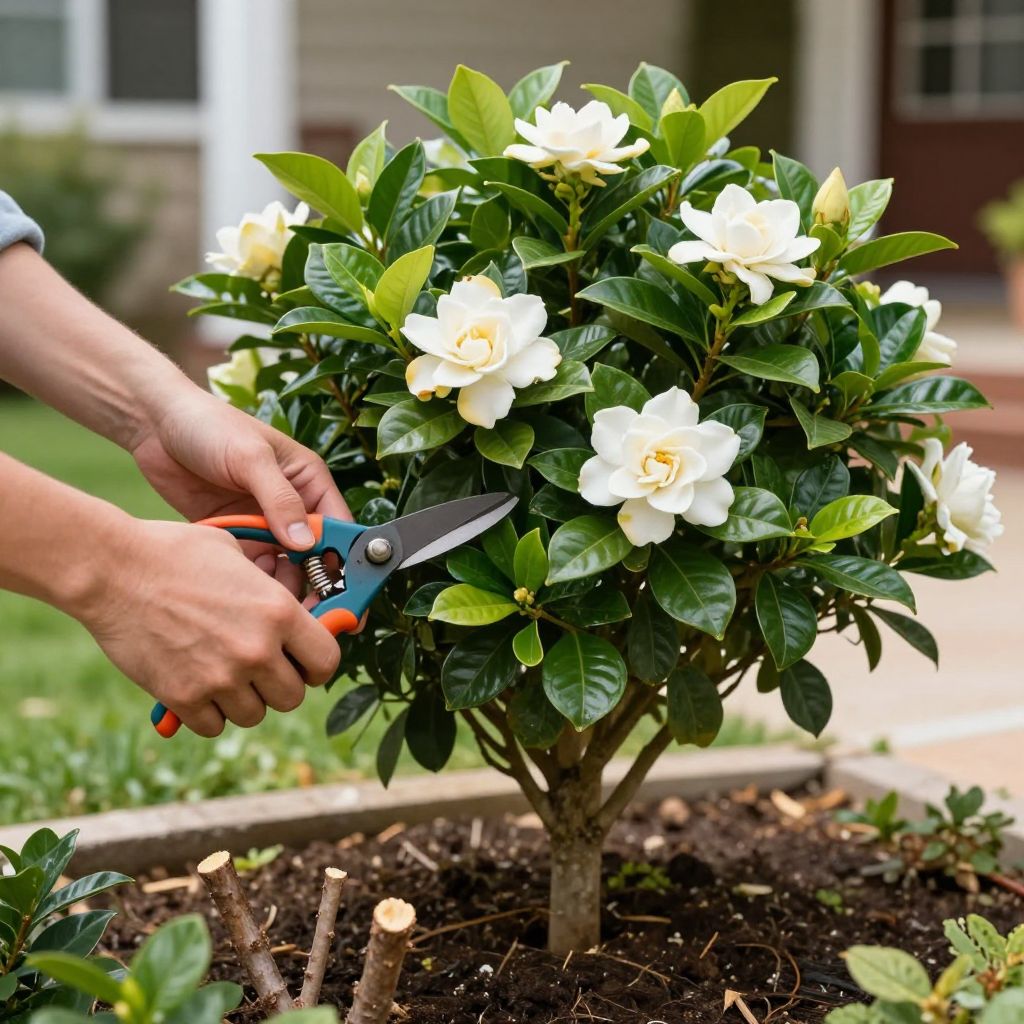
Wondering when to prune gardenias without sacrificing flowers? Timing matters because gardenias set next season’s buds on older growth, so the wrong cut can remove the bloom display you were hoping for. The best approach is usually light pruning soon after flowering, with only minimal shaping at other times.
With the right timing and a gentle hand, you can keep gardenias compact, healthy, and full of blooms. Here’s how to prune them correctly, what to avoid, and how to tell whether your plant needs a trim at all.
When to prune gardenias?
Prune gardenias right after they finish flowering, or as soon as the main bloom flush fades. That timing gives the plant the rest of the growing season to produce new shoots that can form next year’s flower buds. Avoid heavy pruning in late summer, fall, or winter unless you are removing dead, damaged, or diseased wood.
Why timing matters for gardenia pruning
Gardenias bloom on wood that has already matured, so pruning at the wrong time can remove the stems that would have carried flowers. If you cut back too late in the season, the plant may respond with leafy growth instead of buds, leaving you with fewer blooms the following year.
For most gardeners, the safest rule is simple: prune after flowering, not before it. A light trim after bloom helps shape the plant without disrupting its natural flowering cycle.
Best pruning window by season
- Late spring to early summer: Often the best time for most gardenias after the main bloom flush.
- Mid-summer: Still acceptable for light shaping if the plant has finished blooming and has time to regrow.
- Late summer through fall: Usually avoid pruning, because new growth may not harden off before cold weather.
- Winter: Only remove dead, broken, or diseased stems if needed.
How much should you prune gardenias?
Most gardenias only need light pruning. Remove spent flowers, thin out crowded stems, and shorten wayward shoots rather than cutting the whole shrub back hard. A gentle trim of about 1/3 or less of the plant is usually enough for routine shaping.
If your gardenia has become overgrown, it is better to renovate it gradually over one or two seasons rather than cutting it back severely all at once. Heavy pruning can reduce flowering and stress the plant, especially if it is already struggling with poor drainage, heat, or pests.
When a light prune is enough
- The shrub is slightly misshapen.
- Some stems are sticking out beyond the plant’s natural outline.
- You want to encourage bushier growth after flowering.
- You are removing dead blooms and a few weak stems.
When more serious pruning may be needed
- The plant is leggy or bare in the center.
- It has been neglected for several years.
- Winter damage killed back the tips.
- Diseased or broken stems need to be removed.
How to prune gardenias step by step
- Wait until flowering slows or ends. If the shrub is still covered in buds, delay major pruning.
- Use clean, sharp tools. Hand pruners are best for most stems; loppers help with thicker branches.
- Remove dead, damaged, or diseased wood first. Cut back to healthy tissue or to the branch collar where appropriate.
- Deadhead spent blooms. Snip faded flowers just above a leaf node or pair of leaves.
- Shorten long shoots. Cut just above a leaf node to encourage branching.
- Thin crowded growth. Remove a few older stems from the base to improve air circulation and light penetration.
- Step back and check the shape. Keep the plant balanced and natural-looking rather than sheared flat.
Where to make the cut
For shaping cuts, prune just above a leaf node or side shoot. This encourages the plant to branch from that point. For dead or diseased wood, cut back to healthy tissue, making sure your tools are clean between cuts if disease is present.
What not to do when pruning gardenias
Gardenias can recover from light pruning, but they do not respond well to harsh treatment. Avoid these common mistakes if you want reliable blooms.
- Don’t prune in fall if you can avoid it. You may remove developing flower buds and trigger tender growth before winter.
- Don’t shear the shrub into a tight box. This often creates dense outer growth and a bare interior.
- Don’t remove too much at once. Heavy cuts can reduce flowering for a season or more.
- Don’t ignore diseased stems. Pruning out problem wood helps prevent spread.
- Don’t use dirty tools. Clean cuts heal better and lower the risk of infection.
How to tell if your gardenia actually needs pruning
Not every gardenia needs annual pruning. If the shrub is healthy, compact, and blooming well, you may only need to deadhead spent flowers and remove the occasional stray stem. Prune mainly when the plant needs shaping, rejuvenation, or cleanup after damage.
Signs pruning would help
- Flowering has finished and the plant looks untidy.
- Stems are crossing, rubbing, or crowding the center.
- The shrub is too tall for its space.
- Lower branches are sparse and the top is overly dense.
- Winter or storm damage has left broken tips.
Signs to hold off
- The plant is in bud or actively blooming.
- It was recently stressed by drought, transplanting, or pests.
- Cold weather is approaching soon.
- The shrub is already weak or recovering from root problems.
Pruning gardenias in containers
Potted gardenias usually need the same timing as gardenias in the ground: prune after flowering. Container plants can become leggy faster, so light trimming is often useful to keep them compact and balanced. Because pots dry out more quickly, avoid heavy pruning during hot weather if the plant is already stressed.
After pruning a container gardenia, check whether it needs fresh potting mix, better drainage, or a slightly larger container. A plant that keeps outgrowing its pot may need repotting rather than repeated hard cuts.
How pruning fits with overall gardenia care
Good pruning works best when the plant is already growing in the right conditions. Gardenias generally prefer bright light with some protection from harsh afternoon sun, consistently moist but well-drained soil, and slightly acidic conditions. If the roots are unhappy, pruning alone will not solve poor flowering or yellowing leaves.
Support healthy regrowth after pruning
- Water evenly. Keep the soil moist but not soggy while new growth develops.
- Mulch lightly. A layer of organic mulch helps conserve moisture and protect roots.
- Avoid overfertilizing. Too much nitrogen can push leafy growth at the expense of flowers.
- Watch for chlorosis. Yellow leaves may signal poor soil pH, drainage issues, or nutrient problems.
- Protect from extreme heat or cold. Stress can slow recovery after pruning.
Common pests and diseases to watch for after pruning
Pruning itself does not usually cause pest or disease problems, but open cuts and fresh growth can make it easier to notice issues. Keep an eye out for scale insects, aphids, sooty mold, and leaf spot, especially if the plant is crowded or stressed.
If you see blackened, mushy, or discolored stems, remove the affected parts promptly with clean tools. Improve airflow by thinning crowded growth, and avoid wetting the foliage late in the day if leaf diseases have been a recurring issue.
Simple pruning tips for better blooms
- Prune right after flowering. This is the most important timing rule.
- Keep cuts light and selective. Gardenias usually need shaping, not drastic cutting.
- Deadhead faded flowers. This keeps the plant tidy and directs energy into growth.
- Thin for airflow. Better light and air circulation help reduce disease pressure.
- Match pruning to plant health. A stressed shrub should be pruned less, not more.
How to rejuvenate an overgrown gardenia
If a gardenia has become woody and overgrown, resist the urge to cut it nearly to the ground. Instead, rejuvenate it gradually. Remove a few of the oldest stems at the base after flowering, then shorten selected long shoots. Repeat the process the following year if needed.
This slower method preserves more foliage, reduces shock, and gives the plant time to recover while still improving shape and bloom potential.
Conclusion
The best time to prune gardenias is just after they finish blooming, when you can shape the plant without removing next season’s buds. Keep pruning light, use clean tools, and avoid late-season hard cuts. If your gardenia is due for a trim, wait for the bloom flush to fade, then make a few careful cuts and let it recover into the next flowering cycle.
For more help keeping your shrub healthy, you may also want to read about gardenia care basics and how to prune flowering shrubs.