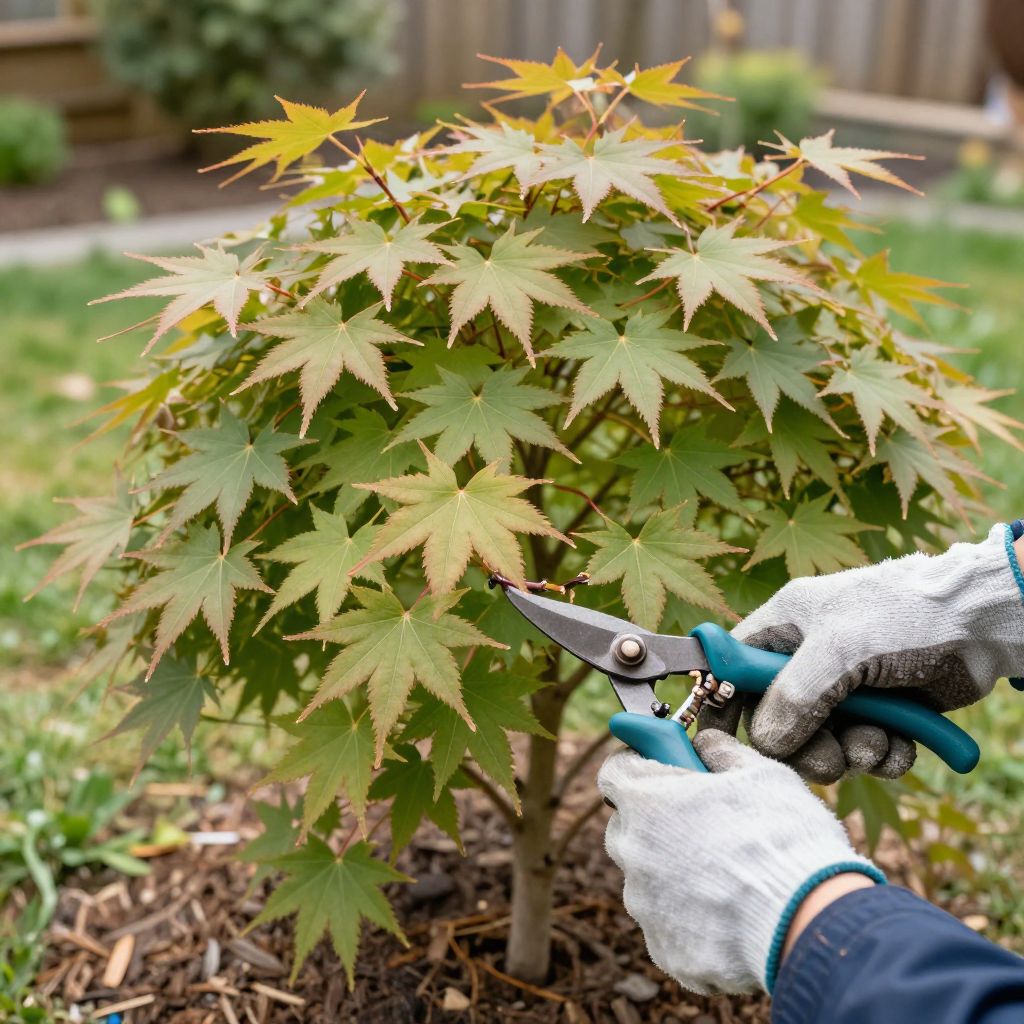
Wondering when to trim Japanese maple without damaging its shape or stressing the tree? Timing matters more than heavy pruning, because Japanese maples respond best to light, careful cuts made at the right season.
The good news is that most pruning is simple: remove dead, damaged, or crossing branches at the proper time, then make only minimal shaping cuts. With the right timing and technique, you can keep your tree healthy, graceful, and naturally attractive.
When to trim Japanese maple?
The best time to trim a Japanese maple is usually in late winter to early spring while the tree is still dormant, or in mid- to late summer for light corrective pruning. Avoid heavy pruning in spring when sap flow is strong, and never remove too much at once. For mature trees, less pruning is usually better.
Why timing matters for Japanese maple pruning
Japanese maples are admired for their delicate branching and elegant form, so pruning should support that natural structure rather than fight it. If you cut at the wrong time, you may see excessive sap bleeding, poor regrowth, or sunscald on branches that were previously shaded.
Timing also affects how visible the cuts are. Winter pruning lets you see the branch structure clearly, while summer pruning can help you fine-tune shape once the leaves are fully out.
What happens if you trim at the wrong time?
- Spring cuts may bleed sap heavily, especially as buds swell and growth starts.
- Large cuts can leave open wounds that take longer to close.
- Removing too much foliage can expose inner branches to sunburn.
- Late-season pruning can sometimes stimulate tender growth that is more vulnerable to cold.
Best seasons for pruning Japanese maple
Late winter to early spring
This is the main pruning window for most Japanese maples. The tree is dormant, the branch framework is easy to see, and you can remove dead wood or cross-branches before new growth begins.
If you live in a colder climate, wait until the harshest winter weather has passed but before buds open. In milder climates, this window may be earlier.
Mid- to late summer
Light pruning in summer is useful for refining shape, shortening overly vigorous shoots, or removing small branches that obscure the tree’s form. This is usually better for subtle adjustments than for major cuts.
Summer pruning can also reduce the chance of strong sap bleeding compared with spring pruning, but keep the cuts modest.
When not to prune
- During active spring growth, when sap flow is strongest
- During extreme heat or drought stress
- Just before a hard freeze
- When the tree is newly planted and still establishing roots, unless you are removing dead or broken wood
How much should you trim?
For Japanese maple, the safest approach is usually minimal pruning. Remove only what is necessary to improve structure, health, or clearance. A mature tree often needs little more than occasional cleanup.
A good rule is to avoid removing more than about 10 to 20 percent of the canopy in one season. If the tree needs more than that, spread the work over several years.
Good reasons to prune
- Dead, broken, or diseased branches
- Crossing or rubbing limbs
- Branches that spoil the tree’s natural shape
- Low limbs blocking a walkway or view
- Weak, crowded growth in the interior of the canopy
What to leave alone
- Healthy branches that contribute to the tree’s layered form
- Major limbs unless they are clearly a problem
- Large top cuts that would create bare stubs
- Repeated “topping” cuts, which can ruin the tree’s structure
How to trim Japanese maple step by step
Use sharp, clean tools and make deliberate cuts. Japanese maple is best pruned with restraint, so take your time and step back often to check the overall shape.
- Start by removing dead or damaged wood. Cut back to healthy tissue or to the branch collar where appropriate.
- Look for crossing or rubbing branches. Remove the weaker or poorly placed branch first.
- Thin crowded areas. Open the canopy slightly so light and air can move through the tree.
- Shorten overly long shoots if needed. Cut back to a side branch or bud rather than leaving a stub.
- Step back and reassess. Japanese maple should still look natural, airy, and balanced.
Where to make the cut
Make cuts just outside the branch collar when removing a whole branch. When shortening a shoot, cut to a lateral branch or a bud facing the direction you want new growth to go. Avoid flush cuts and avoid leaving long stubs.
Tools that work best
Choose tools based on branch size. Clean tools make smoother cuts and reduce the risk of spreading disease.
- Bypass hand pruners for small shoots and fine shaping
- Loppers for thicker branches that are too large for hand pruners
- Pruning saw for larger limbs
- Rubbing alcohol or disinfectant for cleaning blades between cuts if disease is suspected
Keep blades sharp. Ragged cuts heal more slowly and can make the tree look untidy.
Pruning young versus mature Japanese maples
Young trees
Young Japanese maples benefit from light training to establish structure. Focus on selecting a strong trunk line, removing competing leaders, and correcting obvious crossing branches early.
Do not over-prune young trees. They need foliage to build a strong root system and trunk.
Mature trees
Mature trees usually need only selective thinning and cleanup. The goal is to preserve the tree’s character, not reshape it dramatically. If you want to reduce size, do it gradually over several seasons.
Common pruning mistakes to avoid
- Pruning too heavily and exposing the tree to stress
- Cutting in early spring when sap bleeding is most likely
- Topping the tree to force a smaller size
- Removing too many interior branches at once
- Leaving stubs that die back and invite decay
- Ignoring the tree’s natural layered shape
If your Japanese maple has become too large for its spot, resist the urge to cut it back hard in one season. Gradual reduction is much safer and usually produces a better-looking result.
Aftercare after trimming
Japanese maples usually do not need special treatment after light pruning, but they do appreciate steady care. Water during dry spells so the root zone stays evenly moist, especially if the tree was pruned in summer.
Mulch can help conserve moisture and protect roots, but keep it a few inches away from the trunk. Avoid heavy fertilizing right after pruning unless your soil test or local conditions clearly suggest a need.
Watch for these post-pruning issues
- Leaf scorch on exposed branches
- Wilting during hot, dry weather
- Dieback from cuts made too late or too aggressively
- Sprouting from the wrong place after severe pruning
Special situations: potted and stressed Japanese maples
Container-grown Japanese maples dry out faster than in-ground trees, so prune them lightly and avoid major cuts during hot weather. If the tree is stressed by drought, transplant shock, or root problems, postpone nonessential pruning until it recovers.
When a tree is already struggling, the best pruning is often just removing dead or damaged wood and then improving growing conditions.
Quick answer for the home gardener
If you are asking when to trim Japanese maple, choose late winter to early spring for most pruning and summer for light shaping. Keep cuts small, remove only what is necessary, and protect the tree’s natural form. That approach gives you the best balance of health, beauty, and long-term structure.
For more practical tree-care guidance, you may also want to read related articles on pruning ornamental trees and how to care for Japanese maple in the landscape.