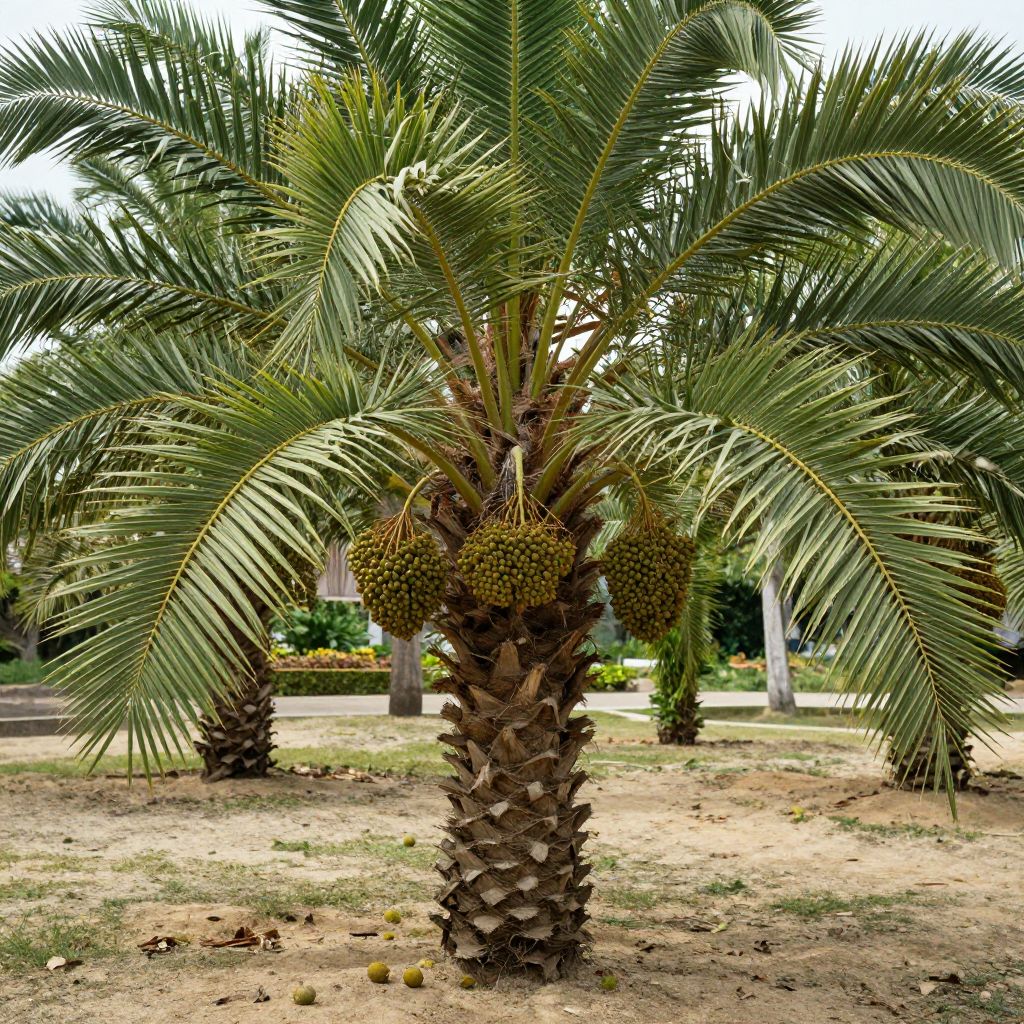
What grows on palm trees? If you’re looking at a palm in your yard or a potted palm indoors, the answer is usually flowers, fruit, and sometimes seed clusters—not “fruit” in the everyday sense you’d snack on. Some palms produce edible dates or coconuts, while many ornamental palms make small berries or drupes that are mainly useful for wildlife or propagation.
Knowing what your palm is producing helps you care for it properly. It also tells you whether the tree is healthy, whether you should prune old flower stalks, and whether the fruits are worth collecting or better left alone.
What grows on palm trees?
Palms commonly grow flowers, fruit, and seeds from branched or unbranched flower stalks called inflorescences. Depending on the species, the fruit may be edible, ornamental, or messy and wildlife-attracting. Some palms also produce offshoots or “pups” at the base, which can be used for propagation.
Flowers, fruit, and seeds: what to expect from different palms
Not every palm looks the same when it blooms or fruits. Some produce large, showy clusters; others make tiny, hidden flowers that later become small fruits. The exact growth depends on the species, age of the palm, climate, and whether it is grown indoors or outdoors.
Common examples
- Date palm (Phoenix dactylifera) produces edible dates in warm, dry climates.
- Coconut palm (Cocos nucifera) produces coconuts, which are large fibrous fruits with a hard seed inside.
- Areca palm (Dypsis lutescens) and many ornamental palms produce small orange, red, or black fruits that are not usually eaten.
- Sago palm is not a true palm, but it can form cone-like reproductive structures; it is grown as an ornamental, not for edible fruit.
Many homeowner palms never produce noticeable fruit indoors because they are too young, not receiving enough light, or are the wrong species for fruiting in a container.
How to tell if your palm is flowering or fruiting
Palm flowers are often easy to miss at first. Look for a stalk emerging near the crown or below the fronds, carrying branched sprays of tiny flowers. After pollination, those flowers may swell into fruit clusters that change color as they mature.
Signs to watch for
- A new stalk emerging from the center or just below the leaf canopy
- Fine, branching sprays that may be cream, yellow, or pale green
- Small round or oval fruits forming after flowering
- Fruit color shifting from green to yellow, orange, red, brown, or black depending on species
Important: if a palm is stressed by low light, drought, root damage, or nutrient deficiency, flowering and fruiting may be reduced or irregular.
Do palm fruits need to be removed?
Sometimes yes, sometimes no. On ornamental palms, fruit clusters can be left in place if you want wildlife value or don’t mind the mess. In small landscapes, near walkways, or around pools, it is often better to remove spent flower stalks and fruit before they drop.
When removal makes sense
- Fruit is staining paving or decking
- Clusters are attracting pests or rodents
- You want a tidier landscape look
- The palm is small and carrying a heavy fruit load
- Fallen fruit could create a slipping hazard
Use clean, sharp pruners or a pole saw for reachable stalks. For taller palms, hire a professional arborist rather than climbing or cutting from a ladder.
Can you grow new palms from what grows on palm trees?
Yes, but the method depends on the palm. Most palms are grown from seed, while a few species can also be propagated from basal offshoots or pups. Seeds are the most common route, but they can be slow to germinate and need warmth, moisture, and patience.
Growing palms from seed
- Collect ripe fruit only when it is fully colored and comes away easily.
- Remove the fleshy outer layer if the species has one.
- Rinse the seed clean to reduce mold and rot.
- Sow in a free-draining seed-starting mix.
- Keep the medium evenly moist, not soggy.
- Provide warmth appropriate to the species; many palms germinate best in consistently warm conditions.
Some palm seeds germinate in weeks, while others take months. Fresh seed is usually more reliable than old, dried-out seed.
Growing palms from pups
Certain clumping palms produce offshoots at the base. If the pup has its own roots, you may be able to separate it carefully and pot it up. This works best when the parent plant is actively growing and the offshoot is large enough to survive on its own.
Tip: If you are unsure whether an offshoot is ready, wait. Removing it too early often leads to failure.
Growing conditions that help palms flower and fruit
Healthy palms are more likely to bloom and set fruit. The basics are the same for most species: enough light, well-drained soil, steady moisture, and appropriate nutrition. Outdoor palms and indoor palms have different needs, especially for light and airflow.
Sunlight
- Outdoor palms: Match the species to the site. Some need full sun, while others prefer bright shade or filtered light.
- Indoor palms: Place them near a bright window with indirect light. Low light often leads to weak growth and fewer flowers.
Soil and drainage
Palms dislike waterlogged soil. Use a loose, well-draining mix outdoors and a potting mix that drains quickly indoors. If your soil is heavy clay, improve the planting area with organic matter and consider planting on a slight mound to keep roots from sitting in water.
Watering
Water deeply, then let the top layer of soil dry slightly before watering again. The exact timing depends on heat, wind, rainfall, pot size, and root development. Young palms usually need more regular moisture than established ones, but none should sit in constantly wet soil.
Nutrition
Palms often benefit from a balanced palm fertilizer or a fertilizer formulated for container plants, especially if they are showing pale fronds or slow growth. Avoid overfeeding, which can burn roots or cause weak, soft growth. In gardens with sandy soil, nutrients may leach quickly and need replenishing more often than in richer soils.
Common problems with flowers and fruit on palms
When palms fail to bloom or fruit, the cause is often environmental rather than mysterious. Start by checking light, water, soil drainage, and overall plant health before assuming the tree is simply “not a fruiting type.”
Why a palm may not be producing
- Too young: Many palms need years before they flower.
- Not enough light: Especially common with indoor palms.
- Poor drainage: Roots stressed by wet soil can reduce flowering.
- Nutrient imbalance: Deficiencies can cause weak growth.
- Improper pruning: Removing too many green fronds weakens the plant.
- Climate mismatch: Some palms need warmer conditions to fruit well.
Pests and diseases to watch for
Flower stalks and fruit can attract insects, birds, and small animals. On the plant itself, look for scale insects, mealybugs, spider mites, and fungal issues if the crown stays too wet or crowded.
- Wipe small infestations off leaves with a damp cloth or treat early with an appropriate horticultural approach for your plant.
- Improve airflow around outdoor palms by avoiding overcrowding.
- Remove rotting fruit and fallen debris promptly to limit pests.
- Do not overwater container palms, especially in cool weather.
If the crown is soft, smells bad, or collapses, the problem may be serious crown rot. That needs prompt attention and may require professional help.
Pruning and maintenance around fruiting palms
Good palm care is mostly about restraint. Palms store energy in their crowns, so removing healthy green fronds can weaken the plant. Prune only dead, fully brown fronds and spent fruit stalks when needed.
Basic pruning rules
- Use clean, sharp tools.
- Cut only dead or clearly spent material.
- Do not “hurricane cut” palms by removing too many fronds.
- Protect your hands and eyes when cutting fruiting stalks, which can be heavy or sharp.
For tall palms, pruning is safest when done by a trained professional. Falling fruit clusters and fronds can injure people or damage property.
Indoor vs outdoor palms: what changes?
Indoor palms rarely fruit the way landscape palms do. They often live in lower light, smaller root spaces, and more stable temperatures, which can support foliage growth but not full reproductive cycles.
Indoor palm care tips
- Rotate the pot so growth stays even.
- Keep the plant away from heating vents and cold drafts.
- Use a pot with drainage holes.
- Repot only when roots are crowded, and move up one pot size at a time.
Outdoor palm care tips
- Choose a palm suited to your climate.
- Mulch lightly, but keep mulch away from the trunk.
- Water deeply during dry spells, especially while the palm is establishing.
- Watch for wind damage, salt exposure, and frost injury if relevant in your area.
What to do if you want edible fruit
If your goal is edible fruit, make sure you are growing the right species. Not all palms produce fruit worth eating, and some ornamental fruits are not suitable for consumption. Even edible species may need specific temperatures, pollination, and long growing seasons to produce well.
For the home gardener, the most practical approach is to identify the palm first, then confirm whether its fruit is edible, ornamental, or best left for wildlife. If you are unsure, do not taste it.
Quick troubleshooting checklist
- No flowers: Check age, light, and overall vigor.
- Flowers but no fruit: Pollination may be poor, or the plant may be stressed.
- Fruit dropping early: Look for drought, nutrient issues, or pests.
- Messy fruit drop: Remove clusters before they ripen fully.
- Weak growth indoors: Increase light and avoid overwatering.
Final thoughts
What grows on palm trees depends on the species, but the most common answers are flowers, fruit, and seeds. If you want better flowering or fruiting, focus on the basics: the right light, good drainage, careful watering, and sensible pruning. Identify your palm first, then adjust care to its needs rather than guessing.
For more practical plant care, you may also find it helpful to read about how to prune palms safely and choosing the right potting mix for container plants.