Wondering when to reseed lawn so the new grass actually takes hold? Timing matters more than most gardeners realize. Seed needs the right soil temperature, moisture, and light to germinate well, and those conditions change with the seasons.
The best window depends on your climate and grass type, but for many lawns, early fall is ideal. In cooler regions, spring can also work if you can keep the seedbed consistently moist and beat summer heat, weeds, and drought stress.
When to reseed lawn?
The best time to reseed lawn is usually when temperatures are mild and soil stays warm enough for germination but not so hot that seedlings dry out. For cool-season grasses, early fall is often best; for warm-season lawns, late spring through early summer is usually better. Local weather matters more than the calendar.
Why timing matters for reseeding
Grass seed germinates best when the soil is in the right temperature range for that grass type. If you seed too early, cold soil slows germination; too late, and heat, weeds, or frost can damage young grass.
Good timing also helps you reduce competition. Weeds, especially crabgrass and other annuals, are often less aggressive when reseeding is done at the right season.
Cool-season vs. warm-season lawns
- Cool-season grasses such as Kentucky bluegrass, perennial ryegrass, and tall fescue usually reseed best in late summer to early fall.
- Warm-season grasses such as bermudagrass, zoysiagrass, and centipedegrass are generally reseeded or repaired in late spring to early summer, when soil is warm and growth is active.
Best season by lawn type
Cool-season lawns: late summer to early fall
For most cool-season lawns, aim for a window about 6 to 8 weeks before your first expected frost. In many areas, that means late August through September, or early October in milder climates.
This timing gives seedlings cooler air, warm soil, and fewer weed problems. It also allows roots to develop before winter.
Warm-season lawns: late spring to early summer
Warm-season grasses respond best when soil is consistently warm and frost danger has passed. Reseed after the lawn has fully greened up and daytime temperatures are reliably warm.
If you seed too early, cool nights can slow germination and young grass may struggle to establish.
What if you don’t know your grass type?
If you are unsure whether your lawn is cool-season or warm-season, look at when it grows most strongly. If it greens up in spring and struggles in summer heat, it is likely cool-season. If it thrives in summer and goes dormant or brown in cool weather, it is likely warm-season.
How to tell if your lawn is ready for reseeding
Before you spread seed, check whether the lawn actually needs overseeding or a more complete renovation. Thin turf, bare patches, and worn areas can often be improved with reseeding alone.
- Thin but living turf: Overseed to thicken the lawn.
- Bare spots from traffic, pets, or drought: Reseed after loosening the soil.
- Large dead areas: You may need to remove debris, level the soil, and start more broadly.
- Heavy weed cover or compacted soil: Fix the underlying problem first, or seed will fail.
How to reseed lawn successfully
1. Prepare the area
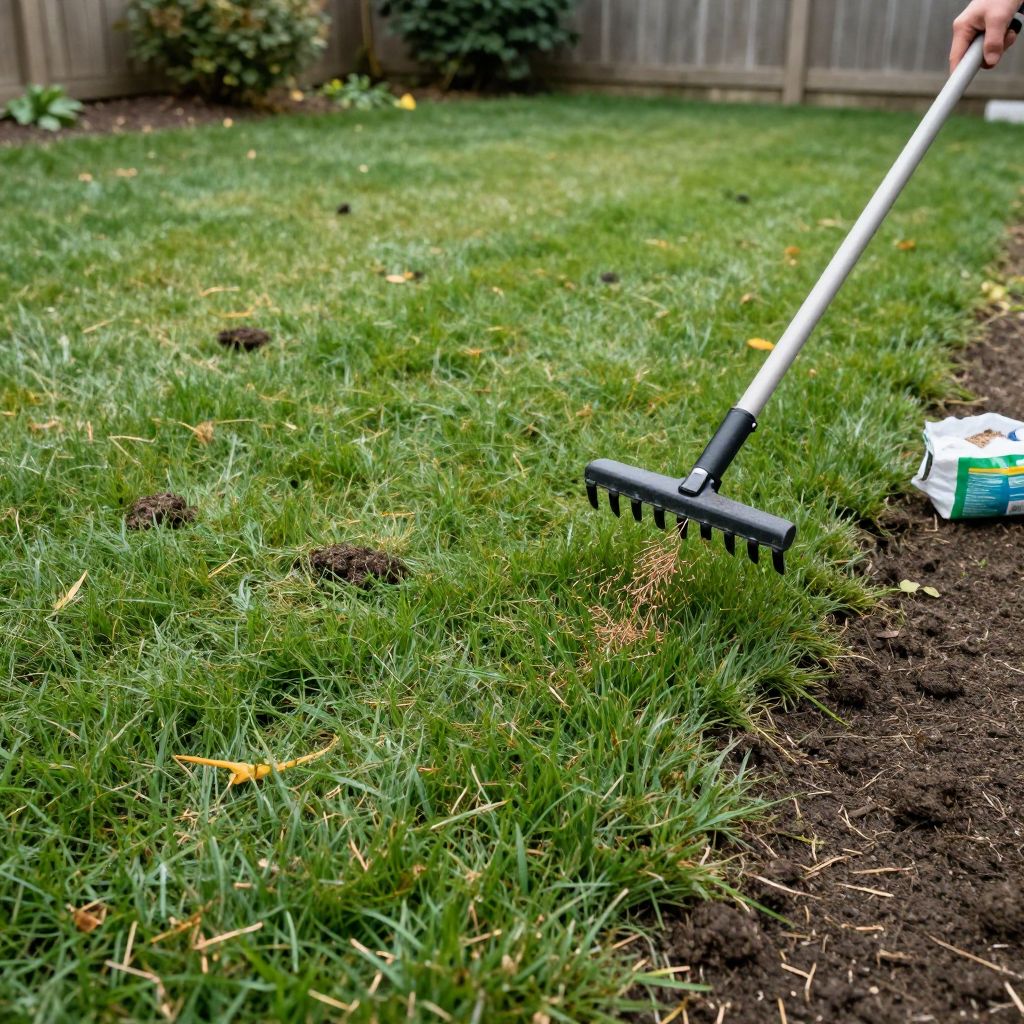
Good seed-to-soil contact is essential. Mow the lawn shorter than usual, rake away debris, and remove dead grass or thick thatch from the surface.
If the soil is compacted, loosen it lightly with a rake or core aerator. In bare patches, rough up the top 1/4 to 1/2 inch of soil so the seed can settle in.
2. Improve the soil if needed
Spread a thin layer of compost or quality topsoil over problem spots if the soil is poor, sandy, or depleted. A light topdressing can help retain moisture and improve germination.
Keep the layer thin enough that seed can still reach the soil surface. Too much compost can smother seed or create uneven spots.
3. Choose the right seed
Use a grass seed mix suited to your climate, sun exposure, and lawn use. A shady lawn needs different seed than a full-sun lawn, and a high-traffic yard benefits from durable varieties.
Fresh seed usually performs better than old seed. Check the bag date if possible, and store leftover seed in a cool, dry place.
4. Spread seed evenly
Apply seed at the rate recommended on the package for overseeding or bare spots. Use a hand spreader for small areas or a broadcast spreader for larger lawns so coverage stays even.
After spreading, lightly rake the area so some seed settles into the soil surface. Do not bury the seed deeply; most lawn seed germinates best when it is just covered or barely exposed.
5. Water carefully
Moisture is the difference between success and failure. Keep the seeded area consistently damp, not soggy, until germination begins.
- Water lightly enough to keep the top layer from drying out.
- Avoid strong spray that washes seed away.
- Once seedlings emerge, water less often but more deeply to encourage roots.
Drying out even once can reduce germination significantly. If you are reseeding during a hot or windy spell, check the soil surface daily.
6. Protect the area while it establishes
Limit foot traffic until the new grass is rooted. If pets or kids use the lawn heavily, mark off the area temporarily.
Wait to mow until the new grass is tall enough to cut without pulling out. A common rule is to mow when seedlings reach about 3 to 4 inches, but let the grass type and growth rate guide you.
Common mistakes to avoid
- Seeding at the wrong season: Heat, cold, or frost can stop germination or kill seedlings.
- Skipping soil prep: Seed placed on hard, dry, or thatchy ground often fails.
- Overwatering: Saturated soil can rot seed or encourage disease.
- Letting the seed dry out: Inconsistent moisture is a major cause of patchy results.
- Using too much seed: Crowded seedlings compete for light, water, and nutrients.
- Mowing too soon: Young grass can be uprooted before it is established.
Troubleshooting poor germination
Seed is not sprouting
If nothing comes up after the expected germination period, check soil moisture first. Dry soil is the most common reason for failure. Also consider whether temperatures are too cool or too hot for the grass type.
Old seed, poor seed-to-soil contact, or seed that was washed away can also cause patchy results.
Seedlings are thin or patchy
Patchiness often means uneven spreading, inconsistent watering, or competition from weeds. Lightly overseed the thin areas again and keep them moist.
If the soil is crusting over, gently break the surface with a rake so emerging shoots can break through.
Weeds are taking over
Many weeds germinate quickly and compete with young grass. The best defense is a dense, healthy stand of turf, but timing also helps.
For cool-season lawns, fall reseeding often reduces weed pressure compared with spring. Avoid using weed killers too close to seeding unless the product label specifically allows it.
Should you reseed in spring?
Spring reseeding can work, especially for cool-season lawns that need urgent repair. It is often the right choice if you have bare spots after winter damage or pet wear.
Still, spring seedings usually face more weed pressure and summer stress. If you seed in spring, be ready to water carefully and protect seedlings through heat.
Should you reseed in fall?
For many lawns, fall is the best answer to when to reseed lawn. Soil is still warm, air temperatures are cooler, and weeds slow down. Those conditions help grass establish strong roots before winter.
If you can choose only one season for cool-season turf, fall is usually the most forgiving and productive.
Maintenance after reseeding
Once the new grass is growing, shift from germination care to establishment care. The goal is to help roots grow deeper and the lawn thicken evenly.
- Mow only when the grass is tall enough and the soil is firm.
- Water less frequently as roots develop.
- Hold off on heavy foot traffic until the lawn is noticeably established.
- Watch for disease in damp, shaded, or crowded areas.
If you fertilize, do so according to your soil needs and grass type rather than by guesswork. A soil test can help you avoid overfeeding, which can create weak, fast growth.
Quick seasonal checklist
- Late summer to early fall: Best for most cool-season lawns.
- Late spring to early summer: Best for most warm-season lawns.
- Before seeding: Mow low, rake debris, loosen soil, and fix drainage issues.
- After seeding: Keep the surface evenly moist and protect seedlings from traffic.
Conclusion
If you are asking when to reseed lawn, start by identifying your grass type and matching the timing to your local weather. In many yards, early fall is the best reseeding window, but warm-season lawns usually do better in late spring to early summer.
For more lawn-care help, you may also want to read related guidance on how to overseed a lawn and how to improve compacted soil before you begin.