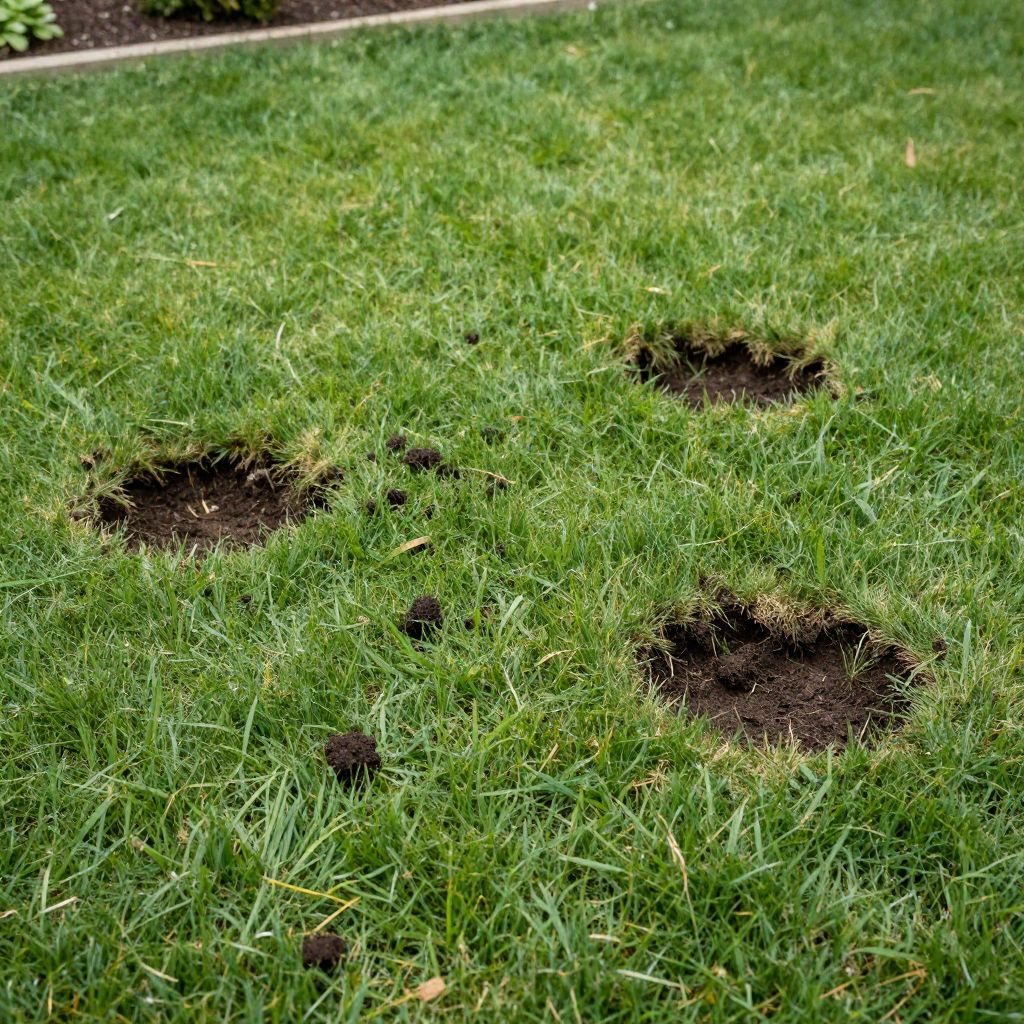
What is digging holes in my yard? If you’re finding fresh holes in the lawn, flower beds, or around shrubs, the cause is usually a burrowing animal, a foraging pest, or sometimes a pet. The shape, size, depth, and location of the holes are the best clues for identifying the culprit.
Once you know what’s making them, you can choose the right fix instead of guessing. Some problems are mostly cosmetic, while others can damage roots, weaken turf, or signal a larger pest issue in the soil.
What is digging holes in my yard?
Most yard holes come from animals looking for food, shelter, or nesting sites. Common culprits include moles, voles, skunks, raccoons, squirrels, chipmunks, rabbits, birds, and ground-nesting insects. The hole’s size, soil disturbance, and nearby signs like tunnels, scat, or uprooted plants help narrow it down.
How to identify the digger by the hole
Start by measuring the hole and looking at the surrounding soil. A clean, round opening suggests a burrow, while scattered divots usually point to an animal digging for grubs or insects.
Small holes, roughly pencil to golf-ball size
- Birds may peck small holes while searching for grubs, especially in lawns.
- Chipmunks or squirrels often make shallow holes while burying or retrieving food.
- Ground-nesting bees or wasps can leave small entrance holes in bare, sunny soil.
Medium holes, about 1 to 3 inches wide
- Voles often leave small openings near grass, mulch, or plant stems, sometimes with surface runways.
- Rats may dig burrow entrances near sheds, compost piles, fences, or dense cover.
- Skunks can create cone-shaped holes while hunting grubs and insects.
Larger holes, 3 inches and up
- Raccoons may tear up turf in patches while searching for grubs.
- Groundhogs leave larger burrow entrances, often near foundations, fences, or brushy edges.
- Pets can dig large, irregular holes quickly, especially in soft soil.
Clues that tell you what’s causing the damage
Look beyond the hole itself. The pattern of damage often matters more than the opening.
- Raised tunnels or runways in grass often point to voles or moles.
- Loose soil piled beside an opening suggests an active burrow.
- Uprooted seedlings or chewed roots can indicate rodents.
- Scattered shallow divots are often from animals hunting insects in the soil.
- Holes near structures, decks, or compost may signal rats or other shelter-seeking pests.
Moles vs. voles
These are often confused, but they cause different problems. Moles usually create raised tunnels and mounds while hunting insects underground. Voles make small surface holes and runways, and they may chew plant roots, stems, and bark near the soil line.
What to do first when you find holes in your yard
Before you treat the problem, confirm whether the holes are active and whether they are a real threat to plants or just a nuisance. A few careful observations can save time and prevent unnecessary control measures.
- Check for fresh soil around the opening or new damage overnight.
- Look for tracks, droppings, tunnels, or chewed plants nearby.
- Mark the holes with a small flag or stick and revisit them after a day or two.
- Inspect nearby plants for root disturbance, bark chewing, or wilting.
- Note the location: lawn, garden bed, under shrubs, near a fence, or beside a structure.
If the holes are shallow and scattered, the issue may be temporary foraging. If you find repeated openings, connected tunnels, or plant decline, you likely have a burrowing pest that needs management.
How to fix holes in the yard
The best fix depends on the cause. In many cases, repairing the soil alone will not solve the problem until you address what is attracting the animal.
If animals are digging for grubs or insects
- Reduce the food source by improving lawn health and avoiding overwatering.
- Inspect damaged turf for grubs before choosing a control method.
- Keep the lawn mowed and remove thick thatch that shelters pests.
- Use physical barriers or exclusion where practical, especially around beds and young plants.
If rodents are burrowing
- Remove dense cover such as tall weeds, brush, and debris near the holes.
- Store compost, bird seed, and pet food in secure containers.
- Seal access points around sheds, raised beds, and foundations.
- Use hardware cloth or other sturdy barriers to protect vulnerable plants and structures.
If pets are digging
- Provide more exercise and supervised play.
- Redirect digging behavior to a designated digging area.
- Cover fresh holes temporarily with loose soil and water lightly to settle it.
- Protect favorite beds with fencing or temporary barriers.
Repairing the yard after the digging stops
Once the cause is under control, repair the damage so turf and roots can recover. Don’t just fill holes blindly if the burrow is still active.
For small holes in lawn or beds
- Rake away loose debris and check that the hole is inactive.
- Fill with matching soil or a soil-compost blend if the area is a planting bed.
- Press the soil gently to remove air pockets, but do not compact it hard.
- Reseed thin lawn spots or replant with suitable groundcover after the soil settles.
For larger burrows or tunnels
- Do not collapse an active burrow if you suspect a larger animal is still using it.
- After confirming it is inactive, backfill in layers and tamp lightly.
- Top with soil and mulch only after the area is stable.
- Watch the spot for sinking, which can mean hidden tunnels remain.
Important: If the hole is near a foundation, retaining wall, septic area, or utility line, be cautious. Large burrows can undermine soil stability and may need professional assessment.
How soil conditions affect digging problems
Soil that is loose, moist, or rich in organic matter is easier for animals to dig through. Overwatered lawns, thick mulch, and heavy thatch can also make yards more attractive to burrowing pests.
Improve conditions without harming plants
- Water deeply but only when the soil actually needs it.
- Keep mulch 2 to 3 inches deep, and pull it back from stems and trunks.
- Aerate compacted lawn areas if your grass is struggling and the season is appropriate for your region.
- Remove excess thatch and fallen fruit that may attract insects or rodents.
When to call a professional
Some digging problems are too large, persistent, or risky to handle on your own. A licensed pest professional or wildlife control specialist can identify the animal and recommend legal, humane, and effective options for your area.
Get help if you notice repeated burrowing, large tunnels, damage near buildings, or signs that an animal is nesting under a structure. If you are unsure what is digging holes in your yard, clear photos and measurements can help a local expert identify the cause faster.
Common mistakes to avoid
- Filling holes before identifying the cause, which often leads to repeat damage.
- Using the same fix for every pest, even though moles, voles, skunks, and pets behave differently.
- Overwatering the lawn, which can encourage grubs and make soil easier to dig.
- Leaving food sources nearby, such as open compost, bird seed spill, or pet food.
- Ignoring nearby plant damage, which may reveal a larger underground issue.
Preventing future holes
Prevention works best when you make the yard less appealing for digging and easier to monitor. Healthy, well-maintained landscapes are less likely to attract repeated pest activity.
- Keep grass trimmed and edges neat.
- Remove brush piles, wood scraps, and clutter where animals can hide.
- Inspect mulch beds regularly for fresh openings.
- Protect young plants with barriers if rodents are common in your area.
- Watch for seasonal spikes in activity, especially after rain or when insects are abundant.
If you’re still wondering what is digging holes in my yard, start by measuring the openings, checking for tunnels or tracks, and watching for fresh activity over a day or two. For more practical help with yard pests and soil problems, you may also want to read about common garden pests and lawn care basics.