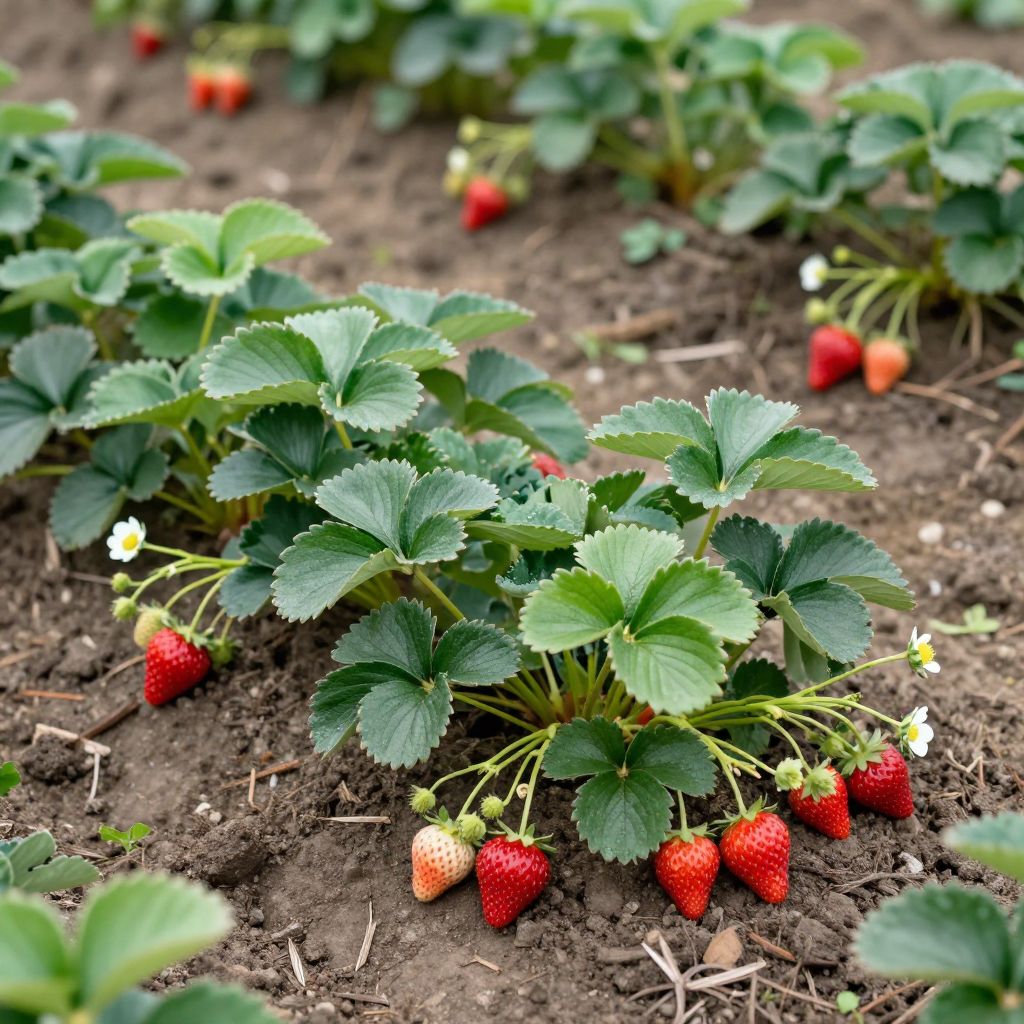
Do strawberries grow on vines? Not exactly. Strawberries are not true vines; they are low-growing perennial plants that spread by runners, which are long stems that root and form new plants. If you’re picturing a climbing plant, strawberries won’t behave that way, but they can spill beautifully from containers, hanging baskets, and raised beds.
Understanding how strawberries actually grow helps you choose the right planting spot, keep the plants healthy, and get better fruit. With the right soil, sunlight, moisture, and pruning, strawberry plants can be productive and easy to manage in home gardens.
Do strawberries grow on vines?
No, strawberries do not grow on vines. They grow from a crown close to the soil surface and send out runners, which are horizontal stems that can root and produce new daughter plants. The fruit develops on short flower stalks, not on climbing stems, so strawberries are best treated as spreading ground plants or container plants.
How strawberry plants actually grow
Strawberry plants form a compact crown with leaves, flowers, and fruiting stems. After flowering, the plant produces berries while also sending out runners during the growing season, especially when plants are healthy and established.
Key growth parts to know
- Crown: The central growing point where leaves, flowers, and roots meet.
- Runners: Long stems that create new plantlets at the ends.
- Flowers: Small white blossoms that become fruit after pollination.
- Fruit: The familiar red berry, which develops near the base of the plant.
Because strawberries spread this way, they work well in beds, borders, containers, and hanging baskets. They do not need trellising like peas or beans, but they do need room for airflow and easy access for harvest.
Best growing conditions for strawberries
Strawberries perform best in full sun, loose fertile soil, and consistent moisture. If your climate is hot, they may appreciate light afternoon shade; if your area is cool and damp, good drainage becomes especially important to prevent root and crown problems.
Sunlight
Give strawberries at least 6 to 8 hours of direct sun daily for the best flowering and fruiting. Less light usually means fewer berries and weaker plants.
Soil and drainage
Use soil that drains well but still holds some moisture. Strawberries dislike sitting in waterlogged ground, so heavy clay soil should be improved with compost or grown in raised beds or containers.
A slightly acidic soil is often ideal, but the most important goal for home gardeners is healthy, well-drained soil rich in organic matter. A 2- to 3-inch layer of compost worked into the planting area can help improve structure and fertility.
Spacing
Allow enough space for air movement and runner growth. Crowded plants are more likely to develop leaf disease and smaller fruit.
- In garden beds, space plants so the crowns are not buried or crowded.
- In containers, use a pot wide enough for several plants without overlap.
- In hanging baskets, avoid overfilling, since dense planting can dry out quickly and reduce airflow.
How to plant strawberries the right way
Whether you start with bare-root plants, plugs, or established nursery plants, the most important planting rule is simple: keep the crown at soil level. If the crown is buried, the plant may rot; if it is planted too high, roots can dry out.
- Choose a sunny site with well-drained soil.
- Remove weeds and mix in compost if needed.
- Dig a hole wide enough to spread the roots naturally.
- Set the plant so the crown sits level with the soil surface.
- Firm the soil gently and water thoroughly.
- Mulch lightly to help hold moisture and keep fruit cleaner.
If you are planting in containers, use a high-quality potting mix rather than garden soil. Containers dry faster than in-ground beds, so they need more attention to moisture and drainage.
Watering, feeding, and mulching
Strawberries need steady moisture, especially while flowering and fruiting, but they do not like soggy soil. Water at the base of the plant to keep leaves as dry as possible, which helps reduce disease pressure.
Watering tips
- Water deeply when the top inch of soil begins to dry.
- Adjust more often in hot, windy weather and less often in cool, wet periods.
- Container plants may need water much more frequently than in-ground plants.
Mulch with clean straw, shredded leaves, or similar organic material to help conserve moisture, suppress weeds, and keep berries cleaner. Keep mulch a little away from the crown so air can circulate.
Feeding
Compost is often enough for many home gardens, especially if the soil was prepared well before planting. If growth is weak or fruiting is poor, use a balanced approach based on your soil conditions rather than overfeeding, since too much nitrogen can produce lush leaves with fewer berries.
Runner management and pruning
Runners are one of the reasons people ask, “Do strawberries grow on vines?” They can look vine-like as they spread across the bed, but they are still runners, not climbing stems. Managing them well keeps plants productive and prevents overcrowding.
What to do with runners
- Leave some runners if you want new plants for propagation.
- Remove extra runners if your goal is larger fruit and a tidier bed.
- Trim damaged or dead leaves to improve airflow and reduce disease buildup.
For first-year plants, many gardeners pinch off early flowers or runners so the plant can establish a stronger root system. In established beds, removing excess runners helps direct energy into fruit production.
Common pests and diseases to watch for
Strawberries can be troubled by slugs, birds, aphids, spider mites, and fungal diseases. Good spacing, clean mulch, and careful watering go a long way toward preventing problems before they start.
Common pest issues
- Slugs and snails: Often chew fruit and leaves near the soil surface.
- Birds: May peck ripening berries before you harvest them.
- Aphids: Can cluster on tender growth and distort leaves.
Use physical barriers, hand removal, or garden-safe controls as appropriate for your situation. Netting can help protect fruit from birds, and keeping berries off wet soil reduces rot and pest damage.
Common disease issues
- Gray mold: Often appears in damp, crowded conditions.
- Leaf spots: Can spread when foliage stays wet too long.
- Crown rot: Often linked to poor drainage or buried crowns.
If disease appears, remove affected leaves promptly, avoid overhead watering, and improve airflow. In severe cases, it may be better to replace tired or infected plants and start fresh in a cleaner location.
Propagation: how to make new strawberry plants
Strawberries are easy to propagate from runners. This is one of the simplest ways to expand your patch without buying new plants, as long as the parent plant is healthy and productive.
- Choose a healthy runner with a young plantlet at the end.
- Set the plantlet on moist soil or into a small pot while it is still attached.
- Pin the runner lightly so the plantlet stays in contact with the soil.
- Wait until roots form and the new plant is well established.
- Cut the runner from the parent plant once the new plant can grow on its own.
Do not propagate from weak, diseased, or poorly fruiting plants. Healthy parent plants give you the best chance of strong new starts.
Harvesting strawberries at the right time
Pick strawberries when they are fully colored and fragrant. Unlike some fruits, strawberries do not continue to ripen much after harvest, so timing matters.
Harvesting tips
- Pick in the cool part of the day if possible.
- Use scissors or gently pinch the stem above the berry.
- Handle fruit carefully to avoid bruising.
- Harvest regularly to encourage more ripening.
Check plants every day or two during peak season, since ripe berries can go from perfect to overripe quickly, especially in warm weather.
Growing strawberries in containers and hanging baskets
Because strawberries stay low and spread by runners, they are excellent for pots, window boxes, and hanging baskets. These setups are especially useful if your garden soil is poor or you want to keep fruit within easy reach.
Container care basics
- Choose a container with drainage holes.
- Use a quality potting mix, not heavy garden soil.
- Water more often than in-ground plants.
- Rotate containers if one side gets more sun than the other.
Container-grown strawberries often need closer monitoring for moisture and nutrients. They can dry out quickly, but overwatering can also cause root stress, so check the soil before watering again.
Common mistakes to avoid
Most strawberry problems come from a few simple mistakes. Fixing these early can make a big difference in plant health and fruit quality.
- Burying the crown when planting.
- Overcrowding plants so air cannot move through the bed.
- Overwatering or letting pots sit in water.
- Ignoring runners until the bed becomes tangled and weak.
- Letting ripe fruit sit on the plant too long, which attracts pests and rot.
If your strawberries look healthy but produce few berries, check sunlight first, then spacing, then soil moisture. Those three factors solve many common growing problems.
Conclusion
Strawberries do not grow on vines, but they do spread in a way that can seem vine-like because of their runners. If you give them sun, drainage, steady moisture, and room to breathe, they can be one of the most rewarding fruits to grow at home. Start by checking your planting site, then thin or train runners to match your goal.
If you want to keep learning, you may also enjoy reading about growing strawberries indoors.