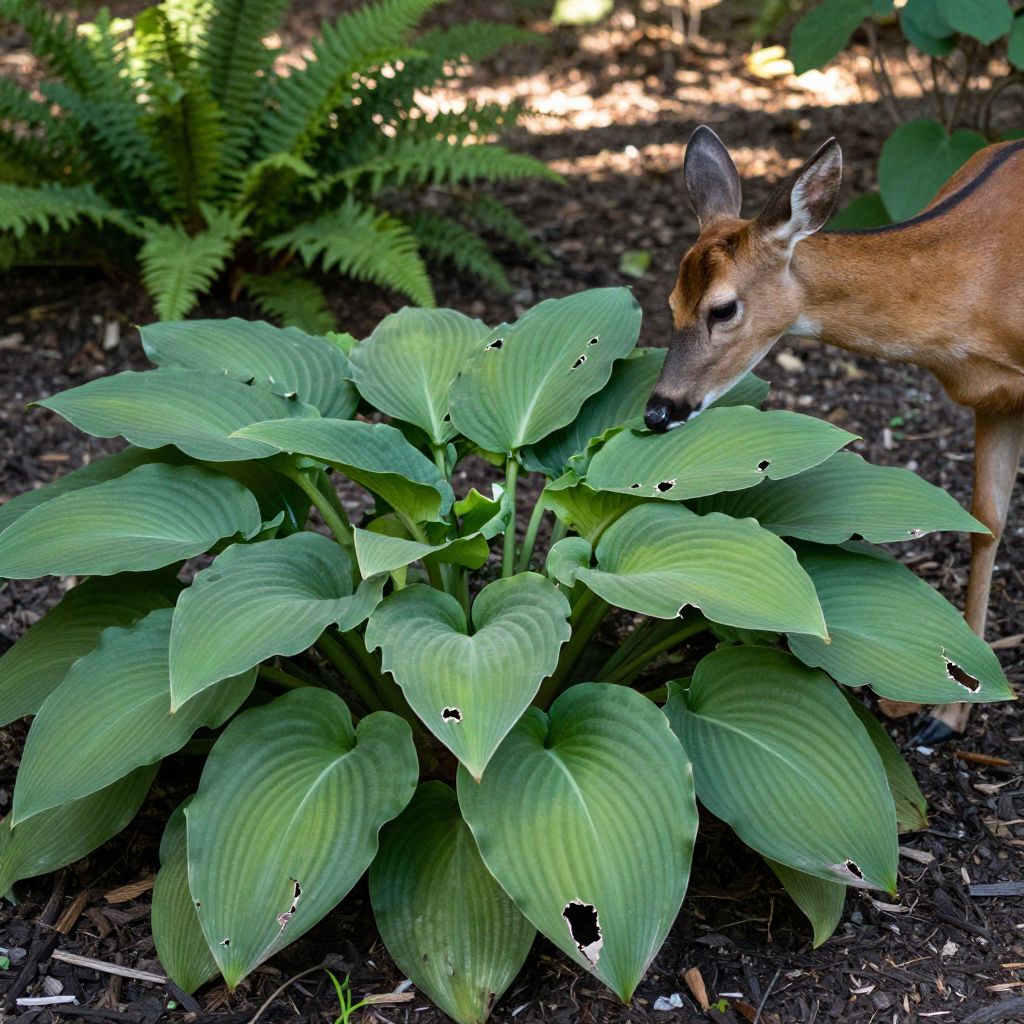
If you’re wondering, “Are hostas deer resistant?” the short answer is no—hostas are one of the plants deer most often browse. Their tender, broad leaves are especially attractive when other food is scarce, so deer may leave them shredded overnight.
You can still grow hostas successfully, but you’ll usually need to combine smart placement, physical protection, and regular monitoring. With the right approach, hostas can remain a beautiful shade-garden staple even in deer-prone yards.
Are hostas deer resistant?
No. Hostas are generally considered deer favorites rather than deer-resistant plants. Deer often eat the leaves, especially young growth, and may return repeatedly once they find a patch they like. In many gardens, the only reliable way to protect hostas is with fencing, netting, repellents, or planting them where deer cannot easily reach them.
Why deer target hostas
Hostas are soft, moisture-rich, and easy to chew, which makes them appealing to deer. The broad leaves offer a big meal with little effort, and new spring growth is often the first to be damaged.
What makes hostas so tempting
- Soft foliage that’s easy to bite through
- High moisture content in the leaves
- Early-season growth that appears before many other plants
- Shade-garden placement, often near wooded edges where deer travel
When deer are hungry, they may eat hostas even if other plants are nearby. In some landscapes, they may also return to the same bed night after night once they learn it is an easy food source.
How to tell deer damage from other problems
Deer damage looks different from slug injury, drought stress, or disease. Knowing the difference helps you choose the right fix instead of treating the wrong problem.
Common signs of deer browsing
- Leaves torn or ragged rather than neatly cut
- Stems clipped at an angle or browsed down to the crown
- Plants stripped quickly, often overnight
- Tracks or droppings nearby
- Damage higher on the plant than slugs usually reach
Problems that can look similar
- Slugs and snails: irregular holes, usually with shiny slime trails
- Heat or drought stress: curling, wilting, or browning edges rather than missing foliage
- Frost damage: blackened, limp leaves after a cold snap
- Fungal issues: spotting, collapse, or discolored patches rather than clean browsing
How to protect hostas from deer
If deer pressure is moderate to heavy, protection works better than hoping deer will ignore the plants. The most reliable strategies are barriers and consistent deterrence.
1. Use physical barriers first
Fencing is the most dependable solution. Deer can jump surprisingly high, so a fence usually needs to be tall enough to discourage entry or designed as a double barrier.
- Single fence: typically about 7 to 8 feet tall for strong protection
- Double fence: two shorter fences spaced apart can confuse deer and reduce jumping
- Individual cages: useful for a few prized hostas or new plantings
- Netting or mesh: can help in small beds if installed securely
Make sure the barrier is practical for your yard. A shorter fence may still help if deer are timid or if your garden layout makes access awkward, but it may not be enough in high-pressure areas.
2. Try repellents, but reapply regularly
Deer repellents can reduce browsing, especially when used before deer start feeding heavily. They work best when you rotate products and reapply after rain or new growth.
- Choose a repellent labeled for deer
- Apply before damage begins if possible
- Reapply after heavy rain or according to the label
- Use a different product occasionally to avoid deer getting used to one scent or taste
Repellents are most useful as part of a larger plan. If deer are very hungry, no spray is completely dependable on its own.
3. Place hostas in less exposed spots
Site selection can make a difference. Deer are more likely to browse plants in open, easy-to-reach areas than those tucked near doors, patios, or high-traffic spaces.
- Plant hostas close to the house if that fits your design
- Use them in enclosed courtyards or fenced beds
- Avoid placing them at the edge of wooded areas if deer are common
- Group them with less-palatable plants to make access less inviting
4. Mix in other plants, but don’t rely on “deer-resistant” labels alone
Some plants are less appealing to deer, but no plant is completely safe when food is limited. If you want a low-maintenance landscape, combine hostas with more deer-resistant companions and still protect the hostas themselves.
Best growing conditions for healthy hostas
Healthy hostas recover better from minor browsing and handle stress more effectively. Give them the right site, soil, and moisture so they can grow vigorously.
Light
Hostas usually perform best in partial to full shade, though some varieties tolerate more sun if the soil stays evenly moist. Morning sun and afternoon shade is often a good balance.
Too much sun can scorch leaves, especially on variegated types. Too much shade can reduce vigor and make plants weaker, which can make browsing damage more noticeable.
Soil
Hostas prefer rich, well-drained soil with plenty of organic matter. Before planting, mix in compost to improve structure and moisture retention.
- Work compost into the top 6 to 8 inches of soil
- Aim for soil that holds moisture but does not stay soggy
- Avoid compacted, heavy clay unless you improve drainage first
Watering
Water deeply when the top layer of soil begins to dry, especially during establishment and hot spells. Consistent moisture helps hostas produce lush leaves, but soggy soil can lead to rot.
Water at the base of the plant if possible. Wet foliage can encourage disease, and overhead watering wastes water where roots need it most.
Planting hostas for better survival
Good planting technique helps hostas establish faster and recover from stress more easily. It also gives you a stronger plant if deer nibble the leaves.
- Choose a site with shade or dappled light and decent drainage.
- Loosen the soil and blend in compost if the bed is poor or compacted.
- Dig a hole wide enough for the roots to spread naturally.
- Set the crown at the same depth it was growing in the pot or division.
- Backfill gently, water thoroughly, and mulch lightly.
Keep mulch a few inches away from the crown so moisture does not collect against the base. A 2- to 3-inch layer of organic mulch is usually enough to help conserve moisture and suppress weeds.
What to do after deer damage
If deer have already eaten your hostas, don’t panic. Many hostas can regrow leaves if the crown and roots are still healthy.
Recovery steps
- Remove shredded leaves with clean pruners if they are badly damaged
- Water the plant well if soil is dry
- Check for repeated browsing and add protection immediately
- Feed lightly only if the soil is poor or the plant is clearly weak
If the hosta was stripped heavily in spring, it may send up new leaves later in the season. If the crown is repeatedly eaten, however, the plant may remain stunted or decline over time.
Common mistakes to avoid
Many gardeners try one quick fix and then wonder why the deer keep coming back. A few common missteps can make protection much less effective.
- Relying on a single repellent for the whole season
- Waiting until after damage starts to protect new growth
- Planting hostas in open, deer-travel areas
- Letting plants become stressed by drought or poor soil
- Assuming “deer resistant” means deer proof
Can you still grow hostas in deer country?
Yes, but you should plan for protection from the start. In areas with light deer pressure, repellents and smart placement may be enough. In areas with regular browsing, physical barriers are usually the best investment.
If you love hostas, think of deer protection as part of the planting plan, not an afterthought. That approach saves time, preserves the foliage, and gives the plants a better chance to thrive.
If you’re also dealing with deer pressure elsewhere in the garden, it can help to learn what attracts them and how to reduce browsing around the whole yard. You may also want to read what to feed deer if you’re trying to understand deer behavior and avoid accidentally encouraging them to stay.