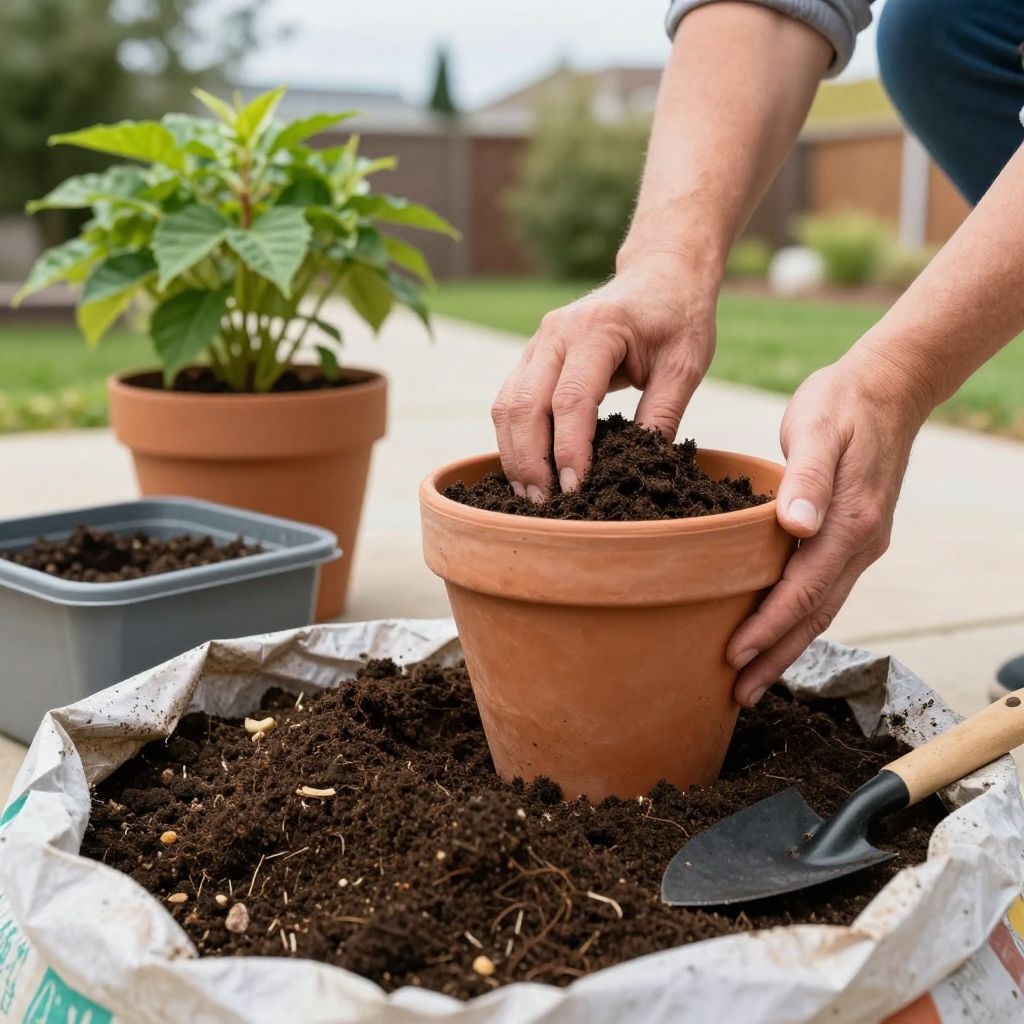
Can I use garden soil in pots? It’s a common question, especially when you have a bag of soil left over from a raised bed or want to save money on container plants. The short answer is that you usually should not use straight garden soil in pots, because it can compact, drain poorly, and create root problems.
Some plants may tolerate a small amount mixed into a container blend, but most potted plants do best in a lighter, well-aerated potting mix made for containers. The right choice depends on the plant, the pot size, and whether the container stays indoors or outdoors.
Can I use garden soil in pots?
Yes, but only with caution. Straight garden soil is usually too dense for containers, so it can hold too much water, reduce oxygen around roots, and become hard over time. For most pots, a quality potting mix is safer and easier to manage than garden soil alone.
Why garden soil behaves differently in containers
Garden soil is designed for the ground, where worms, microbes, and natural drainage help keep it loose. In a pot, that same soil has nowhere to spread out, so it can settle tightly and stay wet longer than roots like.
Common problems with garden soil in pots
- Poor drainage that can lead to root rot.
- Compaction, which limits air movement to roots.
- Uneven watering, where the top dries but the bottom stays soggy.
- Salt buildup if fertilizer and minerals cannot flush through well.
- Weed seeds, insects, or disease organisms that may already be in the soil.
Container roots need both moisture and air. If the mix stays waterlogged, plants may wilt even when the soil feels wet.
When garden soil can work in pots
Garden soil is not always a complete no. In some large outdoor containers, you can blend a small amount into a container mix to improve structure or reduce cost, but it should not make up the whole potting medium.
Situations where a small amount may be acceptable
- Very large outdoor planters with enough volume for better drainage.
- Temporary containers for hardy landscape plants being held short term.
- Mixing with compost, bark, perlite, or coco coir to improve texture.
Even then, use garden soil sparingly. A container mix should still feel light and crumbly, not heavy or sticky when wet.
Best soil for pots: what to use instead
For most container gardening, use a potting mix rather than garden soil. Potting mix is formulated to drain well while still holding enough moisture for container roots.
What a good potting mix usually contains
- Peat moss, coco coir, or another moisture-holding base
- Perlite or pumice for air space and drainage
- Bark or compost for structure and nutrients
Different plants need different blends. Cacti and succulents prefer a grittier mix, while vegetables and many houseplants do better in a standard potting mix with good moisture retention.
How to use garden soil in pots the right way
If you want to use garden soil, amend it heavily and test the texture first. The goal is to create a mix that drains freely and does not pack down after watering.
Simple container blend for outdoor use
- Sift out rocks, roots, and debris from the garden soil.
- Mix in equal parts potting mix or composted bark to lighten it.
- Add perlite or pumice if the soil still feels heavy.
- Moisten the blend and check that it crumbles rather than clumps.
A useful rule is to keep garden soil as only a minor component of the final mix. If it feels like clay, stays in a ball, or turns slick when wet, it is too heavy for most pots.
Drainage matters as much as soil
Even the best soil can fail in a pot with poor drainage. Containers need drainage holes so excess water can escape, especially after rain or deep watering.
Drainage tips for healthier container plants
- Choose pots with at least one drainage hole.
- Use saucers only if you empty standing water after watering.
- Do not rely on rocks at the bottom of the pot to fix drainage; they usually do not help much.
- Raise outdoor pots slightly off the ground so water can move out freely.
If you are growing indoors, drainage is even more important because pots cannot dry as quickly as they do outside.
Watering container plants in garden-soil mixes
Garden soil in pots usually stays wet longer, so overwatering becomes more likely. Check moisture with your finger rather than watering on a fixed schedule.
How to tell when to water
- Insert a finger 1 to 2 inches into the mix.
- If it feels dry at that depth, water thoroughly.
- If it still feels cool and damp, wait.
Water until it runs from the drainage holes, then let the excess drain away. Shallow watering encourages weak roots near the top of the pot.
Choosing the right pot size and material
Pot size affects how quickly soil dries. Large pots hold moisture longer, which can make garden soil problems worse. Small pots dry faster but may need more frequent watering.
Helpful container choices
- Terracotta dries faster and can help with heavy mixes.
- Plastic or glazed pots hold moisture longer and are less forgiving with dense soil.
- Fabric pots improve air pruning and can reduce compaction issues.
If you are using any soil that is heavier than a standard potting mix, a breathable container can help reduce waterlogging.
Which plants are more forgiving?
Some plants handle heavier mixes better than others, especially if they are strong growers or planted outdoors in large containers. Still, most container plants prefer a lighter medium.
Plants that may tolerate a slightly heavier mix
- Many herbs grown outdoors in large pots
- Some annual flowers in roomy containers
- Hardy shrubs kept temporarily in nursery-sized pots
Plants that are especially sensitive to wet roots, such as succulents, cacti, and many indoor houseplants, usually need a much airier potting mix.
Common mistakes to avoid
Most container failures with garden soil come from a few avoidable errors. If you know these in advance, you can save a plant before it declines.
- Using straight garden soil in a pot.
- Filling containers with soil from the yard that may contain pests or weed seeds.
- Ignoring drainage holes.
- Watering on a rigid schedule instead of checking moisture.
- Using a mix that is too fine and dense for the plant type.
Troubleshooting signs your potting mix is wrong
If your plant is struggling, the soil may be part of the problem. Look for patterns rather than assuming the plant simply needs more water or fertilizer.
Signs of a mix that is too heavy
- Leaves yellowing while soil stays wet
- Slow growth despite adequate light
- Mold or algae on the soil surface
- Wilting even though the pot feels heavy
What to do
- Stop watering until the top layer dries slightly.
- Check that drainage holes are open.
- Repot into a lighter mix if the soil stays soggy for days.
- Trim any black, mushy roots before replanting.
If the plant is in active decline, repotting sooner is usually better than waiting for the soil to “dry out on its own.”
Repotting from garden soil to potting mix
When a plant has been growing in garden soil inside a pot, moving it into a better mix can make a big difference. Repotting is especially helpful if the plant has been sitting in wet soil for a long time.
Step-by-step repotting approach
- Choose a pot with drainage holes and only slightly larger than the root ball.
- Remove the plant gently and loosen compacted soil from the roots.
- Trim away dead or rotted roots with clean pruners.
- Set the plant in fresh potting mix and firm lightly.
- Water once to settle the mix, then let excess water drain.
Do not bury the crown of the plant deeper than it was before. That can increase rot problems, especially in wet mixes.
Indoor vs. outdoor container growing
Indoor pots and outdoor pots face different conditions, so the same soil mix may not behave the same way in both places.
Indoor containers
Indoor plants usually need a lighter, cleaner potting mix because they dry more slowly and receive less natural airflow. Heavy garden soil indoors often causes long-lasting wetness and fungus gnats.
Outdoor containers
Outdoor pots dry faster in sun and wind, but rain can also saturate them. In hot climates, a slightly moisture-retentive potting mix may be useful, while in cool or rainy climates, extra drainage is often more important.
Fertilizer and soil health in pots
Garden soil can seem “rich,” but container plants still need regular feeding because nutrients wash out of pots over time. Potting mix is usually a better base, and you can supplement it with fertilizer suited to the plant.
Use fertilizer according to the plant type and product directions. Avoid overfeeding plants already stressed by dense, wet soil, because fertilizer will not solve drainage problems.
Final takeaways for healthy container plants
So, can I use garden soil in pots? You can in limited cases, but it is usually not the best choice. For most containers, a lightweight potting mix gives roots the air, drainage, and moisture balance they need.
If you want the safest approach, repot into a container mix, make sure the pot drains well, and check moisture before watering. For more container-growing guidance, see how to choose the right potting mix and container drainage tips for healthy roots.