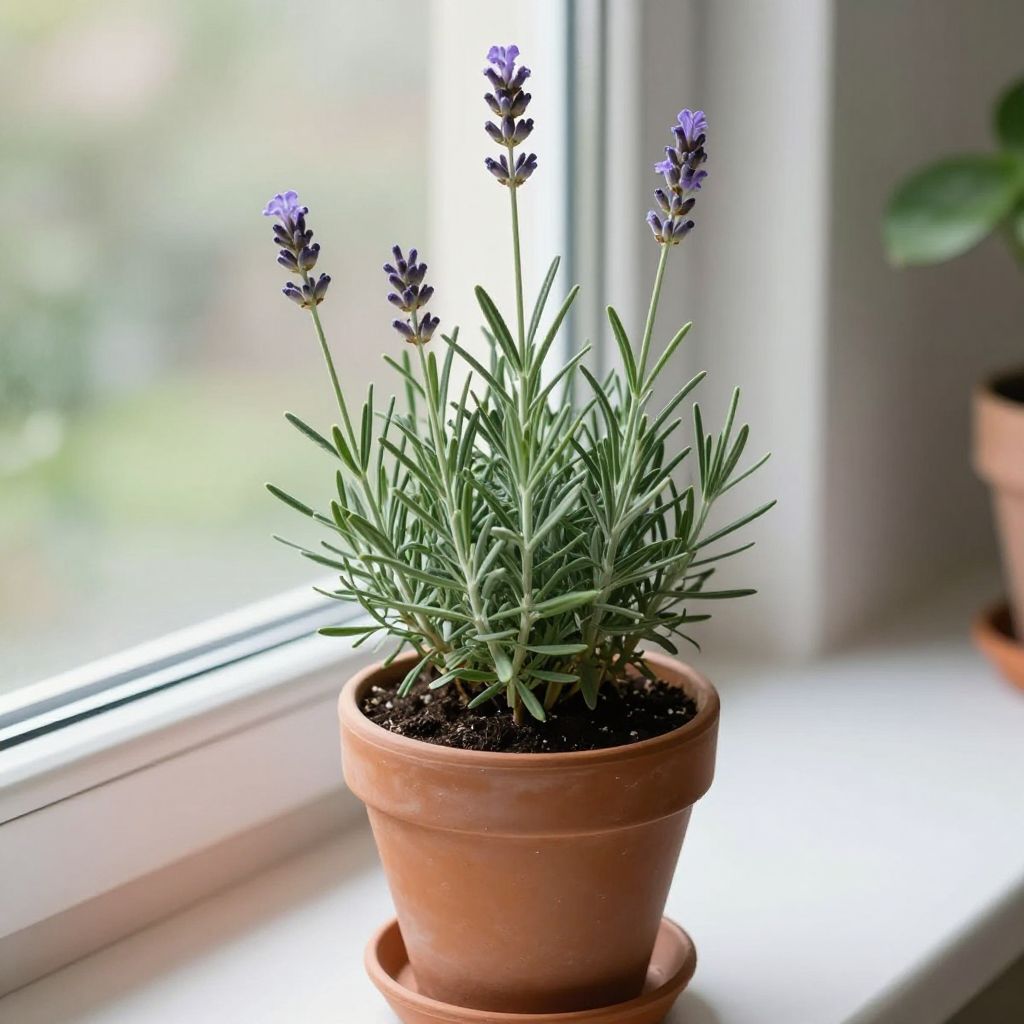
Can lavender grow inside? Yes, but it is one of the trickier herbs to keep happy indoors. Lavender needs very bright light, sharp drainage, and careful watering, and many indoor failures come from too little sun or soil that stays wet too long.
If you can give it a sunny window, a lean potting mix, and good airflow, lavender can live indoors for a while and even bloom. The key is to mimic the dry, bright conditions it prefers outside as closely as possible.
Can lavender grow inside?
Yes, lavender can grow inside if you provide at least 6 to 8 hours of strong light, a fast-draining pot, and a dry-down period between waterings. It usually performs best in a south-facing window or under a grow light. Indoors, the main challenge is preventing excess moisture and weak, leggy growth.
Why lavender is harder indoors than outdoors
Lavender is a Mediterranean plant that naturally grows in bright sun, lean soil, and breezy conditions. Most homes are dimmer and more humid than lavender prefers, so the plant often stretches, stops blooming, or develops root rot if its needs are not adjusted.
The biggest indoor challenges
- Not enough light: weak stems, sparse foliage, and fewer flowers.
- Too much water: yellowing leaves, drooping, and root problems.
- Poor airflow: higher risk of fungal issues and mildew.
- Heavy potting mix: roots stay wet too long and decline.
Best lavender varieties for indoor growing
Some lavender types adapt better to containers and indoor conditions than others. Lavandula angustifolia is often the safest choice because it is compact and widely grown in pots. French lavender (Lavandula dentata) can also do well indoors if light is strong, though it still needs excellent drainage.
Choose a smaller, compact plant rather than a large, fast-growing one. A young plant in a 6- to 8-inch pot is usually easier to manage indoors than a mature shrub that has already outgrown its space.
How to grow lavender indoors successfully
1. Give it the brightest light possible
Lavender needs intense light to stay compact and flower well. A south-facing window is usually best, followed by a west-facing window with several hours of direct sun. If your home is dim, use a full-spectrum grow light placed close enough to prevent stretching.
- Rotate the pot every week so growth stays even.
- Keep leaves clean so they can absorb more light.
- If stems become long and floppy, the plant is not getting enough light.
2. Use a pot with excellent drainage
Drainage is non-negotiable for indoor lavender. Use a container with at least one large drainage hole, and never let the pot sit in standing water inside a saucer or cachepot.
Terracotta is often a good choice because it helps the mix dry faster. A pot that is only slightly larger than the root ball is usually better than an oversized container that holds too much moisture.
3. Plant in a gritty, fast-draining mix
Lavender does not like rich, moisture-retentive soil. Use a light potting mix amended with coarse materials such as perlite, pumice, or coarse sand to improve drainage and air around the roots.
A practical indoor mix is one that feels loose and drains quickly when watered. If your mix stays soggy for more than a day or two, it is too heavy for lavender.
4. Water only when the mix dries
Water lavender deeply, then let the top portion of the soil dry before watering again. Indoors, that may mean watering less often than most houseplants, especially in winter when growth slows.
- Check the top 1 to 2 inches of mix with your finger.
- Water thoroughly until excess drains out.
- Empty the saucer after watering.
Overwatering is the most common reason indoor lavender fails. If the plant looks limp but the soil is still moist, do not water again. Check for root rot instead.
5. Keep temperatures moderate and air moving
Lavender prefers cool to moderate indoor temperatures and good airflow. A room that is warm but not stuffy is better than a hot, humid corner. Avoid placing the plant right next to a radiator, heating vent, or steamy bathroom.
A small fan on a low setting can help circulate air, especially in winter or in rooms with little ventilation. Good airflow also helps reduce fungal problems.
Indoor lavender care through the seasons
Spring and summer
During active growth, lavender may need more frequent watering, but still only after the soil begins to dry. This is also the best time to prune lightly and shape the plant if it starts to become leggy.
If you move the plant outdoors for summer, harden it off gradually so the leaves do not scorch. Start with a few hours of morning sun and increase exposure over several days.
Fall and winter
Indoor lavender often slows down in winter, especially if light levels drop. Reduce watering, avoid fertilizer unless the plant is clearly growing, and keep the pot in the brightest spot available.
If your home is very dark in winter, a grow light can make the difference between survival and decline. Lavender that gets too little light indoors during winter often becomes weak and difficult to revive in spring.
Pruning and shaping indoor lavender
Pruning helps keep lavender compact and encourages bushier growth. Remove spent flower stems after blooming, and trim lightly to maintain shape. Avoid cutting far into old woody stems that have no green growth, because those sections may not regrow well.
- Snip flower spikes just above leafy growth.
- Trim long stems to keep the plant dense.
- Do not shear the plant into bare wood.
If the plant becomes too woody and sparse, it may be better to replace it or take cuttings from healthy tips and start over with a younger plant.
Feeding lavender indoors
Lavender is not a heavy feeder. Too much fertilizer can produce soft, leafy growth with fewer flowers and a weaker scent. If the potting mix is fresh and the plant looks healthy, it may need very little feeding at all.
If growth is slow but the plant is otherwise healthy, use a light, balanced fertilizer sparingly during the active growing season. Always follow the product label and avoid overfeeding, especially in winter.
Common indoor lavender problems and fixes
Yellow leaves
Yellowing often points to overwatering or poor drainage. Check the soil first, not just the leaves. If the mix is wet, let it dry more fully and make sure the pot drains freely.
Leggy, stretched growth
This usually means the plant needs more light. Move it to a brighter window or add a grow light. You can also prune lightly to encourage a fuller shape.
Drooping stems
Drooping can come from either underwatering or root damage from too much moisture. Feel the soil before reacting. Dry soil suggests the plant needs water; wet soil suggests a drainage or root issue.
No flowers
Lavender may refuse to bloom indoors if light is too weak, temperatures are too warm, or the plant is overfed. Strong light and a slightly lean, dry setup are usually the best fixes.
Fungal problems
Powdery mildew and other fungal issues are more likely when air is still and foliage stays damp. Improve airflow, avoid wetting the leaves, and remove affected growth if needed.
Pests to watch for indoors
Indoor lavender can occasionally attract aphids, spider mites, or whiteflies, especially if the plant is stressed. Inspect the undersides of leaves regularly so you can catch problems early.
- Rinse small infestations off with a gentle spray of water.
- Isolate the plant from other houseplants if pests appear.
- Remove badly infested stems to slow spread.
Can you propagate lavender indoors?
Yes, you can propagate lavender from soft stem cuttings indoors if you have a healthy parent plant. Take a non-flowering tip cutting, remove the lower leaves, and place it in a very light, moist but not soggy rooting medium.
Keep cuttings in bright light without direct harsh sun until roots form. Good airflow and careful moisture control matter here too, because cuttings rot easily in overly wet conditions.
Harvesting indoor lavender
If your indoor lavender blooms, harvest stems when the flowers are just opening for the best fragrance. Cut in the morning after the dew has dried, and use the stems fresh or dry them in a cool, airy place.
Regular harvesting can also help the plant stay neat and may encourage more branching. Just avoid removing too much foliage at once, since the plant still needs leaves to photosynthesize.
Should you keep lavender indoors long term?
Some gardeners keep lavender indoors successfully for months or even years, but many plants do better with at least part of the year outdoors in suitable weather. If your climate allows, a seasonal move to a sunny patio or balcony can improve growth and flowering.
If you want lavender mainly as a houseplant, choose the brightest spot you have and be strict about drainage and watering. If you want the strongest, longest-lived plant, outdoor growing is usually easier.
Quick indoor lavender checklist
- Use a pot with drainage holes.
- Give 6 to 8 hours of strong light.
- Plant in a gritty, fast-draining mix.
- Water only after the soil begins to dry.
- Keep air moving and humidity moderate.
- Prune lightly to maintain shape.
Conclusion
So, can lavender grow inside? Yes, if you treat it more like a sun-loving, drought-tolerant shrub than a typical houseplant. Focus on bright light, dry roots, and good airflow, and your plant has a much better chance of staying healthy. If you are planning your next indoor herb project, compare lavender’s needs with other container herbs before you buy.
Leave a Reply