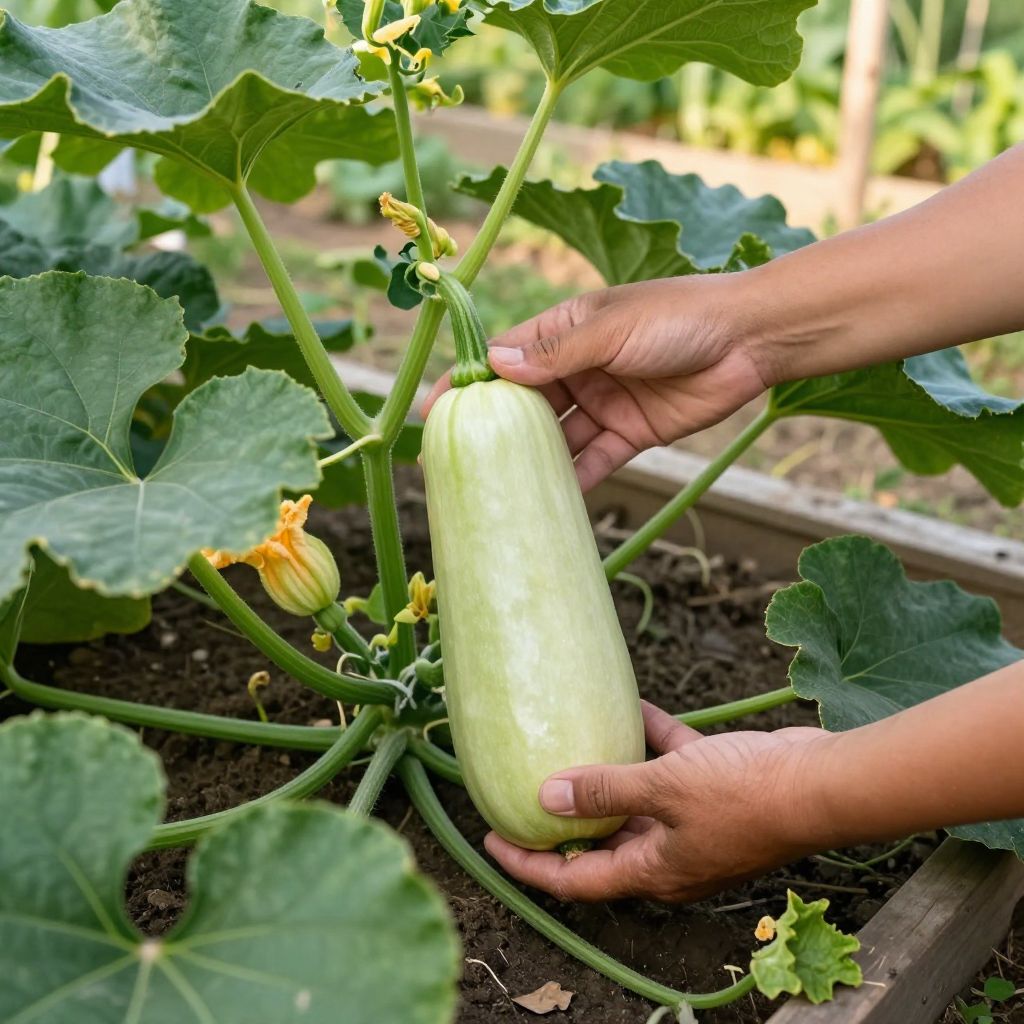
Wondering when to harvest squash so it tastes best and stores well? The right picking time depends on the type of squash you’re growing, because summer squash and winter squash are harvested at different stages of maturity. If you pick too early, fruits may be small and bland; if you wait too long, they can become tough, seedy, or overripe.
The good news is that squash gives clear visual clues. With a little practice, you can learn to harvest at peak flavor, improve storage life, and keep the plant producing longer.
When to harvest squash?
Harvest squash when it reaches the right size, color, and skin firmness for its type. Summer squash is picked young and tender, usually before the skin hardens, while winter squash is left on the vine until fully mature with a hard rind and dry stem. Always check the specific variety if possible.
How to tell if squash is ready to pick
The easiest way to know when to harvest squash is by combining size, skin texture, and stem condition. Don’t rely on size alone, because different varieties mature at different rates.
Summer squash readiness signs
Summer squash includes zucchini, yellow crookneck, straightneck, and pattypan types. These are harvested immature, while the skin is still tender.
- Size: Most are best when small to medium, often 6 to 8 inches long for zucchini, though some varieties are best even smaller.
- Skin: It should be glossy and easy to pierce with a fingernail.
- Seeds: The seeds should be soft and undeveloped.
- Texture: The flesh should feel firm but not woody.
If summer squash grows too large, it often becomes watery, seedy, and less flavorful. Frequent picking usually encourages the plant to keep producing.
Winter squash readiness signs
Winter squash includes butternut, acorn, spaghetti squash, kabocha, and many pumpkins. These are harvested fully mature for curing and storage.
- Skin: It should be hard and difficult to scratch with a fingernail.
- Color: The fruit should have developed its mature, rich color.
- Stem: The stem often turns dry, corky, and firm.
- Vine: The vine may begin to decline as the fruit finishes ripening.
For many winter squash, the rind should resist pressure and the fruit should feel heavy for its size. If frost is approaching, harvest even if the squash is not fully cured on the vine.
How to harvest squash without damaging the plant
Use clean, sharp pruners or a knife rather than twisting fruit off by hand. A clean cut protects the vine from tearing and reduces the chance of disease entering the plant.
- Inspect the fruit and confirm it looks ready.
- Hold the squash gently with one hand.
- Cut the stem with pruners, leaving a short stem attached.
- Place the harvested squash carefully in a basket or tray.
For winter squash, leave a stem stub of about 1 to 2 inches if possible. A broken or missing stem can shorten storage life.
Best harvest timing by squash type
Summer squash
Pick summer squash every 1 to 3 days during peak production, especially in warm weather. Fruits can grow surprisingly fast, sometimes getting oversized in just a couple of days.
Harvest in the morning if you can, when the fruit is firm and cool. This helps preserve quality after picking.
Winter squash
Winter squash usually needs a longer season and should stay on the vine until mature. Depending on the variety and climate, this may be late summer into fall.
Many gardeners wait until the rind is fully hardened and the stem begins to dry before cutting. If weather turns cold or wet, harvest promptly to avoid frost damage and rot.
Pumpkins
Pumpkins are often treated like winter squash, but timing varies by type. Decorative pumpkins and pie pumpkins should be harvested when the skin is fully colored and firm, and the vine is starting to decline.
Do not leave pumpkins sitting on wet soil for long periods if you can avoid it. Use a board, straw, or mulch to reduce rot and pest damage.
What happens if you harvest too early or too late?
Picking at the wrong time affects both flavor and storage. The mistake is common, especially when fruit looks impressive before it is truly mature.
If you pick summer squash too late
- The skin becomes tougher.
- Seeds enlarge and feel hard.
- The texture turns stringy or dry.
- Flavor becomes less delicate.
If you pick winter squash too early
- The rind may stay soft.
- The flesh can taste bland or watery.
- Storage life is usually shorter.
- The squash may not cure well after harvest.
Important: Winter squash can sometimes continue to cure after harvest, but it will not improve much if picked before it has reached near-full maturity on the vine.
How weather affects harvest time
Local climate matters a lot. In cool regions, squash may mature more slowly, while in hot weather it can size up quickly and become overripe fast.
Before frost
Summer squash is usually damaged by frost and should be harvested before cold nights arrive. Winter squash also needs protection from frost, even if the fruit looks close to ready.
During wet weather
Wet conditions can increase the risk of rot, especially for fruit resting on soil. Harvest mature squash promptly and handle it gently to avoid bruising or stem injury.
In hot weather
Summer squash can overgrow almost overnight. Check plants frequently, and don’t assume yesterday’s size is still ideal today.
How to cure winter squash after harvest
Curing helps harden the rind and improve storage quality for many winter squash and pumpkins. This step is especially useful if the fruit was harvested at the right stage but still has a slightly soft skin.
- Place the squash in a warm, dry, well-ventilated spot.
- Keep fruits out of direct rain and away from damp ground.
- Allow air to circulate around each fruit.
- Turn them gently if needed so they dry evenly.
Exact curing time varies by type and conditions, but the goal is a firmer rind and a drier stem. Avoid curing in humid, poorly ventilated spaces, which can encourage mold and decay.
Common mistakes to avoid
- Waiting for oversized summer squash: Bigger is not better for eating quality.
- Pulling fruit off the vine: This can tear stems and damage the plant.
- Ignoring stem condition: For winter squash, a dry stem is often a better sign than size alone.
- Harvesting in wet conditions when avoidable: Wet fruit is more prone to bruising and rot.
- Storing damaged squash: Cuts, cracks, and missing stems reduce keeping quality.
Troubleshooting poor squash quality
Squash is bitter or bland
Overmature summer squash often loses its tender texture and flavor. If the fruit is already large, it may be better for compost rather than the table.
Winter squash won’t harden
If the rind stays soft, the fruit may not have matured enough before harvest. Give remaining fruits more time on the vine if weather allows, or harvest before frost and accept shorter storage life.
Fruit rots at the stem end
This can happen when the stem is damaged, the fruit sits on wet soil, or pests and disease enter through wounds. Harvest carefully and keep fruits dry and elevated.
Plants stop producing
For summer squash, letting fruit get too large can slow production. Frequent picking often helps the plant keep flowering and setting new fruit.
Simple harvest checklist
Before you cut, use this quick check:
- Is it the right type of squash?
- Does it match the expected size for that variety?
- Is the skin tender for summer squash or hard for winter squash?
- Is the stem in good condition?
- Is frost or heavy rain coming soon?
Conclusion
When to harvest squash comes down to knowing the type you’re growing and watching for the right maturity signs. Pick summer squash young and tender, and leave winter squash on the vine until the rind hardens and the stem dries. If you’re unsure, check your plants every day or two and harvest a test fruit to compare.
For more practical help with your vegetable garden, you may also want to read about how to grow zucchini and how to grow pumpkins.
Leave a Reply