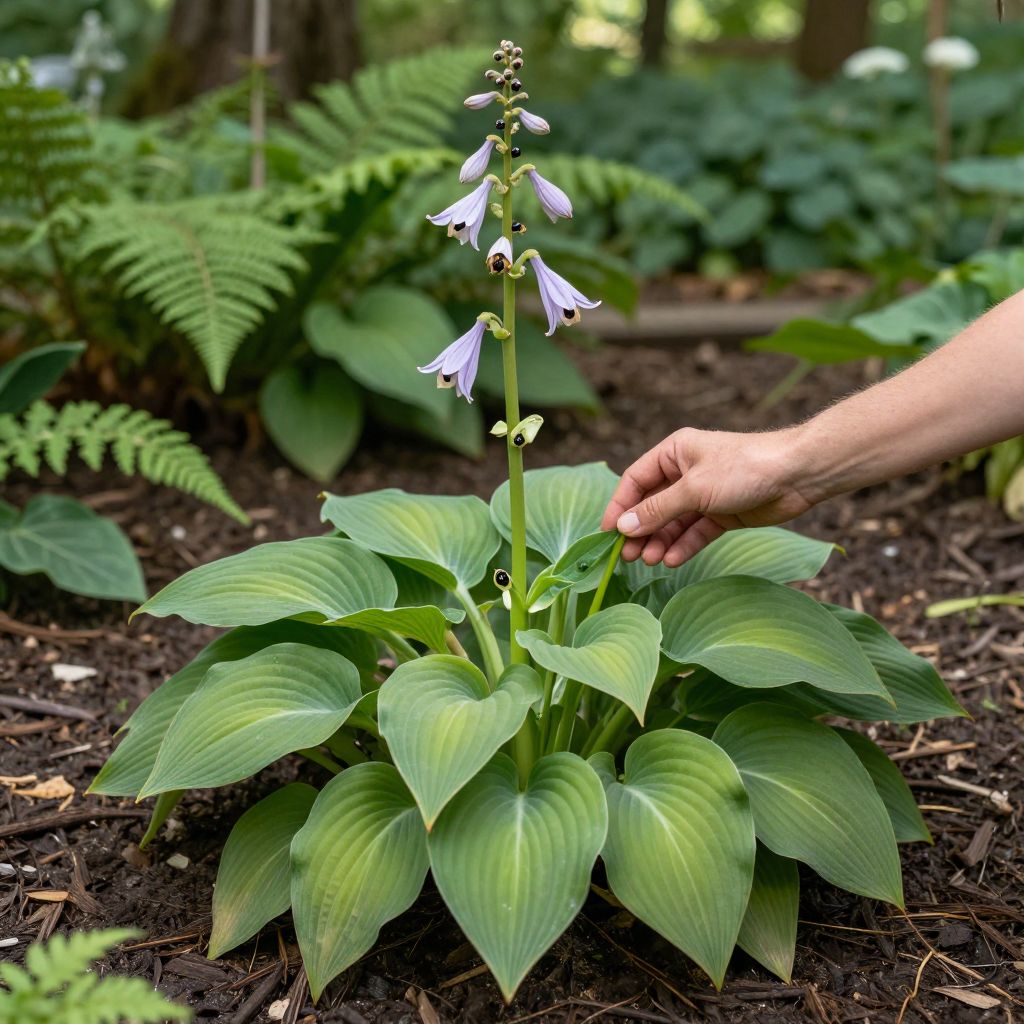
Wondering what do hosta seeds look like when your plant finishes flowering? Hosta seeds are small, flat, black to dark brown seeds held inside thin, dry seed pods that form after the lavender or white flowers fade. They usually look a bit like tiny papery triangles or flattened teardrops, and they’re easiest to spot once the pods split open.
If you want to collect them, the key is timing. Hosta seeds are mature only after the seed pods dry on the stalk, and they can be easy to miss if you wait too long or if birds, wind, or rain scatter them first.
What do hosta seeds look like?
Hosta seeds are small, flat, dark seeds that develop in dry, upright pods after flowering. Each pod usually contains several seeds arranged in rows. When ripe, the pods turn tan or brown, dry out, and split open, revealing shiny black or very dark brown seeds that are easy to spill if handled roughly.
How hosta seeds develop after flowering
Hostas bloom on tall stalks called scapes. After the flowers fade, the plant may put energy into seed production if the flowers were pollinated.
Not every hosta produces viable seed, and seedlings may not look like the parent plant. That matters if you are hoping to grow a specific cultivar from seed, because many named hostas do not come true from seed.
From flower to seed pod
- Flowers fade first, often leaving a dried, papery flower base.
- The ovary behind each flower swells into a narrow pod.
- Pods start green, then turn tan, beige, or brown as they ripen.
- When fully mature, the pod dries and splits lengthwise.
- The seeds inside are small, flat, and dark.
What the seeds themselves look like
- Color: usually black, very dark brown, or nearly charcoal.
- Shape: flat, oval, teardrop-like, or slightly triangular.
- Size: typically only a few millimeters long.
- Texture: smooth and dry, sometimes with a slight sheen.
How to tell ripe hosta seeds from unripe ones
Unripe hosta seeds are usually pale, soft, and tucked inside green pods. Ripe seeds are dark, firm, and separated easily from the pod. If the pod is still green and flexible, the seeds probably need more time.
Use the pod, not just the seed color, as your main clue. A dark seed inside a green pod may still be immature, while a brown, splitting pod usually means the seeds are ready or nearly ready.
Simple ripeness checks
- Look at the seed pod color. Green usually means wait; tan or brown usually means closer to ready.
- Gently squeeze the pod. A ripe pod feels dry and papery, not fleshy.
- Watch for splitting along the seam.
- Shake the stalk lightly. If you hear seeds rattling, harvest soon.
When to harvest hosta seeds
Harvest hosta seeds when the pods are dry but before they burst and scatter. In many gardens, this happens later in the season after flowering, but exact timing depends on your climate, weather, and the hosta variety.
Check the seed stalk every few days once the pods begin turning brown. Dry, windy, or rainy weather can speed up seed loss, so don’t wait for every pod to open fully if you want to save seed.
Best harvesting method
- Cut the seed stalk with clean scissors or pruners.
- Place it in a paper bag or tray to finish drying indoors.
- Let the pods open naturally in a dry, airy spot.
- Collect the seeds and remove any pod debris.
Tip: Use paper, not plastic, for drying. Plastic traps moisture and can encourage mold.
How to collect and store hosta seeds
Once the pods split, pour or pick out the seeds and separate them from the dry husks. If you are collecting seed from more than one plant, label each batch right away so you do not mix them up.
Store fully dry seeds in a cool, dry place in a paper envelope or another breathable container. If your storage area is humid, place the envelope inside a sealed jar or box with a desiccant packet, but make sure the seeds are dry before sealing them away.
Storage mistakes to avoid
- Storing seeds while they are still damp.
- Leaving them in direct sun or a hot shed.
- Mixing seed lots without labels.
- Using airtight storage for seeds that have not finished drying.
Can you grow hostas from seed?
Yes, you can grow hostas from seed, but it takes patience and the results may vary. Seed-grown hostas often differ from the parent plant, especially if the parent is a named cultivar. If you want an exact duplicate, division is usually the better method.
Growing from seed is useful if you enjoy experimenting or want to raise many seedlings. It is also a good way to see natural variation in leaf shape, color, and vigor.
Basic sowing approach
- Use a clean seed-starting mix with good drainage.
- Moisten the mix evenly before sowing.
- Place seeds on the surface and cover lightly, if at all, according to your seed source or local practice.
- Keep the medium evenly moist, not soggy.
- Provide bright light and moderate temperatures suited to seed starting.
Because conditions vary, match your setup to your local season and indoor growing space. A bright windowsill may be enough in some homes, but many gardeners get more reliable results with grow lights.
Common problems when checking hosta seeds
One of the biggest mistakes is confusing dried flower parts with actual seed pods. Another is harvesting too early, when the seeds are still pale and soft. If you are unsure, wait a few more days and check again.
Problem: Pods look dry but there are no seeds
Some flowers may not have been pollinated, so the pod forms but the seed is empty or poorly developed. This is common and not a sign that you did anything wrong.
Problem: Seeds are missing from the pod
If the pods opened on their own, wind, rain, or birds may have scattered the seed. Harvest a little earlier next time, and monitor the stalk more closely as pods begin to brown.
Problem: Mold appears during storage
That usually means the seeds were packed away before they were fully dry. Spread them out in a dry, shaded place and let them finish drying before storing again.
How hosta seeds fit into overall hosta care
Healthy hosta plants are more likely to produce mature seed pods. Hostas generally prefer rich, moisture-retentive soil with good drainage and partial shade, though exact light needs depend on the variety and your climate.
If your hosta is stressed by drought, compacted soil, or too much sun, it may produce fewer flowers and less seed. Keeping the plant evenly watered during dry spells and mulching lightly can help it stay vigorous.
Helpful care reminders
- Give hostas consistent moisture, especially in hot weather.
- Use compost to improve soil structure if your soil is poor.
- Make sure the planting area drains well.
- Remove spent flower stalks only after you have decided whether to save seed.
Quick visual guide: what to expect at each stage
- Fresh flower: open lavender, white, or pale blooms on a tall stalk.
- Fading flower: petals drop, leaving a small green swelling behind.
- Green pod stage: narrow pods form and enlarge.
- Ripe pod stage: pods turn tan or brown and begin to split.
- Seed stage: small, dark, flat seeds are visible inside or have fallen out.
Conclusion: the easiest way to recognize hosta seeds
If you remember one thing, remember this: hosta seeds are tiny, flat, dark seeds inside dry brown pods. Check the stalk as the pods ripen, harvest before they split open, and dry the seeds fully before storing them. If you want, inspect your hosta today and compare the pods to this guide.
For more practical plant-care help, you may also want to read about how to divide hostas and choosing plants for a shade garden.