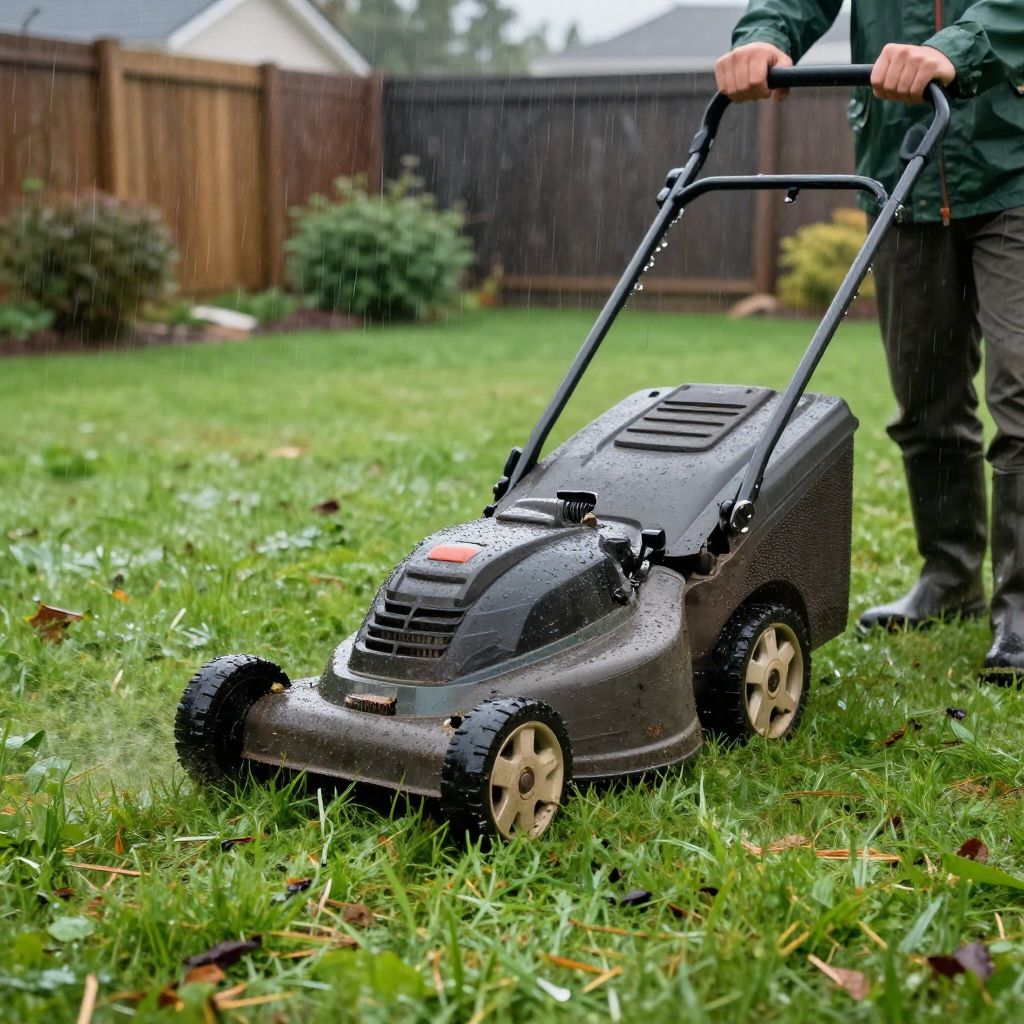
Can you cut grass in the rain? Sometimes, but it is usually a bad idea. Wet turf is easier to tear, mower traction is poorer, clippings clump together, and the risk of slipping or spreading lawn disease goes up. In most cases, it is safer and better for the lawn to wait until the grass surface has dried.
If you are trying to stay on schedule, the key is knowing when a lawn is merely damp versus too wet to mow. A few practical checks can help you decide whether to mow now, delay for a few hours, or skip the job until conditions improve.
Can you cut grass in the rain?
You can mow light, brief moisture in some situations, but mowing in steady rain is not recommended. Wet grass bends instead of standing upright, the mower may leave an uneven cut, and soggy soil can rut under the wheels. If the lawn is dripping, squishy, or slippery, wait for it to dry.
Why mowing wet grass is a problem
It can damage the lawn
Wet blades of grass are more likely to fold over and get torn rather than cleanly cut. Torn tips dry out and turn brown, which can make the lawn look ragged for several days.
Soft soil is also easier to compact. Repeated passes with a mower can press air out of the root zone, making it harder for roots to get oxygen and water movement to stay balanced.
It can create safety and equipment issues
Grass and mud reduce traction, especially on slopes or uneven ground. That raises the chance of slipping, tipping, or losing control of the mower.
Wet clippings also stick under the deck and around the discharge chute. That can reduce cutting performance, clog the mower, and make cleanup more difficult.
It may encourage disease spread
Many lawn diseases spread more easily when foliage stays wet for long periods. Mowing wet turf can move spores or infected debris from one part of the lawn to another, especially if the grass is already stressed.
This is most concerning when the lawn has a history of fungal problems, or when weather has been cool, humid, and rainy for several days in a row.
How to tell if your lawn is dry enough to mow
Use a few simple checks
- Step on the lawn: If your shoe leaves a deep print or water seeps up, it is too wet.
- Look at the blades: If grass is still glossy with water or bent over from rain, wait longer.
- Check the soil: If the ground feels spongy or sticky, mower wheels may rut the surface.
- Test a small area: Mow a short strip only if conditions seem borderline, then inspect the cut quality and traction.
A lawn can be damp on top and still be mowable if the soil is firm. The opposite is also true: a surface may look only slightly wet but still be too soft underfoot.
Best conditions for mowing
The safest time to mow is after the grass has dried enough that blades stand up and the soil supports your weight without sinking. Morning dew, drizzle, and recently saturated ground are all poor mowing conditions.
If weather is variable, try to mow during the driest part of the day once the sun and wind have had time to help dry the turf.
What happens if you mow wet grass anyway?
Common results
- Uneven cutting because the grass lies flat
- Clumps of wet clippings left on the lawn
- Wheel ruts or soil compaction
- More strain on the mower engine
- Higher slip risk for you
In a light, brief shower, you might finish a small lawn without major problems. But if the rain is steady or the turf is saturated, the downsides usually outweigh the convenience.
How to mow safely after rain
Wait for the right moment
After rain stops, give the lawn time to dry. The exact wait depends on temperature, wind, sun exposure, shade, soil type, and how much rain fell. Sandy soil dries faster than heavy clay, and shaded lawns stay wet longer than open ones.
If your yard stays wet for a long time after rain, drainage may be part of the problem rather than the mower schedule.
Adjust your mowing approach
- Raise the cutting height slightly if the lawn is still recovering from wet weather.
- Use a sharp blade so the mower slices cleanly instead of ripping wet leaves.
- Take narrower passes to reduce turf pressure and wheel marks.
- Empty the bag or clear clippings often if they start to clump.
- Stop if the mower begins slipping or leaving ruts.
If the grass is only slightly damp, a higher cut can help reduce stress. Cutting too short after rain can leave the lawn thin, patchy, and more vulnerable to weeds and heat stress.
Choose the right mower settings
Mulching mowers can struggle with wet grass because the clippings stick together. If your mower allows it, bagging may be cleaner in damp conditions, but only if the turf is not saturated and the clippings are not clogging the deck.
Never force a mower through waterlogged grass. That can damage the turf and the machine at the same time.
When you should not mow at all
Skip mowing if you notice these signs
- Standing water in low spots
- Deep footprints or tire marks after walking across the lawn
- Heavy rain still falling
- Slopes that are slick or muddy
- Grass so wet that clippings smear instead of cut
These are clear signs the lawn is too wet. Waiting a day or two is usually better than repairing ruts, compacted soil, or a rough cut later.
What to do if the grass is getting too long
Don’t scalp it to catch up
If rain has delayed mowing and the lawn is tall, avoid removing too much at once. A good rule is to cut no more than about one-third of the grass height in a single mow.
If the lawn is very overgrown, mow in stages. Set the mower higher for the first pass, then lower it again after the grass has recovered and dried out.
Use a staged approach
- Mow once at a higher setting when conditions are safe.
- Let the lawn dry and recover for a day or two.
- Mow again if needed to reach your normal height.
This approach reduces shock to the turf and helps prevent the yellowing that can happen after an overly aggressive cut.
How wet weather affects different lawn types
Cool-season and warm-season grasses
Most lawn grasses react similarly to wet mowing conditions, but growth rate and recovery differ. Fast-growing lawns may need more frequent mowing, while slower-growing lawns may tolerate a delay better.
Regardless of grass type, the same basic rule applies: if the lawn is saturated or slippery, wait.
New lawns need extra caution
Freshly seeded or newly sodded lawns are especially vulnerable. Their roots are not fully established, so mower wheels can disturb the surface more easily.
For new lawns, avoid mowing until the grass is tall enough and rooted firmly enough to resist being lifted or torn. If you are unsure, tug gently on a small patch; if it lifts easily, it is not ready.
How to care for your mower after cutting wet grass
Clean it right away
Wet clippings dry hard and can corrode metal parts or clog the underside of the deck. After mowing damp grass, disconnect the power source or spark plug before cleaning.
- Scrape off clumps from the deck
- Brush away grass from wheels and discharge areas
- Check the blade for buildup or dullness
- Let the mower dry before storage
Regular cleaning helps the mower cut better next time and reduces the chance of rust or mechanical strain.
Better ways to manage a rainy mowing schedule
Plan around weather, not the calendar
In rainy periods, mowing by habit can lead to repeated damage. Instead, watch the lawn itself. If it is dry enough, mow. If not, wait.
If your area often gets frequent showers, consider keeping the mower blades sharp, maintaining a slightly higher cutting height, and improving drainage in low spots so the lawn dries faster.
Improve drainage where needed
If water lingers after every storm, the problem may be soil compaction, poor grading, or a low area that collects runoff. Aeration, topdressing, or reshaping drainage patterns may help over time, depending on the site.
For persistent puddling, it may be worth addressing the drainage issue rather than repeatedly mowing around it.
Quick answer: should you mow in the rain?
Usually no. Light dampness is sometimes manageable, but rain, saturated soil, and slippery turf make mowing harder on the lawn, the mower, and you. Wait until the grass is dry enough to stand upright and the ground is firm enough to support your steps without sinking.
If you want more practical lawn care guidance, it also helps to read about sharpening lawn mower blades and improving lawn drainage so your grass dries faster and cuts cleaner after wet weather.