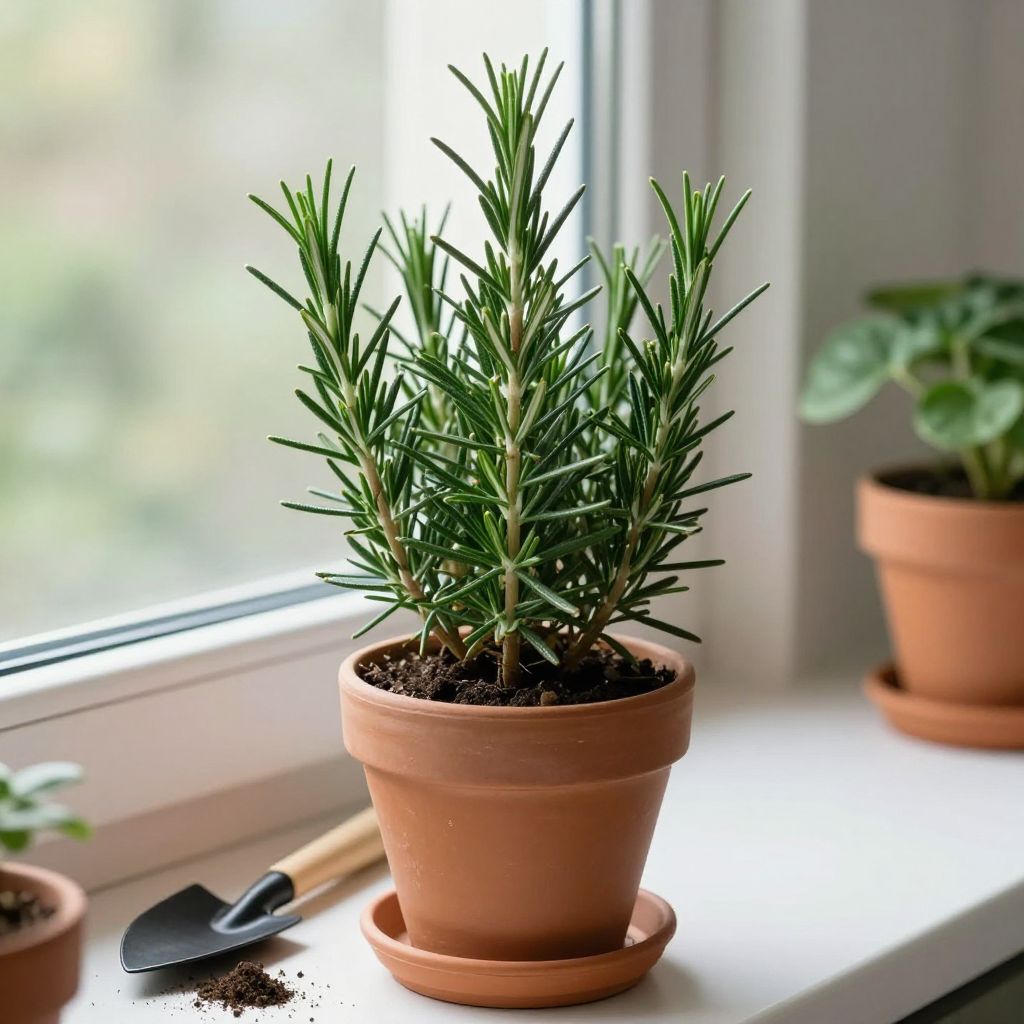
Can you grow rosemary indoors? Yes—if you give it bright light, sharp drainage, and careful watering, rosemary can do well in a pot inside your home. The biggest challenge is usually not keeping it alive, but keeping it from getting too little sun or too much moisture.
Rosemary (Salvia rosmarinus) is a Mediterranean herb that prefers lean soil, dry air, and plenty of sun. Indoors, your job is to mimic those conditions as closely as possible while adjusting for your home’s light, temperature, and humidity.
Can you grow rosemary indoors?
Yes, rosemary can be grown indoors successfully if it gets at least 6 to 8 hours of strong light, is planted in fast-draining soil, and is watered only when the top layer of soil dries out. Indoor rosemary often fails from low light, soggy roots, or poor air circulation, not from lack of care.
What rosemary needs indoors
Light is the make-or-break factor
Rosemary is a sun-loving herb. A bright south-facing window is usually best, though an east- or west-facing window may work if the plant still gets several hours of direct sun.
If your home is dim, use a grow light. Place it close enough to provide strong light without overheating the foliage, and keep it on for a consistent daily cycle.
Temperature and airflow
Rosemary prefers cool to moderate indoor temperatures. Warm, stagnant rooms can encourage weak growth and pests, while very cold drafts can stress the plant.
- Keep it away from heating vents and radiators.
- Avoid placing it right next to cold window glass in freezing weather.
- Give it gentle air movement, but not a strong draft.
Humidity and indoor conditions
Rosemary usually does better in average household humidity than in very damp conditions. Excess humidity, especially with poor airflow, can increase the risk of fungal problems.
If your home is naturally humid, focus even more on drainage and spacing the plant so air can move around it.
Best pot and soil for indoor rosemary
Choose a container with drainage
A pot with drainage holes is essential. Rosemary roots dislike sitting in water, and decorative containers without drainage often lead to root rot.
Use a pot that is only slightly larger than the root ball. Oversized pots hold too much moisture for too long.
Use a fast-draining mix
Rosemary grows best in a light, airy potting mix that drains quickly. Standard all-purpose potting soil can work if it is amended for better drainage.
- Use a quality potting mix as the base.
- Improve drainage with perlite, pumice, or coarse sand.
- Avoid heavy garden soil in containers.
Good drainage matters more than rich soil for indoor rosemary. Too much compost or moisture-retentive material can make the roots stay wet too long.
How to plant rosemary indoors
- Choose a pot with drainage holes.
- Fill it with a light, well-draining potting mix.
- Remove the rosemary from its nursery container gently.
- Loosen circling roots if needed.
- Set the plant at the same depth it was growing before.
- Water lightly to settle the mix, then let excess water drain away.
After planting, place the pot in its brightest location and avoid overwatering while the plant adjusts.
How to water rosemary indoors
Rosemary is drought-tolerant once established, but indoor plants still need consistent attention. The key is to water deeply, then wait until the soil dries partway before watering again.
Check the soil before watering
Use your finger to test the top 1 to 2 inches of soil. If it still feels moist, wait. If it feels dry and the pot is noticeably lighter, it is time to water.
Water slowly until it runs from the drainage holes, then empty any saucer beneath the pot. Never let the plant sit in standing water.
Common watering mistakes
- Watering on a fixed schedule instead of checking the soil.
- Keeping the soil constantly damp.
- Using a pot without drainage.
- Letting the plant dry out so long that the foliage becomes brittle and stressed.
If the plant is dropping leaves or turning yellow, overwatering is often the first thing to check.
Pruning and shaping indoor rosemary
Regular pruning helps rosemary stay compact, leafy, and productive indoors. Without trimming, it can become leggy and sparse, especially if light is not ideal.
How to prune
Pinch or snip soft stem tips to encourage branching. Remove weak, woody, or crossing stems to improve airflow and shape.
- Trim lightly and often rather than cutting back hard all at once.
- Do not remove too much from a stressed plant.
- Use clean, sharp scissors or pruners.
If the plant becomes stretched toward the window, rotate the pot every week or so to help it grow more evenly.
Feeding rosemary indoors
Rosemary does not need heavy fertilizing. Too much nitrogen can produce soft, weak growth with less fragrance and flavor.
Feed lightly only when the plant is actively growing and looks like it needs support. A mild, balanced fertilizer used sparingly is usually enough. If the plant is growing well in fresh potting mix, it may need very little feeding at all.
Overfertilizing is a common mistake with indoor herbs. If growth is pale, leggy, or weak, check light and watering first before adding more fertilizer.
Propagating rosemary indoors
One of the best ways to keep rosemary going indoors is to propagate new plants from cuttings. This is useful if an older plant becomes woody or declines in poor winter light.
Simple cutting method
- Take a healthy 4- to 6-inch stem tip from non-flowering growth.
- Remove the lower leaves.
- Place the cutting in a small pot of moist, well-draining mix.
- Keep it in bright light, but not harsh direct sun at first.
- Maintain light moisture, not soggy soil, until roots form.
You can also root cuttings in water, but soil propagation often produces sturdier roots for transplanting into a pot.
Common problems with indoor rosemary
Yellowing leaves
Yellow leaves often point to too much water, poor drainage, or insufficient light. Check the roots and soil moisture before assuming the plant needs fertilizer.
Leggy growth
Long, weak stems usually mean the plant is not getting enough light. Move it to a brighter window or add a grow light, then prune lightly to encourage bushier growth.
Leaf drop
Rosemary may drop leaves when it is stressed by sudden temperature changes, overwatering, underwatering, or low light. Small amounts of leaf drop can happen during adjustment, but ongoing loss means conditions need correction.
Root rot
Soft stems, a sour smell from the soil, and persistent wilting can indicate root rot. This is usually caused by wet soil and poor drainage. If caught early, repotting into fresh, dry, fast-draining mix may help.
Pests
Indoor rosemary can attract spider mites, aphids, and whiteflies. Inspect the undersides of leaves regularly, especially in dry indoor air.
- Rinse small infestations off with water.
- Remove badly affected stems.
- Improve airflow around the plant.
- Isolate the plant if pests spread to nearby houseplants.
Harvesting rosemary indoors
You can harvest rosemary indoors once the plant is established and growing well. Snip tender stem tips or small sprigs as needed, but avoid taking too much at once from a young plant.
Harvesting also helps keep the plant bushier. Cut just above a leaf node so new growth can branch from that point.
Can rosemary live indoors year-round?
Yes, rosemary can live indoors year-round, but it may not look perfect all the time. Many indoor plants slow down in winter when light levels drop, then resume stronger growth in spring and summer.
In colder climates, some gardeners move rosemary outdoors for the warm season and bring it inside before frost. If you do this, acclimate it gradually to avoid shock from sudden changes in light and temperature.
Indoor rosemary care checklist
- Give it strong light, ideally several hours of direct sun.
- Use a pot with drainage holes.
- Plant in a fast-draining mix.
- Water only after the top layer of soil dries.
- Prune lightly to keep it compact.
- Watch for pests and poor airflow.
- Feed sparingly, if at all.
Conclusion
Can you grow rosemary indoors? Absolutely—if you treat it like the sun-loving, drought-tolerant herb it is. Start with a bright window, a draining pot, and a light hand with water, then adjust based on how your plant responds. If you want more indoor-growing ideas, you may also enjoy can you grow strawberries indoors.