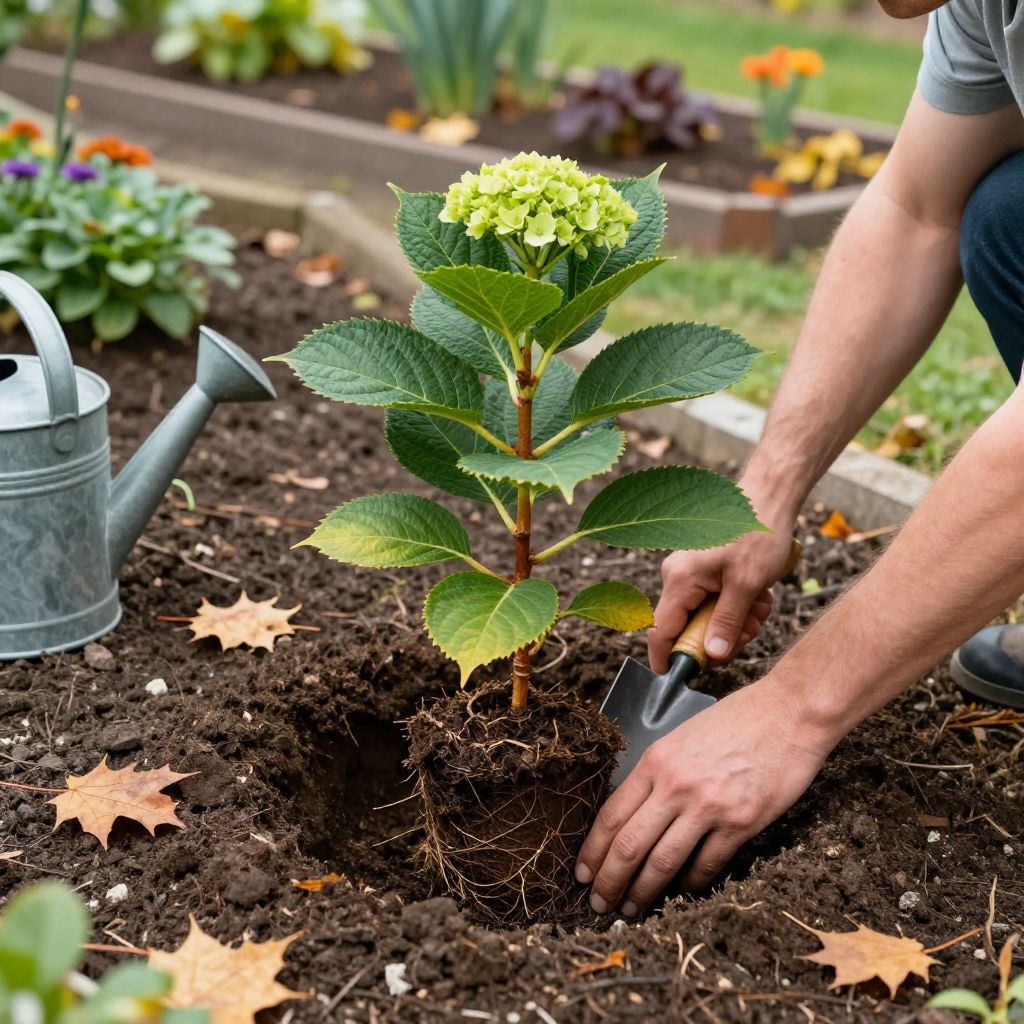
Can you plant hydrangeas in the fall? Yes—fall is often a very good time to plant hydrangeas, especially in regions with mild autumn weather. Cooler air, warm soil, and more reliable rainfall can help new roots establish before winter, as long as the plant has enough time to settle in before hard freezes arrive.
The key is matching the planting time to your local climate and giving the shrub steady moisture while it roots. With the right site, soil preparation, and a little winter protection if needed, fall-planted hydrangeas can get off to a strong start.
Can You Plant Hydrangeas In The Fall?
Yes, you can plant hydrangeas in the fall if the ground is still workable and the plant has several weeks to establish roots before freezing weather. Fall planting is often easier on the shrub than summer planting because heat stress is lower, but success depends on your local frost timing, soil drainage, and how well you water after planting.
Why Fall Planting Often Works Well
Hydrangeas are woody shrubs that benefit from root growth in cool weather. In fall, the plant can focus energy underground instead of pushing lots of new leafy growth.
That means less transplant shock and, in many climates, a better start the following spring. The soil is usually still warm enough for root development even when the air feels cool.
When fall planting is a good choice
- Your area has a long, mild autumn.
- The soil drains well and does not stay soggy after rain.
- You can water consistently until the ground cools.
- You plant at least several weeks before the first hard freeze.
When to wait until spring instead
- Winter arrives early in your region.
- Your soil is heavy clay and stays wet for long periods.
- You cannot keep the shrub watered after planting.
- The plant is very small, weak, or recently stressed.
Best Site Conditions For Hydrangeas
Most hydrangeas do best in a spot with morning sun and afternoon shade, especially in warmer climates. In cooler regions, they may handle more sun if the soil stays evenly moist.
Good drainage matters just as much as light. Hydrangeas like moisture, but they do not like sitting in waterlogged soil.
What to look for before planting
- Light: Bright shade or morning sun with protection from hot afternoon rays.
- Soil: Rich, loose soil that holds moisture but drains well.
- Space: Enough room for the mature shrub size, which varies by type.
- Airflow: Some air movement to help reduce leaf disease.
Soil pH and flower color
For some hydrangeas, especially bigleaf hydrangeas (Hydrangea macrophylla), soil pH can influence flower color. Acidic soil often encourages blue flowers, while more alkaline soil can lean pink, but the plant’s genetics and available aluminum also play a role.
Do not treat color change as a quick fix. Focus first on healthy roots, good drainage, and proper light.
How To Plant Hydrangeas In Fall
Planting is straightforward, but the details matter. A well-prepared hole and careful watering make a big difference in how well the shrub establishes before winter.
- Choose a healthy plant. Look for firm stems, healthy leaves, and roots that are not circling tightly in the pot.
- Water the container first. Moisten the root ball before planting so it is easier to hydrate evenly.
- Dig a wide hole. Make it at least twice as wide as the root ball, but no deeper than the container height.
- Loosen compacted soil. Break up the sides of the hole so roots can move outward more easily.
- Set the plant at the right height. The top of the root ball should sit level with or slightly above the surrounding soil.
- Backfill with native soil. Mix in a small amount of compost if your soil is poor, but avoid creating a “potting mix pocket” that holds too much water.
- Water deeply. Soak the root zone thoroughly after planting to settle soil around the roots.
- Mulch lightly. Apply 2 to 3 inches of mulch, keeping it a few inches away from the stems.
Why planting depth matters
Hydrangeas can struggle if planted too deeply. A buried crown can stay too wet and may rot, especially in cool fall weather.
If the soil settles after watering, check that the crown is still visible and not buried under mulch or soil.
Watering Newly Planted Hydrangeas In Fall
Newly planted hydrangeas need steady moisture until the ground cools or freezes. Fall rain may help, but do not assume it is enough.
Check the soil by hand. If the top 2 to 3 inches feel dry, water deeply. If it is still moist, wait.
Watering tips that prevent problems
- Water at the base of the plant, not over the leaves.
- Water slowly so moisture reaches the root zone.
- Keep soil evenly moist, not saturated.
- Reduce watering only when cooler weather and rainfall keep the soil consistently damp.
One of the most common mistakes in fall is overwatering. Cool weather slows evaporation, so soggy soil can suffocate roots and invite rot.
Mulching And Winter Protection
Mulch helps moderate soil temperature, conserve moisture, and protect young roots from sudden cold snaps. It is especially helpful for fall-planted shrubs in colder regions.
Use shredded bark, pine needles, leaf mold, or similar organic mulch. Keep the layer around 2 to 3 inches deep, and avoid piling it against the stems.
Extra protection for colder climates
- Water well before the ground freezes, if conditions are dry.
- Add a slightly thicker mulch ring after the soil cools, but do not bury the crown.
- If your site is windy or exposed, consider a temporary burlap windbreak.
- For potted hydrangeas, move containers to a sheltered spot or insulate them to reduce root freeze damage.
In very cold climates, a fall-planted hydrangea may survive winter but still lose some top growth. That is not always a failure if the roots remain healthy.
Pruning After Fall Planting
In most cases, do not do major pruning right after planting in fall. The shrub needs its leaves and stems to keep making energy and building roots.
Save significant pruning for the right time based on the hydrangea type. Some bloom on old wood, some on new wood, and some on both. If you are unsure which type you have, avoid heavy pruning until you can identify it in spring.
What you can remove
- Broken stems
- Dead or diseased wood
- Clearly damaged leaves
Do not cut back healthy stems just to “tidy up” unless you know the plant’s bloom habit and timing.
Common Problems After Fall Planting
Most issues after fall planting come from water stress, poor drainage, or planting too late in the season. Catching problems early improves the odds of winter survival.
1. Wilting leaves
Wilting can happen from transplant shock, dry soil, or root damage. Check soil moisture first. If the soil is dry, water deeply. If it is wet but the plant still wilts, drainage may be the issue.
2. Yellowing leaves
Yellow leaves can signal overwatering, poor drainage, or nutrient stress. In fall, some yellowing is also normal as the plant slows down for winter.
3. Root rot
Root rot is more likely in heavy, poorly drained soil. Symptoms include limp growth, darkened stems, and a plant that declines despite wet soil.
If drainage is poor, consider moving the shrub to a better site in spring rather than trying to rescue it in place through winter.
4. Frost damage
Early frost can damage tender new growth, especially if you planted late. Mulch helps, but the best protection is planting early enough for roots to establish before hard freezes.
Pests And Diseases To Watch For
Hydrangeas can attract a few common garden pests, but newly planted shrubs are usually more vulnerable to stress than to serious infestations.
- Aphids: Small insects that cluster on tender growth.
- Spider mites: More common in hot, dry conditions.
- Powdery mildew: A white coating on leaves, often worse in humid, crowded conditions.
- Leaf spot: Brown or purple spots that can appear when foliage stays wet too long.
Good spacing, morning sun, and watering at the soil line help reduce disease pressure. Remove badly spotted leaves if needed, but avoid stripping the plant bare.
Can You Propagate Hydrangeas In Fall?
Fall is not usually the best time to start new hydrangea cuttings outdoors, because young cuttings need steady warmth and humidity to root well. Softwood cuttings are more often taken in late spring or early summer.
If you want to propagate in fall, your best option is usually to wait for the right season or use a controlled indoor setup. For most home gardeners, fall is better for planting established nursery plants than for propagation.
Choosing The Right Hydrangea For Your Climate
Not all hydrangeas behave the same way in fall. Some are more cold-tolerant than others, and bloom timing varies by species and cultivar.
Before planting, identify whether your hydrangea is a bigleaf, panicle, smooth, oakleaf, or another type. That helps you understand pruning needs, winter hardiness, and how much sun it can take.
Ask these questions before you buy
- Will this shrub survive winters in my area?
- Does it bloom on old wood, new wood, or both?
- How large will it get at maturity?
- Does my site have enough light and drainage?
Fall Planting Checklist
If you want the best chance of success, use this simple checklist before you plant.
- Plant early enough for roots to establish before hard frost.
- Choose a site with morning sun or bright shade.
- Make sure the soil drains well.
- Dig a wide hole, not a deep one.
- Keep the crown level with the soil surface.
- Water deeply after planting.
- Mulch lightly, keeping mulch off the stems.
- Monitor moisture through late fall.
- Avoid heavy pruning until you know the bloom type.
Conclusion: Is Fall A Good Time To Plant Hydrangeas?
Yes, fall can be an excellent time to plant hydrangeas if your climate gives the shrub enough time to root before winter. Focus on good drainage, steady moisture, and proper planting depth, and your hydrangea will have a much better chance of thriving next season.
If you are planning your next shrub bed, it also helps to read up on hydrangea pruning and choosing the right planting site so you can match care to the type you are growing.
Leave a Reply