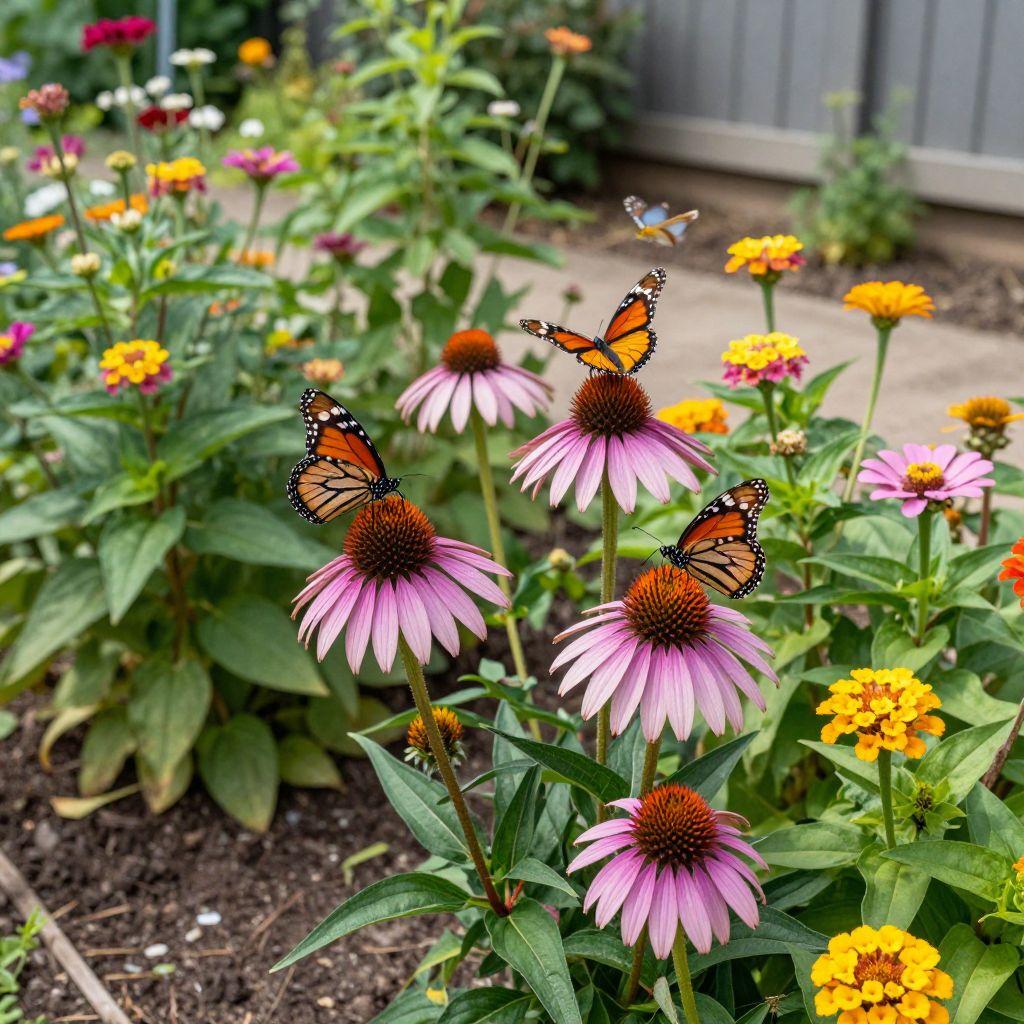
What flowers do butterflies like? The best choices are nectar-rich, open-faced flowers that make it easy for butterflies to land and feed, especially in sunny spots. Plants such as coneflower, lantana, milkweed, zinnia, verbena, salvia, and asters are reliable butterfly magnets when grown in the right conditions.
If you want more butterflies in your garden, focus on continuous bloom, sunny planting sites, and avoiding pesticides. A butterfly-friendly border is not just about flowers; it also needs host plants for caterpillars, water nearby, and a little shelter from wind.
What flowers do butterflies like?
Butterflies prefer bright, nectar-rich flowers with flat or clustered blooms they can easily land on. They are especially drawn to purple, pink, red, orange, and yellow flowers in full sun, including coneflowers, butterfly bush, lantana, milkweed, zinnias, verbena, and asters. A mix of bloom times keeps them visiting from spring through fall.
Best butterfly-friendly flowers to grow
Choose plants that offer nectar over a long season and suit your climate. The best butterfly flowers are usually easy to access, not too double or ruffled, and planted in generous drifts so butterflies can spot them from a distance.
Top annuals for butterflies
- Zinnia (Zinnia elegans) — fast-growing, colorful, and excellent for cutting gardens.
- Verbena (Verbena spp.) — long-blooming and useful in beds, containers, and hanging baskets.
- Lantana (Lantana camara) — heat-tolerant and highly attractive to many butterfly species in warm climates.
- Cosmos (Cosmos bipinnatus) — airy flowers that bloom for a long stretch in sunny spots.
Top perennials for butterflies
- Butterfly weed (Asclepias tuberosa) — a milkweed species that supports monarchs and other pollinators.
- Common milkweed (Asclepias syriaca) — important as a host plant for monarch caterpillars where it is suitable and allowed.
- Purple coneflower (Echinacea purpurea) — sturdy, drought-tolerant, and long blooming.
- Bee balm (Monarda spp.) — nectar-rich and useful for a pollinator border.
- Salvia (Salvia spp.) — especially good in sunny, well-drained sites.
- Joe-Pye weed (Eutrochium spp.) — excellent for larger gardens and moist areas.
- Asters (Symphyotrichum spp.) — valuable late-season nectar sources.
Flowering shrubs and vines butterflies visit
- Butterfly bush (Buddleja davidii) — very attractive to adults, though it can be invasive in some regions.
- Spirea (Spiraea spp.) — useful for spring nectar.
- Blazing star (Liatris spp.) — upright blooms that are easy for butterflies to feed from.
How to plant a butterfly garden that actually works
A successful butterfly garden is layered, sunny, and blooming across the season. Instead of planting one or two showy flowers, combine several species with different bloom times so butterflies always have a reason to return.
- Pick a sunny location. Most butterfly flowers need at least 6 hours of direct sun daily.
- Group plants in clumps. Plant the same species in drifts of 3, 5, or more so butterflies can find them easily.
- Mix bloom times. Include spring, summer, and fall flowers for a longer nectar supply.
- Use well-drained soil. Most butterfly favorites dislike soggy ground.
- Leave some open space. Butterflies prefer warm, sunny landing spots and sheltered edges.
Soil and compost
Most butterfly flowers grow best in moderately fertile soil that drains well. Work in 2 to 3 inches of compost before planting to improve structure and feed the soil gently over time.
Avoid over-enriching the bed with high-nitrogen fertilizer. Too much nitrogen can produce leafy growth with fewer flowers, which means fewer butterflies.
Spacing and airflow
Give each plant enough room to reach its mature width. Good spacing improves air circulation, helps foliage dry faster after rain, and reduces disease problems such as powdery mildew on bee balm or asters.
Care tips for healthy butterfly flowers
Butterfly-friendly flowers are usually straightforward to maintain, but they bloom best when you match care to the plant’s needs. Consistent watering during establishment and regular deadheading can make a big difference in flower production.
Watering
Water new plants deeply after planting and keep the root zone evenly moist until they are established. After that, many butterfly favorites, such as coneflower, zinnia, and lantana, are more drought-tolerant and prefer drying slightly between waterings.
In hot weather, check soil moisture with your finger rather than following a fixed schedule. Container plants dry out faster than in-ground plantings and may need more frequent watering.
Mulching
Apply a 2- to 3-inch layer of organic mulch around plants, keeping it a few inches away from stems. Mulch helps conserve moisture, suppress weeds, and keep roots cooler in summer.
Deadheading and pruning
Remove faded blooms to encourage more flowers on annuals and many perennials. For plants like zinnia, verbena, and coreopsis, regular deadheading can extend the display and keep nectar available longer.
Cut back leggy growth on some perennials after flowering if needed, but avoid heavy pruning during peak bloom. Leave some seed heads, such as coneflower, if you want to feed birds later in the season.
Host plants matter too
If you want butterflies to stay, not just visit, include host plants where they can lay eggs and caterpillars can feed. Nectar flowers attract adults, but host plants support the next generation.
Examples of host plants
- Milkweed for monarch butterflies.
- Parsley, dill, and fennel for swallowtail caterpillars.
- Violets for fritillary butterflies.
- Native grasses and trees for some local butterfly species.
Keep in mind that caterpillars may chew leaves. This is normal and usually a sign your garden is supporting wildlife, not failing.
Common mistakes to avoid
- Planting only double flowers. Heavily ruffled blooms can hide nectar and make feeding difficult.
- Using insecticides. Even products labeled for garden pests can harm butterflies and caterpillars.
- Choosing too much shade. Butterflies are most active in warm, sunny areas.
- Overwatering. Many butterfly flowers dislike constantly wet soil.
- Relying on one bloom season. A garden that flowers only briefly will attract fewer butterflies over time.
Pests, diseases, and troubleshooting
Butterfly gardens still get pests, but the goal is to manage problems without harming pollinators. Start with healthy soil, proper spacing, and hand removal when possible.
Common issues
- Aphids — often cluster on tender stems and buds; a strong spray of water can help.
- Powdery mildew — common on bee balm and some asters in humid weather; improve airflow and avoid overhead watering late in the day.
- Japanese beetles or caterpillar feeding — handpick when practical, especially on smaller plantings.
- Root rot — usually caused by poor drainage; improve soil or move plants to a better site.
If flowers are blooming poorly, check for too much shade, too much nitrogen, or overcrowding. If butterflies are not visiting, the bed may need more sun, more variety, or more continuous bloom through the season.
Design ideas for a butterfly-friendly border
A good butterfly border combines height, color, and bloom succession. Place taller plants like Joe-Pye weed or butterfly bush at the back, medium plants like coneflowers and salvias in the middle, and low growers like verbena or lantana at the front or in containers.
For the best effect, repeat the same plants in groups rather than scattering single specimens. Butterflies are more likely to notice a mass of flowers than a few isolated blooms.
Simple planting combination
- Spring: milkweed, salvia, bee balm
- Summer: zinnia, lantana, coneflower
- Late summer to fall: asters, Joe-Pye weed, blazing star
Container growing for small spaces
If you garden on a patio or balcony, you can still grow butterfly flowers in pots. Choose compact, sun-loving plants and use containers with drainage holes and quality potting mix.
Containers dry out faster than garden beds, so monitor moisture closely. Deadhead often, and place pots where butterflies can easily spot them from above and land safely.
When to expect butterflies
Butterfly visits depend on weather, local species, and what is blooming nearby. Warm, calm, sunny days usually bring the most activity, especially when flowers are open and nectar-rich.
Be patient if your garden is new. It can take time for butterflies to discover a planting, especially if there are few nectar sources in the surrounding area.
Conclusion
If you want to know what flowers do butterflies like, start with sun-loving, nectar-rich plants such as coneflower, milkweed, lantana, zinnia, verbena, and asters. Plant them in groups, keep blooms coming through the season, and avoid pesticides. For best results, add one or two host plants so your garden supports both adult butterflies and caterpillars.
For more practical help with pollinator planting, you may also want to read about butterfly-friendly garden plants and milkweed for monarchs.
Leave a Reply