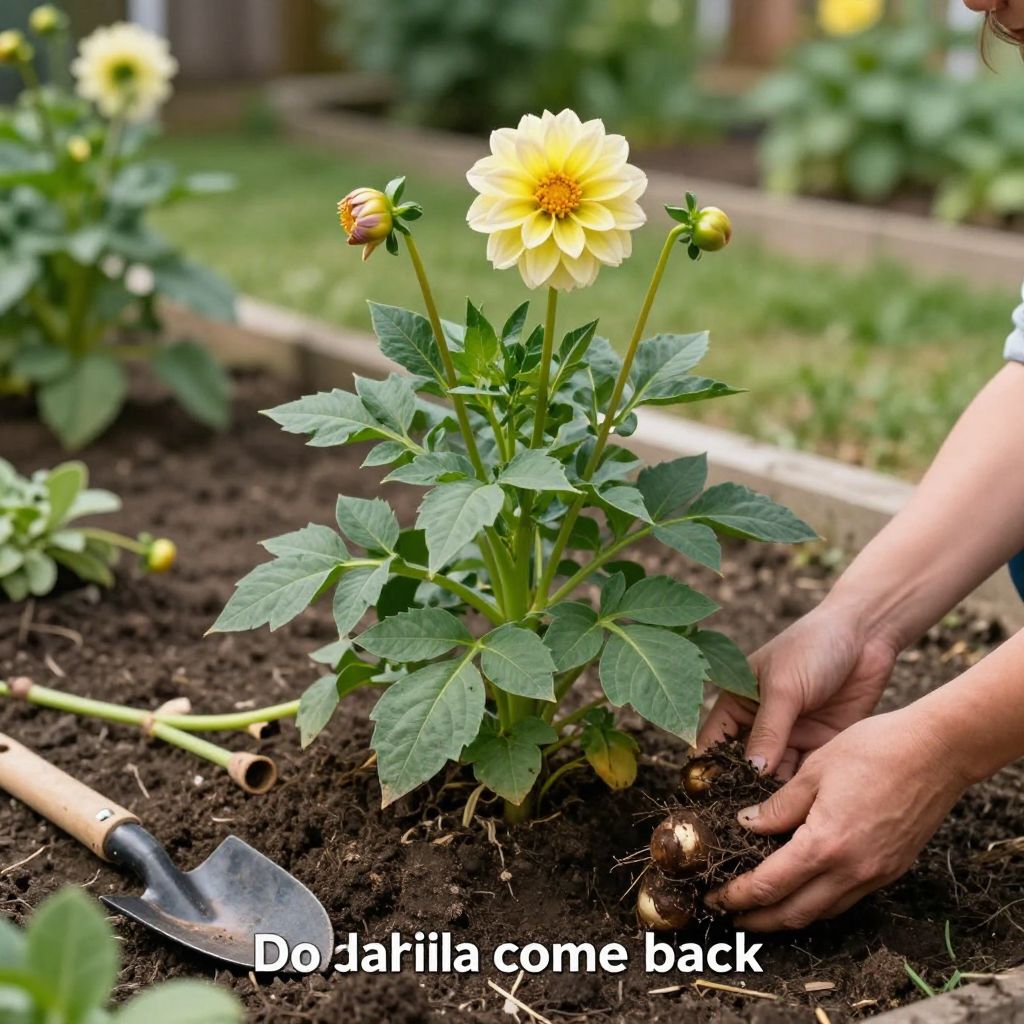
Do dahlias come back? Yes—often they do, but only if the tubers survive your winter conditions and are stored or protected correctly. In warm climates, dahlias can return year after year in the ground. In colder areas, they usually need to be lifted and stored indoors before freezing weather arrives.
The key is understanding that dahlias are tender perennials. Their flowers and foliage die back with frost, but the underground tubers can live on if they stay dry, cool, and unfrozen through winter.
Do dahlias come back?
Dahlias come back from their tubers if those tubers survive winter. In mild climates, they may regrow in the garden each spring. In colder regions, you usually need to dig them up after frost, store them properly, and replant them when the soil warms.
Why dahlias return in some gardens and not others
Dahlias are not true hardy perennials in most climates. Their ability to return depends on winter temperatures, soil moisture, and how well the tubers are protected from rot and freezing.
What the plant is actually doing underground
The colorful top growth dies back after frost, but the plant stores energy in tuberous roots. Those tubers are what you save, divide, or replant. If they dry out too much, rot, or freeze solid, the plant will not return.
Climate matters more than the calendar
In frost-free or very mild areas, dahlias may stay in the ground year-round. In areas with hard freezes, leaving them outside is risky unless you use extra protection and your soil drains very well. Heavy, wet winter soil is especially hard on tubers.
How to tell if your dahlias will come back
If your dahlias were planted in the ground, the answer depends on winter survival. If you grew them in pots, they are even more vulnerable because containers freeze faster than garden soil.
- Likely to return in the ground: mild winters, free-draining soil, and a sheltered site.
- Less likely to return: repeated hard freezes, soggy soil, or poorly insulated containers.
- Most reliable method in cold climates: lift and store tubers indoors.
Signs the tubers are healthy
Healthy dahlia tubers feel firm, not mushy. The crown, where the stems meet the tubers, is especially important because new growth comes from that area. A tuber without a viable crown may not sprout well.
What to do before winter
Winter preparation is the difference between dahlias that come back and dahlias that disappear. The exact approach depends on your local climate, but the goal is always the same: keep the tubers alive without letting them rot.
- Let the foliage be frosted back before digging in colder climates. This helps the plant finish storing energy.
- Cut stems down to a few inches above the crown after frost blackens the top growth.
- Dig carefully so you do not snap the tubers or damage the crown.
- Brush off excess soil and let tubers dry for a short time in a sheltered, airy place.
- Store them cool, dark, and slightly dry in a medium such as dry peat-free compost, vermiculite, or wood shavings if needed for your method.
When to leave dahlias in the ground
If your winters are mild and your soil drains well, you may be able to leave tubers in place. Add a thick mulch after the first frost if that is common practice in your area, but avoid doing this in heavy, wet soil where rot is likely.
When to dig them up
Dig dahlias if your ground freezes hard, stays wet through winter, or if you want the most dependable return. This is also smart for container-grown dahlias, because pots expose roots to more cold than garden beds do.
How to store dahlia tubers so they come back
Storage is one of the biggest reasons dahlias fail to return. Tubers need a balance: not too wet, not too dry, and not warm enough to sprout early.
- Temperature: cool, but above freezing.
- Light: dark or dim storage is best.
- Moisture: just enough to prevent shriveling, but not enough to cause mold.
- Airflow: some ventilation helps prevent rot.
Common storage mistakes
- Storing tubers while they are still wet.
- Keeping them in a warm room where they sprout too early.
- Letting them dry out until they become wrinkled and brittle.
- Putting damaged or diseased tubers into storage with healthy ones.
How to grow dahlias for reliable return
Good growing conditions during the season help dahlias build strong tubers for next year. A weak plant is less likely to overwinter well, whether it stays in the ground or gets lifted.
Sunlight
Dahlias usually perform best in full sun, though very hot climates may benefit from a little afternoon shade. More sun generally means stronger stems, better flowering, and better tuber development.
Soil and drainage
Use rich, well-drained soil. Dahlias dislike sitting in waterlogged ground, and poor drainage is one of the main reasons tubers rot. If your soil is heavy clay, improve it with compost and consider raised beds or mounded planting areas.
Watering
Water deeply when the soil begins to dry, especially during active growth and flowering. Avoid frequent shallow watering, which encourages weak roots near the surface. Once the plant is established, consistent moisture is better than drought followed by soaking.
Feeding and compost
Mixing in compost at planting time helps improve soil structure and fertility. Avoid overdoing high-nitrogen fertilizer, which can produce lots of leafy growth but fewer flowers and weaker tubers. Balanced nutrition supports sturdier plants.
Should you divide dahlia tubers?
Division can help keep plants vigorous, but it is not required every year for all gardeners. If you do divide, each section needs at least one viable eye or growing point and a firm tuber attached to it.
Why division matters
Dividing helps prevent overcrowded clumps and makes storage easier. It can also reduce the chance of keeping diseased or damaged material for another season. However, dividing too early or too aggressively can reduce the plant’s ability to regrow.
Best time to divide
Many gardeners wait until the tubers are dormant and the eyes are easier to identify. If you are unsure, it is safer to store the clump whole and divide later, rather than cutting away pieces that may not regrow.
Common reasons dahlias do not come back
If your dahlias failed to return, the problem is often one of a few predictable issues. Once you identify the cause, you can improve your chances next season.
- Freezing: tubers were left unprotected in a cold winter.
- Rot: soil stayed too wet, especially in winter storage or in the garden.
- Damage: tubers were cut, broken, or bruised during digging.
- Poor storage: too warm, too damp, or too dry.
- Weak clump: the plant never built enough energy before frost.
Pests and diseases to watch for
Slugs, earwigs, aphids, and spider mites can weaken plants during the growing season. Fungal problems are more likely in crowded, damp conditions. Healthy spacing, good airflow, and clean tools reduce risk.
How to encourage stronger regrowth next year
To improve the odds that dahlias come back, focus on plant health from spring through fall. Strong tubers are the result of a strong growing season.
- Plant in a sunny, sheltered spot with good drainage.
- Water consistently, especially during dry spells.
- Stake taller varieties so stems do not snap in wind.
- Deadhead spent blooms to keep the plant flowering longer.
- Watch for pests and disease before they weaken the plant.
- Let the plant grow long enough in fall to store energy before frost.
Growing dahlias in containers
Container dahlias can come back, but pots need extra winter care. Because containers cool and warm faster than garden soil, tubers in pots are more exposed to freezing and moisture swings.
Container care tips
- Use a pot with drainage holes.
- Choose a large container so roots have room to develop.
- Water carefully, since pots dry out faster than beds but can also stay too wet after rain.
- Before winter, move pots to a frost-free space or remove and store the tubers indoors.
What to expect in spring
If your dahlias survived winter, you may see new shoots emerge from the crown when the soil warms. Do not rush them with heavy watering too early. Wait until growth is active and the weather is reliably mild in your area.
If nothing appears, check the tubers gently. Firm tissue and visible eyes are promising signs, while soft, moldy, or hollow tubers usually will not recover. Sometimes only part of a clump survives, so a few healthy sections can still give you a plant.
Conclusion
So, do dahlias come back? They can, as long as the tubers survive winter and the plant is grown in conditions that support strong roots. In cold climates, that usually means digging and storing them; in mild climates, they may return in the ground with the right drainage and care.
If you want more help with seasonal flower care, consider reading about how to overwinter dahlias and growing dahlias in pots.
Leave a Reply