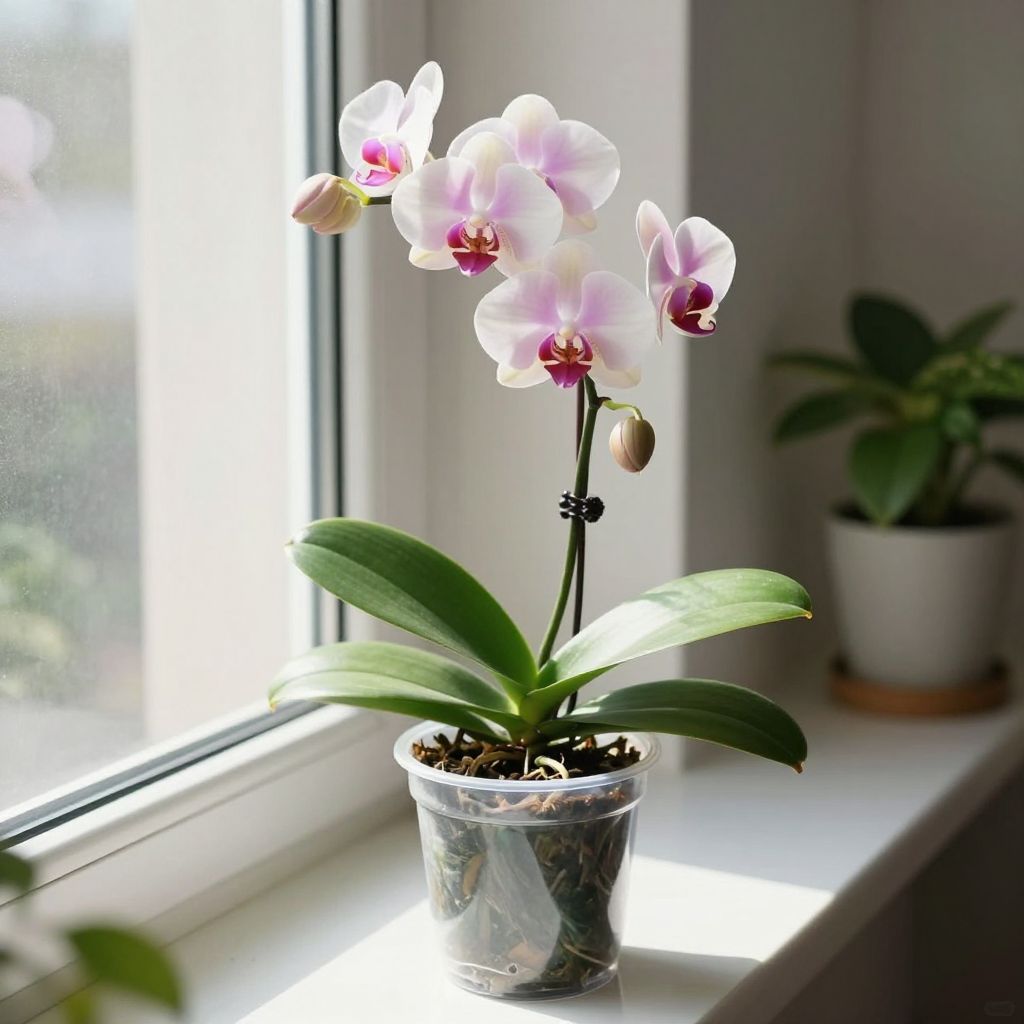
Do orchids need direct sunlight? Usually, no. Most popular houseplant orchids, especially Phalaenopsis, grow best in bright, indirect light rather than strong direct sun, which can scorch leaves and stress the plant.
The right light makes the difference between healthy leaves and repeated blooms, so it helps to match the orchid to your window, climate, and indoor conditions. A little sun can be useful for some orchids, but “more” is not automatically better.
Do orchids need direct sunlight?
Most orchids do not need direct sunlight. They prefer bright, filtered light that mimics the dappled conditions many orchids experience in nature. A few types, such as some Cattleya and Dendrobium orchids, can handle more sun, but many common orchids will burn in harsh midday light.
How much light orchids really need
Orchids need enough light to support growth and flowering, but the intensity should match the type of orchid. The goal is usually bright light without the heat and leaf damage that comes from direct sun through a hot window.
General light range by orchid type
- Low to medium light: Phalaenopsis (moth orchids), many common indoor orchids
- Medium to bright light: Oncidium, some Miltonia and related hybrids
- Bright light, some direct sun: Cattleya, some Dendrobium, Vanda in very bright conditions
If you do not know the orchid’s exact type, assume it prefers bright indirect light until you can identify it. That is the safer choice for most store-bought orchids.
What “bright indirect light” means
Bright indirect light means a well-lit spot where the plant receives strong ambient light but not the full force of direct sun rays. A sheer curtain, an east-facing window, or a few feet back from a south or west window often works well indoors.
How to tell if your orchid is getting too much or too little light
Orchids usually show light problems through their leaves and flowering habits. Watching the plant closely is more useful than relying on a calendar or a fixed window direction.
Signs of too much direct sun
- Leaves turn yellow, bleached, or reddish-brown
- Dry, sunken, or papery patches appear on exposed leaves
- Leaves feel hot in the afternoon
- Sudden wilting even when the potting mix is moist
Sunburned orchid leaves do not recover, so move the plant sooner rather than later if you see damage. New growth should emerge healthier once the light is corrected.
Signs of too little light
- Dark green leaves with little flowering
- Weak, thin growth
- No flower spikes for long periods
- Slow growth during the active season
Very dark green leaves may look healthy, but they can signal that the orchid is not receiving enough light to bloom well. Many orchids need brighter conditions than people expect.
Best window placement for indoor orchids
Window direction matters, but so does season, glass type, and your climate. A spot that is ideal in winter may be too intense in summer.
East-facing windows
East windows are often the easiest starting point for orchids because they provide gentler morning sun. Many Phalaenopsis orchids do very well here.
South-facing windows
South windows can be excellent for light-loving orchids, but the sun may be too strong for many common houseplants. Use a sheer curtain, blinds, or set the orchid back from the glass to reduce scorching.
West-facing windows
West windows can become hot in the afternoon, especially in summer. These are often the most likely to cause leaf burn unless the light is filtered.
North-facing windows
North windows are usually too dim for orchids unless the room is very bright overall or you supplement with grow lights. Some orchids may survive there, but flowering can be weak.
Can orchids get direct sun outdoors?
Yes, but only for some orchids and only with gradual acclimation. Outdoor light is much stronger than indoor light, so even a few hours of direct sun can burn an orchid that was growing inside.
Outdoor growing tips
- Move orchids outside only after temperatures are consistently suitable for the plant type.
- Start in deep shade or bright shade, not full sun.
- Increase light slowly over 1 to 2 weeks if the orchid tolerates it.
- Protect plants from harsh midday sun, hot reflected light, and drying wind.
- Bring sensitive orchids in before cool nights or storms if needed.
A covered porch, shade cloth, or bright area under trees often works better than an open patio. Outdoor orchids also dry out faster, so watch moisture closely.
How to give orchids the right light without burning them
You do not need perfect conditions to grow orchids well. You just need to manage light intensity and keep the plant comfortable through the day.
Practical ways to soften strong sun
- Use a sheer curtain to filter direct rays
- Move the orchid 1 to 3 feet back from the window
- Place it behind another plant that breaks up the light
- Use a light shade cloth outdoors
- Rotate the pot occasionally so growth stays even
Do not suddenly move an orchid from low light to full sun. Even orchids that like brighter conditions need time to adjust. Sudden exposure is a common cause of leaf scorch.
Using grow lights for orchids
If your home is dim, grow lights can be a reliable substitute for sunlight. They are especially helpful in winter or in rooms with few windows.
- Choose a full-spectrum grow light designed for plants
- Keep the light at a safe distance based on the bulb strength and manufacturer guidance
- Provide a consistent day length, often around 12 to 14 hours for many indoor setups
- Watch the leaves for bleaching or overheating
Grow lights should supplement, not cook, the plant. If leaves become warm or pale, the light is probably too intense or too close.
Light needs and orchid care go hand in hand
Light affects more than blooms. It influences watering, growth rate, and how quickly the potting mix dries.
Watering changes with light
Orchids in brighter light usually use water faster than orchids in lower light. That means the same plant may need less frequent watering in winter or in a dim room and more attention in a bright summer window.
Always check the potting mix rather than watering by a strict schedule. Orchids in bark, moss, or a mix with charcoal and perlite can dry at different rates depending on light, temperature, and airflow.
Air circulation matters
Brighter light often comes with warmer conditions, which can increase the risk of drying stress or disease if air movement is poor. Good airflow helps leaves dry after watering and reduces fungal problems.
- Keep leaves dry when possible
- Use a pot with drainage holes
- Do not let the orchid sit in standing water
- Provide gentle air movement indoors if the room is still
Common mistakes gardeners make with orchid light
Most orchid light problems come from trying to treat all orchids the same. A little observation prevents a lot of stress.
- Placing every orchid in a sunny window: many orchids need filtered light, not direct sun
- Ignoring seasonal changes: winter sun is weaker, summer sun is stronger
- Using dark glass or heavy curtains: these can make the room too dim for flowering
- Moving orchids too quickly: acclimation matters
- Assuming no blooms means a watering problem: light is often the real issue
If your orchid looks healthy but refuses to bloom, the first question to ask is often, “Is it getting enough light?”
What to do if your orchid has already been sunburned
Sunburned orchid leaves cannot heal, but the plant can often recover if you correct the light and keep care steady.
- Move the plant out of direct sun immediately.
- Check the roots and potting mix for dryness or rot.
- Water only as needed based on the mix and root condition.
- Trim only dead, fully dried tissue if necessary; leave healthy green tissue alone.
- Wait for new growth to judge recovery.
Do not remove a damaged leaf unless it is fully dead or diseased. A partially damaged leaf can still help the plant photosynthesize.
How to tell when the light is just right
Healthy orchid light conditions usually produce firm leaves, steady root and leaf growth, and, for many types, regular blooming. The plant should look vigorous without showing burn marks or deep shade stress.
A simple light check
- Leaves are medium green, not yellow or very dark green
- Growth is steady during the active season
- Flower spikes appear when the plant is mature enough and conditions are right
- No leaf scorch appears after a few weeks in the spot
For many home growers, the sweet spot is bright filtered light for most of the day with a little gentle morning sun, if the orchid tolerates it.
Conclusion: the safest answer for most orchids
So, do orchids need direct sunlight? For most common orchids, the answer is no. They do best in bright, indirect light, with only certain types able to handle stronger sun. Start with a filtered window, watch the leaves, and adjust based on how your orchid responds.
If you want to improve bloom potential, begin by moving your orchid to a brighter but gentler spot and observe it for a few weeks. If you are also fine-tuning watering and potting mix, related care guides on orchid roots and indoor plant light can help you build a healthier routine.