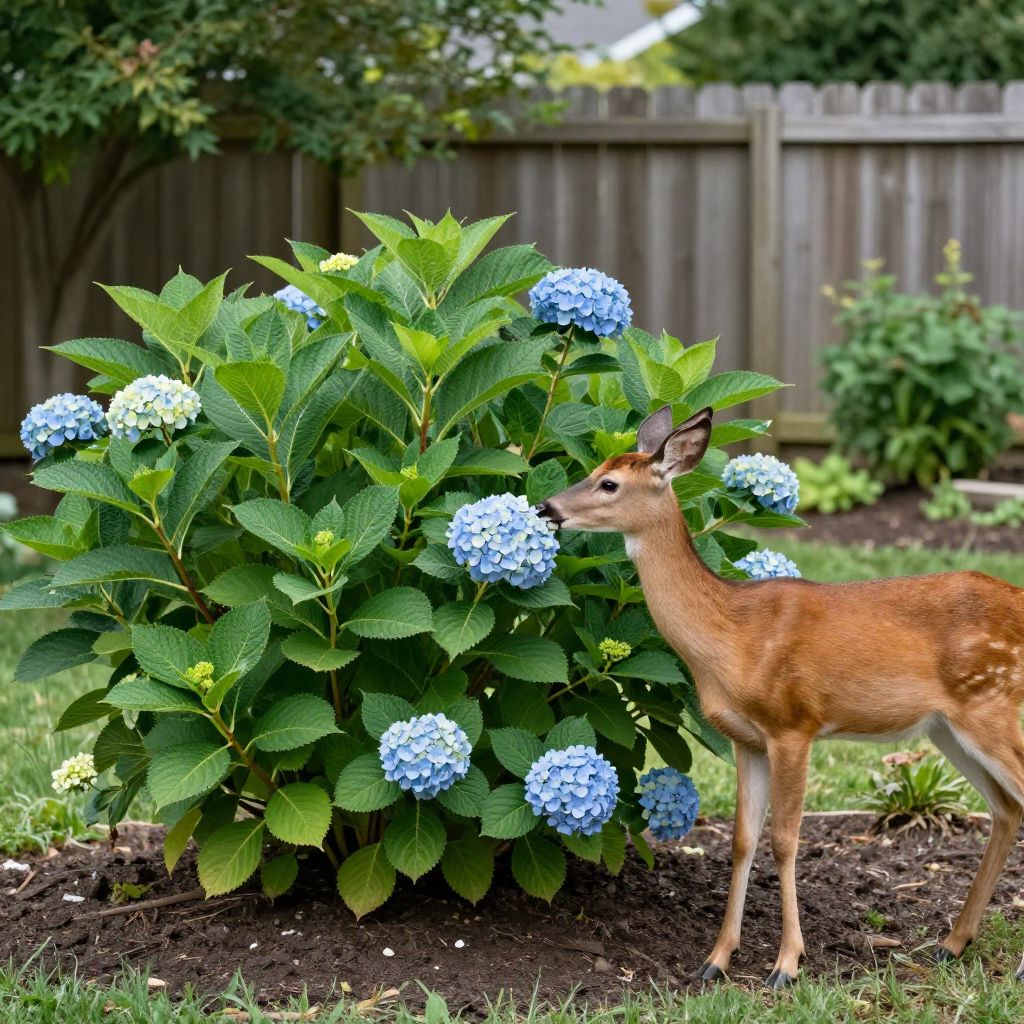
Do deer like hydrangeas? Yes, they often do—especially when other food is scarce. Hydrangeas are not usually the first plant deer choose, but tender new growth, buds, and flower heads can be browsed, particularly in spring and in dry or crowded landscapes.
If you want hydrangeas and deer in the same yard, the best approach is to combine smart plant placement, physical protection, and good plant care. Healthy hydrangeas recover better from browsing, and a few practical defenses can make a big difference.
Do deer like hydrangeas?
Deer may eat hydrangeas, but they are not considered highly deer-resistant. Young shoots, leaves, and flower buds are the most vulnerable parts, and damage is more likely when deer pressure is high or other plants are limited. In many gardens, deer nibble hydrangeas selectively rather than stripping them completely.
Why deer browse hydrangeas
Deer feeding habits change with season, weather, and local pressure. Even plants that are not their favorites can become targets when deer are hungry, thirsty, or moving through a yard regularly.
What parts are most at risk?
- New spring growth is tender and easy for deer to eat.
- Flower buds can be removed before blooms open.
- Soft stems and leaves are more appealing than older, tougher growth.
- Container plants near walkways or wooded edges may be especially exposed.
When are hydrangeas most vulnerable?
- In early spring, when fresh shoots emerge.
- During drought, when deer seek moisture-rich plants.
- In late fall and winter, when food is limited.
- In gardens near woods, fields, or established deer routes.
How to protect hydrangeas from deer
No method is perfect, so the most reliable strategy is to layer several defenses. A single repellent may help for a while, but fencing and smart planting usually provide the strongest protection.
1. Use physical barriers first
- Fencing is the most dependable option.
- A tall fence is often more effective than a short decorative one.
- Individual cages or netting can protect young shrubs or newly planted hydrangeas.
- Temporary barriers work well during the first season, when plants are most tender.
If you only have a few shrubs, a simple wire cage or garden mesh can be enough to keep deer from reaching the plant while it establishes.
2. Try repellents, but reapply as needed
Deer repellents can reduce browsing, especially when used before damage starts. They work best as part of a rotation and may need reapplication after rain or new growth.
- Choose products labeled for deer deterrence.
- Apply according to the label, especially on new growth.
- Alternate products if deer become accustomed to one scent or taste.
- Reapply after heavy rain, irrigation, or rapid growth.
Important: repellents are usually more effective when deer are only occasional visitors. In high-pressure areas, they often need backup from fencing or netting.
3. Make the planting less attractive
You can reduce browsing pressure by placing hydrangeas where deer are less likely to linger.
- Plant near the house, patio, or driveway rather than at the edge of woods.
- Surround hydrangeas with strongly scented or deer-resistant companion plants, if those suit your site.
- Avoid creating a sheltered, hidden feeding spot with dense shrubs and easy access.
- Keep lawn edges and pathways open so deer feel less comfortable feeding undisturbed.
Best growing conditions for healthy hydrangeas
Well-grown hydrangeas are better able to recover from minor deer damage. Good planting conditions also reduce stress, which helps the shrub produce more growth after browsing.
Light
Most hydrangeas grow best with morning sun and afternoon shade, especially in warmer climates. Too much hot afternoon sun can stress the plant, while too much shade may reduce flowering.
Soil
Hydrangeas prefer soil that holds moisture but drains well. Work in compost if your soil is poor or sandy, but avoid making the planting hole a waterlogged pocket.
- Use rich, organic soil that stays evenly moist.
- Avoid heavy clay that drains slowly unless you improve drainage.
- Mulch to conserve moisture and moderate soil temperature.
Watering
Hydrangeas dislike drying out, especially while establishing. Water deeply when the top few inches of soil begin to dry, adjusting for rainfall, heat, and soil type.
- New plants need more consistent moisture than established shrubs.
- Water at the base to keep foliage drier and reduce disease risk.
- Mulch 2 to 3 inches deep, but keep it a few inches away from the stems.
Pruning and recovery after deer damage
If deer have already browsed your hydrangea, don’t panic. Many shrubs recover well if the roots are healthy and the plant is not repeatedly stressed.
What to do after browsing
- Trim only clearly torn or broken stems.
- Leave healthy tissue in place so the plant can regrow.
- Water consistently during dry weather.
- Protect the plant immediately so new growth is not eaten again.
Do not overprune a damaged hydrangea unless the stems are dead or severely broken. Removing too much can delay flowering and slow recovery.
How pruning affects blooms
Hydrangeas vary in how they set flower buds, so pruning at the wrong time can remove next season’s blooms. If you are unsure which type you have, prune lightly and remove only dead, damaged, or crossing stems until you can identify the shrub more confidently.
Common problems that look like deer damage
Not every missing leaf or stem is caused by deer. Correctly identifying the culprit helps you choose the right fix.
- Rabbit damage is usually lower to the ground and more uniformly clipped.
- Insects often leave holes, stippling, or curled foliage rather than clean bites.
- Storm damage breaks stems unevenly and may shred leaves.
- Heat or drought stress causes wilting, browning, and leaf scorch, not browsing patterns.
Deer typically leave ragged but fairly clean bites, and you may notice tracks, droppings, or repeated damage on the same shrubs.
Propagation and replacement if deer pressure is severe
If deer repeatedly damage your hydrangeas despite protection, you may want to propagate a favorite plant or choose a better site before replacing it.
Simple ways to start more plants
- Softwood cuttings can work well on healthy, actively growing stems.
- Layering may succeed if a low branch can be bent to the ground and rooted.
- Take material from healthy, undamaged growth only.
When replacing a shrub, consider whether the new location is more exposed to deer traffic, morning sun, or dry soil. A better site often matters more than the variety name alone.
Maintenance tips for deer-prone gardens
A few routine habits can help hydrangeas stay vigorous and less tempting to deer.
- Keep plants evenly watered during dry spells.
- Refresh mulch each season to conserve moisture.
- Check new growth regularly in spring.
- Reapply repellents before deer start feeding heavily.
- Protect young shrubs until stems are woody and the plant is established.
Tip: The first year after planting is often the most important time to guard hydrangeas. Once the shrub is established, it can usually tolerate minor browsing better than a newly planted one.
Conclusion: the best way to keep deer off hydrangeas
So, do deer like hydrangeas? They can and often do browse them, especially tender new growth and buds. Your best defense is to combine good hydrangea care with fencing, cages, or repellents, then monitor the plant closely during spring and dry weather. If you want stronger landscape protection, look for more deer-resistant plant choices and compare them with your hydrangea planting plan.
For more practical garden planning, you may also want to read about choosing deer-resistant shrubs and how to mulch shrubs for healthier growth.