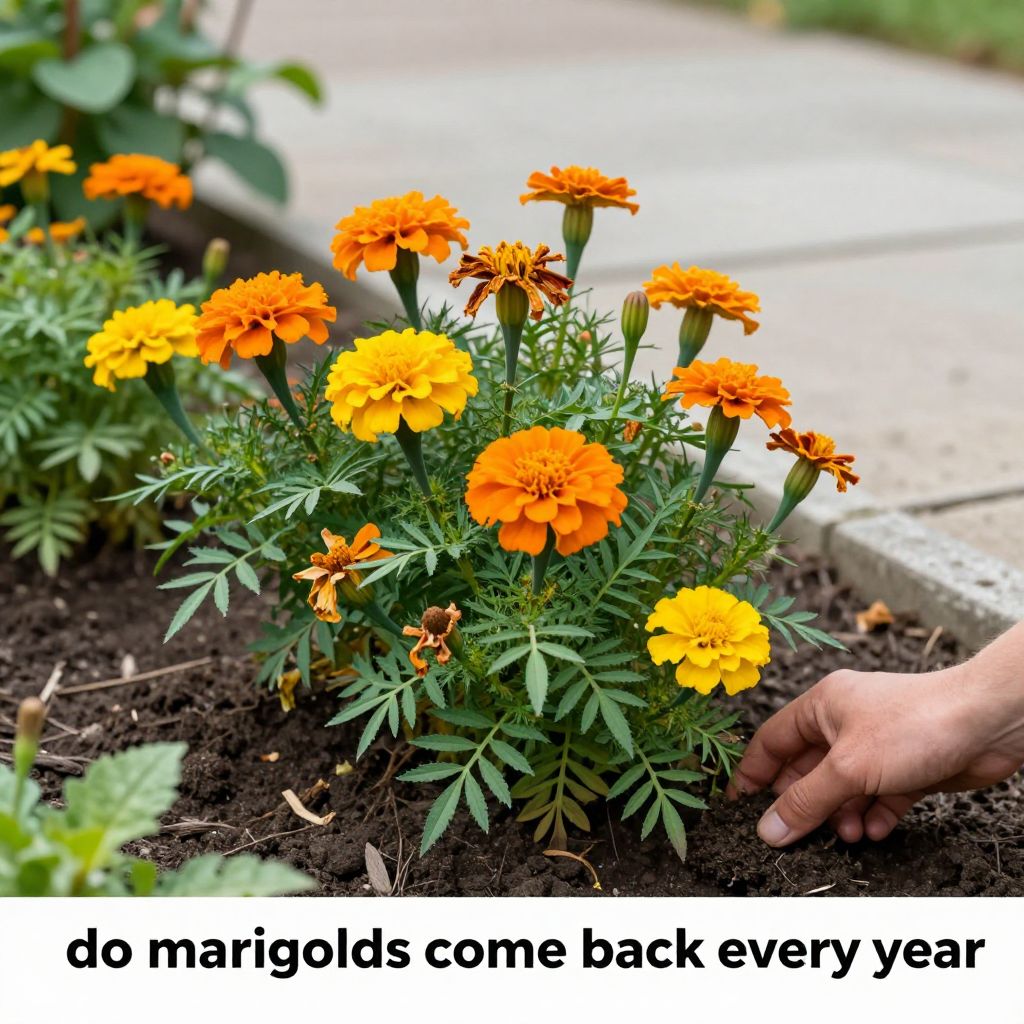
Do marigolds come back every year? It depends on the type you’re growing and your climate. Most garden marigolds are treated as annuals, so they bloom for one season and then die after frost, but some may reseed themselves if conditions are favorable.
If you want marigolds to return reliably, it helps to know which kind you have and how to care for them through the season. With the right planting, deadheading, and end-of-season cleanup, you can enjoy strong blooms and, in some cases, self-sown plants the following year.
Do marigolds come back every year?
Most common marigolds do not come back every year in cold climates because they are frost-tender annuals. French marigolds (Tagetes patula) and African marigolds (Tagetes erecta) usually complete their life cycle in one season. In warm, frost-free areas, they may keep blooming longer, and they can sometimes reseed themselves.
Which marigolds are annuals and which may return?
Understanding the difference between marigold types helps set realistic expectations. The plants sold in spring bedding packs are usually annual marigolds, while a few other plants are sometimes called marigolds but behave differently.
Common garden marigolds
- French marigolds are compact, fast-growing annuals with a long bloom season.
- African marigolds are taller annuals with larger flowers and a stronger presence in beds and borders.
- Signet marigolds are also annuals and are valued for finer foliage and smaller flowers.
Perennial or longer-lived plants sometimes called marigolds
Some plants with “marigold” in the common name are not the same as bedding marigolds. For example, Calendula officinalis is often called pot marigold, but it is usually grown as a cool-season annual or short-lived plant rather than a true perennial in most gardens.
If you are unsure what you planted, check the plant tag or seed packet. The botanical name is the easiest way to tell whether you’re growing a true annual marigold or a different plant with a similar common name.
Why marigolds usually don’t survive winter
Marigolds are tender plants that dislike frost and cold, wet soil. Once temperatures drop below freezing, the foliage and roots are damaged, and the plant stops growing. Even in mild climates, older plants often decline after heavy flowering and seasonal stress.
That said, marigolds can sometimes act like “returning” plants in two ways:
- Self-seeding: spent flowers drop seed that germinates the next season.
- Overwintering in frost-free areas: in very mild climates, some plants may persist longer than one season, though they often get leggy and less vigorous.
How to help marigolds come back in your garden
If you want marigolds year after year, the best approach is usually to encourage reseeding or save seed yourself. That gives you a better chance of fresh plants each season, even if the original plants don’t survive winter.
1. Let a few flowers go to seed
Deadheading keeps marigolds blooming, but if you want volunteers next year, leave some faded blooms on the plant near the end of the season. The flower heads will dry and form seed.
Choose healthy, disease-free plants for seed production. Avoid saving seed from weak, stunted, or pest-damaged plants if you want strong offspring.
2. Collect and store seed
When the seed heads are dry and papery, snip them off and break them open over a tray or paper bag. Store the seed in a cool, dry place in a labeled envelope until you’re ready to sow.
- Let seed heads dry fully before storing.
- Keep seed away from heat and moisture.
- Label the packet with the plant type and year.
3. Allow a few seedlings to self-sow
In suitable climates, marigold seed can drop and sprout on its own. Leave a few spent plants in place if you want to encourage this, but don’t expect perfect placement. Self-sown seedlings often appear where conditions are best, not where you planned them.
Best growing conditions for healthy marigolds
Strong, healthy marigolds are more likely to bloom heavily and produce viable seed. They also handle heat and dry spells better when the soil and sunlight are right.
Sunlight
Marigolds bloom best in full sun, which usually means at least 6 hours of direct sunlight a day. In very hot climates, a little afternoon shade can help flowers last longer, but too much shade leads to fewer blooms and leggier growth.
Soil and drainage
Marigolds prefer well-drained soil that is not constantly soggy. They are not fussy, but they do best in moderately fertile soil with some organic matter mixed in.
- Improve heavy soil with compost to help drainage.
- Avoid planting in spots where water pools after rain.
- In containers, use a potting mix made for flowers or vegetables, not garden soil.
Watering
Water marigolds when the top layer of soil begins to dry, especially while they are getting established. Once rooted, they tolerate short dry periods better than overly wet conditions.
Overwatering is a common mistake. Constantly wet soil can encourage root problems and weak growth. Water at the base of the plant rather than soaking the leaves whenever possible.
Seasonal care that keeps marigolds blooming longer
Good care won’t make annual marigolds live forever, but it will extend their flowering season and improve the chance of self-seeding or seed saving.
Deadhead regularly
Remove faded flowers to encourage more blooms. Snip the flower stem back to the first set of healthy leaves or just above the next bud.
If you want some plants to reseed, stop deadheading a few of the healthiest blooms late in the season.
Pinch young plants
When marigolds are small, pinching the growing tips can help them branch and become bushier. More branches usually mean more flowers.
Feed lightly if needed
Marigolds usually do not need heavy feeding. Too much nitrogen can produce lots of leaves and fewer flowers. If your soil is poor, a light application of compost at planting time is often enough.
Can marigolds survive winter indoors?
In most homes, marigolds do not thrive as long-term indoor houseplants. They need strong light and tend to decline indoors unless you have a very bright, cool location or supplemental grow lights.
If you want to try overwintering a favorite plant, move it indoors before frost and place it in the brightest window you have. Keep it on the dry side, and watch closely for aphids or whiteflies, which can become a problem indoors.
Even then, many gardeners find it easier to take cuttings from other plants or save seed from marigolds rather than trying to keep mature plants alive indoors through winter.
Common problems that affect whether marigolds return
Healthy plants are more likely to finish the season well and produce seed. These common issues can shorten the life of your marigolds or reduce the chances of reseeding.
Frost damage
Marigolds blacken quickly after a hard frost. If frost is forecast, cover plants temporarily or harvest seed heads before cold weather arrives.
Root rot
Poor drainage and overwatering can cause roots to rot. Symptoms include yellowing leaves, wilting despite moist soil, and a general collapse of the plant.
Pests
Aphids, spider mites, and thrips may feed on marigolds, especially in hot, dry weather or indoors. Check the undersides of leaves and new growth regularly.
- Rinse small infestations off with a strong spray of water.
- Remove heavily infested stems if needed.
- Improve air circulation by spacing plants properly.
Powdery mildew and leaf spots
These problems are more likely when plants are crowded, shaded, or watered overhead. Remove affected leaves, avoid wetting foliage at night, and clean up plant debris at the end of the season.
How to plant marigolds for the best chance of return
If your goal is to enjoy marigolds again next year, a little planning helps. Healthy plants produce more flowers, more seed, and stronger volunteers.
- Choose a sunny site with well-drained soil.
- Mix in compost if the soil is thin or compacted.
- Space plants so air can move between them.
- Water regularly while plants are young, then only as needed.
- Deadhead most flowers, but leave a few to mature if you want seed.
- Collect seed before hard frost or let some drop naturally.
Practical mistakes to avoid
A few simple errors can make marigolds look tired before the season is over or prevent them from coming back through seed.
- Planting in deep shade, which reduces flowering.
- Keeping soil constantly wet, which can rot roots.
- Using too much fertilizer, which encourages foliage over flowers.
- Waiting too long to collect seed, which can lead to loss from rain, birds, or frost.
- Expecting annual marigolds to overwinter like perennials, which they usually won’t do.
The bottom line
So, do marigolds come back every year? Usually not as the same plant, but they can return through self-seeding or by reseeding from saved seed. In frost-free climates, they may last longer, but most bedding marigolds are best treated as annuals.
If you want dependable marigolds next season, let a few flowers mature, save the seed, and replant in a sunny, well-drained spot. For more practical flower-garden advice, you may also want to read about choosing annual flowers for full sun and how to deadhead flowers for more blooms.
Leave a Reply