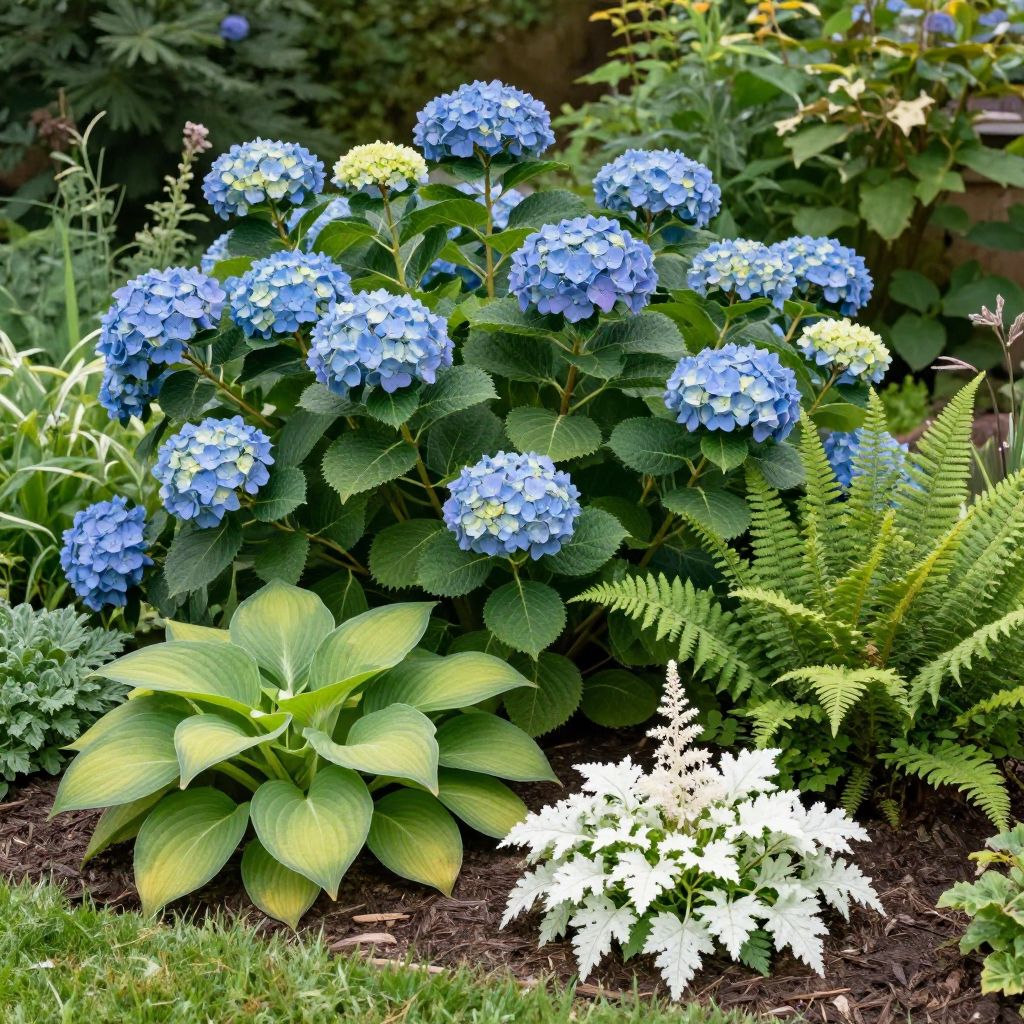
What should you plant with hydrangeas so the whole bed looks full, healthy, and balanced? The best companions are plants that enjoy similar conditions: moist, well-drained soil, part shade to morning sun, and room for hydrangeas’ wide roots and blooms. Good pairings add texture, extend seasonal interest, and help the planting look intentional rather than crowded.
The key is to choose plants that won’t compete too aggressively for water or light. Around hydrangeas, think in layers: low growers at the front, medium perennials in the middle, and shrubs or grasses that echo the hydrangea’s shape without overwhelming it.
What to plant with hydrangeas?
Plant hydrangeas with shade-tolerant perennials, spring bulbs, ornamental grasses, and compact shrubs that like similar soil moisture and light. Good companions include hostas, astilbe, heuchera, ferns, Japanese forest grass, hellebores, and small evergreens. Choose plants that won’t crowd the root zone and that keep the bed attractive when hydrangeas are not in bloom.
Best companion plants for hydrangeas
1. Hostas
Hostas are one of the easiest companions for hydrangeas in part shade. Their broad leaves contrast nicely with hydrangea flowers and help fill the lower layer of the bed.
- Best for: shade to part shade
- Soil: rich, evenly moist, well-drained
- Why they work: bold foliage balances large hydrangea blooms
Watch for slugs, especially in damp gardens. Keep mulch tidy and avoid overcrowding to improve airflow.
2. Astilbe
Astilbe adds feathery plumes that look light next to hydrangeas’ fuller flower heads. It also prefers moist soil, which makes it a natural fit in many garden beds.
- Best for: part shade
- Soil: humus-rich and consistently moist
- Why they work: soft texture and staggered bloom time
If your soil dries quickly, astilbe may struggle unless you improve it with compost and mulch.
3. Heuchera
Heuchera, or coral bells, gives you colorful foliage from spring through fall. It works especially well at the front of a hydrangea border where flowers are not the only feature.
- Best for: part shade
- Soil: well-drained, moderately fertile
- Why they work: year-round foliage color and neat mounds
Choose varieties with foliage colors that complement your hydrangea blooms rather than competing with them.
4. Ferns
Ferns soften the base of hydrangeas and suit woodland-style plantings. Their fine texture balances the broader leaves and larger blossoms of the shrub.
- Best for: shade to dappled light
- Soil: moist, organic-rich, not waterlogged
- Why they work: elegant texture and low visual weight
Ferns are especially useful where hydrangeas are planted under trees or along the north side of a house.
5. Japanese forest grass
Japanese forest grass (Hakonechloa macra) brings movement and a graceful arching shape that contrasts beautifully with hydrangeas’ rounded form. It is a strong choice for softening edges.
- Best for: part shade
- Soil: moist but well-drained
- Why they work: flowing shape and refined texture
Use it where you want a more natural, layered look rather than a formal hedge effect.
6. Hellebores
Hellebores bloom early, often before hydrangeas are active, giving the bed interest in late winter or early spring. Their evergreen or semi-evergreen foliage also helps keep the planting from looking bare.
- Best for: shade to part shade
- Soil: rich and well-drained
- Why they work: early flowers and lasting foliage
They are especially useful in mixed borders where you want multi-season structure.
7. Ornamental grasses
Smaller ornamental grasses can add vertical contrast near hydrangeas, especially in sunnier spots. Use them carefully so they do not shade the hydrangea too much or crowd the base.
- Best for: sun to part shade, depending on the grass
- Soil: varies, but most prefer drainage
- Why they work: movement, texture, and winter interest
Choose compact types rather than large, aggressive grasses that can overtake the bed.
8. Small shrubs and evergreens
Compact shrubs can anchor a hydrangea border and provide structure when flowers fade. Dwarf boxwood, small inkberry holly, or other restrained evergreens can work well if they suit your climate and soil.
- Best for: mixed borders and foundation plantings
- Soil: well-drained and suitable for the shrub species
- Why they work: year-round structure and contrast
Keep enough spacing so the hydrangea still gets air circulation and room to mature.
How to choose the right companion plants
The best answer to what to plant with hydrangeas depends on your site. A plant that thrives beside hydrangeas in one garden may fail in another if the light, drainage, or winter conditions are different.
Match the light
- Morning sun and afternoon shade: ideal for many hydrangeas and their companions
- Bright shade: best for hostas, ferns, heuchera, and hellebores
- More sun: choose tougher companions and make sure moisture is consistent
If your hydrangea gets too much afternoon sun, even good companion plants may look stressed because the whole bed dries out faster.
Match the soil moisture
Hydrangeas usually perform best in soil that stays evenly moist but never soggy. Companion plants should tolerate the same rhythm.
- Avoid drought-loving plants that need dry soil between waterings
- Avoid bog plants unless your site is naturally wet
- Use compost to improve moisture retention in sandy soil
Match the mature size
Many planting mistakes happen because small plants are placed too close together. Hydrangeas can spread wider than expected, so give companions enough room to grow without being swallowed.
- Leave space for airflow around the hydrangea crown
- Use low plants near the front edge of the bed
- Place taller companions where they won’t block blooms
How to plant around hydrangeas
Planting around hydrangeas is easiest when you protect the shrub’s shallow roots. Hydrangeas dislike deep digging near the crown, so work carefully and improve the surrounding soil without disturbing the main root ball too much.
- Choose companions that suit the same light and moisture conditions.
- Mark the mature spread of the hydrangea before planting.
- Dig holes for companion plants outside the densest root area when possible.
- Mix compost into the backfill if the soil is poor, especially in sandy or compacted beds.
- Set new plants at the same depth they were growing in their pots.
- Water thoroughly after planting to settle the soil.
- Apply 2 to 3 inches of mulch, keeping it a few inches away from stems.
Do not pile mulch against the hydrangea stem. That can trap moisture and invite rot or pests.
Design ideas for hydrangea beds
Woodland border
Use hydrangeas with ferns, hostas, and hellebores for a soft, layered woodland look. This style works well in dappled shade and naturally moist soil.
Cottage-style planting
Combine hydrangeas with heuchera, astilbe, and spring bulbs for a relaxed, full look. The mix gives you changing color through the season without needing constant replanting.
Foundation planting
For a house border, pair hydrangeas with compact evergreens and low perennials. This keeps the bed neat year-round while allowing the hydrangeas to be the main seasonal feature.
Mixed sunny border
If your hydrangea gets more sun, use companion plants that can handle brighter conditions and slightly drier periods, but still avoid plants that prefer very dry soil. Keep mulch in place and monitor moisture closely.
What not to plant with hydrangeas
Some plants look attractive in theory but cause problems in practice. Avoid companions that need very different care or that will outcompete the shrub.
- Plants that need dry, lean soil
- Large shrubs that will shade or crowd hydrangeas
- Aggressive spreaders that invade the root zone
- Deep-rooted plants that make watering difficult
- Very tall perennials that block flowers in front of the bed
If you are unsure, check the mature size and water needs before planting. That small step prevents years of maintenance problems later.
Care tips for hydrangeas and their companions
A mixed planting looks best when the whole bed is cared for as one system. Hydrangeas and their neighbors usually benefit from the same basic routine.
Watering
Water deeply when the top few inches of soil begin to dry, especially during establishment and hot weather. Newly planted companions need more frequent attention than established shrubs.
Try to water at the soil level rather than soaking the leaves. This helps reduce disease pressure and makes watering more efficient.
Mulching
Use organic mulch such as shredded bark or leaf mold to conserve moisture and reduce weeds. Keep the layer moderate so the soil can still breathe.
- Good for: moisture retention and weed control
- Keep clear of stems: to reduce rot risk
- Refresh as needed: when the mulch breaks down
Pruning
Pruning depends on the hydrangea type, so avoid cutting at random. Some hydrangeas bloom on old wood, others on new wood, and pruning at the wrong time can remove flower buds.
For companion plants, remove spent flowers, damaged leaves, and overly crowded stems to keep the bed tidy and airy.
Common problems and fixes
Hydrangea looks crowded
If the shrub is being squeezed by nearby plants, thin or move the companions before the bed becomes hard to maintain. Crowding reduces airflow and can increase disease problems.
Companion plants are wilting
Wilting usually means the soil is too dry, the roots are too shallow, or the plant is getting more sun than expected. Check moisture at root level before assuming the plant needs more fertilizer.
Leaves are yellowing
Yellow leaves can point to poor drainage, compacted soil, or nutrient imbalance. Improve the soil with compost, avoid overwatering, and make sure the plants are not sitting in waterlogged ground.
Fungal spots or mildew
Increase spacing, water at the base, and remove heavily affected leaves if needed. Dense plantings with poor airflow are more likely to develop leaf problems.
Final thoughts
The best plants to grow with hydrangeas are the ones that match their light, moisture, and space needs while adding texture and season-long interest. Start with a few reliable companions such as hostas, astilbe, heuchera, or ferns, then build the rest of the bed around your local conditions. If you want to expand your planting plan, choose one companion group and map out spacing before you dig.
For more practical garden planning, you may also want to read about hydrangea pruning basics and shade garden plants that thrive together.
Leave a Reply