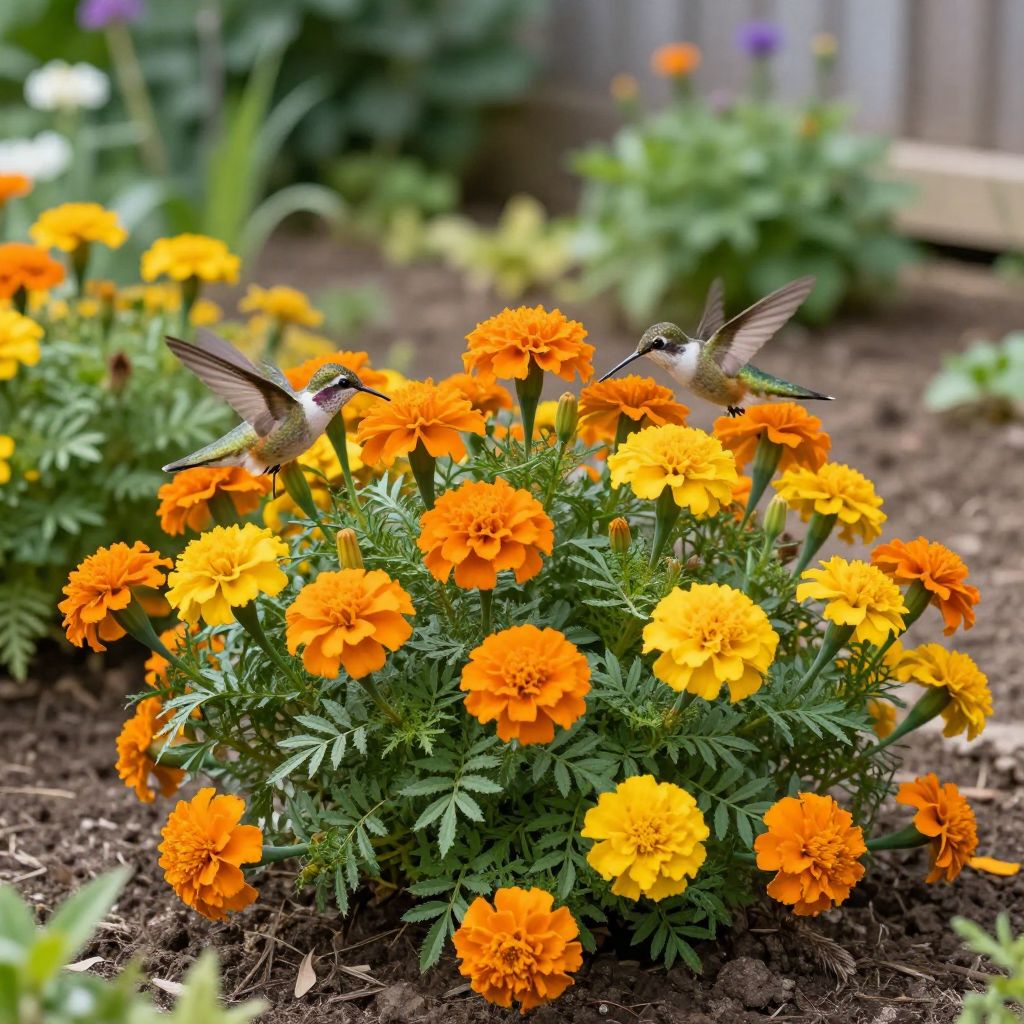
Do hummingbirds like marigolds? The short answer is: sometimes, but not strongly. Marigolds are not a top hummingbird plant because their flowers usually offer little nectar and are built more for insect pollinators than for hovering birds. Still, they can support a lively garden that attracts insects hummingbirds do enjoy eating.
If you want to bring hummingbirds in, marigolds are best treated as a helpful companion plant rather than the main attraction. Use them for color, pest management, and border planting, then pair them with true nectar-rich flowers to create a better feeding habitat.
Do hummingbirds like marigolds?
Hummingbirds may visit marigolds occasionally, but they usually prefer tubular, nectar-rich flowers such as salvia, bee balm, penstemon, trumpet vine, and fuchsia. Marigolds can still help by drawing small insects and adding bright color, but they are not among the most reliable hummingbird magnets.
Why marigolds are not a top hummingbird plant
Marigolds (Tagetes spp.) produce showy blooms, but those blooms are typically dense and open rather than long and tubular. That flower shape is better suited to bees and other insects than to hummingbirds, which feed most efficiently from nectar deep inside narrow blossoms.
What hummingbirds actually look for
- Nectar-rich flowers with a tubular or trumpet shape
- Bright colors, especially red, orange, and pink
- Flowers that bloom repeatedly through the season
- Plants arranged in sunny, open spots where birds can hover safely
Marigolds can still be useful because they bloom steadily, are easy to grow, and may attract tiny insects that hummingbirds sometimes catch. But if your goal is to see hummingbirds at the garden edge, you will get better results by planting marigolds alongside stronger nectar plants.
How to use marigolds in a hummingbird-friendly garden
Think of marigolds as a support plant. They add color, help fill gaps in beds and containers, and can contribute to a healthier mixed planting that supports insects and birds. They work especially well as edging plants, companion plants in vegetable beds, and bright fillers around taller hummingbird flowers.
Best planting combinations
- Marigolds with salvia, bee balm, or cardinal flower
- Marigolds at the front of a border with taller nectar plants behind them
- Marigolds in containers near a feeder or flowering shrub
- Marigolds mixed into vegetable beds to add color and help discourage some pests
Tip: If you want hummingbirds to notice your garden quickly, place marigolds near plants that bloom in the same season and offer real nectar. The combination is more effective than marigolds alone.
Growing marigolds well for a healthier garden
Healthy marigolds bloom longer, look better, and support a more active garden overall. They are generally easy annuals, but they still need the right light, drainage, and spacing to perform well.
Sunlight and soil
Marigolds bloom best in full sun, which usually means at least 6 hours of direct light daily. In hotter climates, a little afternoon shade can help prevent stress, but too much shade reduces flowering.
Use well-drained soil. Marigolds tolerate average garden soil, but they do poorly in soggy beds where roots stay wet. If your soil is heavy clay, mix in compost to improve structure and drainage rather than overwatering.
Planting and spacing
Space plants according to their mature size so air can move freely around them. Good airflow helps reduce disease and keeps flowers cleaner. Crowded marigolds may grow leggy and bloom less.
- Choose a sunny site with loose, well-drained soil.
- Work in a modest amount of compost if the soil is poor or compacted.
- Set transplants or sow seeds at the recommended spacing for the variety you chose.
- Water after planting to settle the soil around the roots.
- Mulch lightly to reduce weeds and conserve moisture, keeping mulch away from stems.
Watering needs
Marigolds prefer even moisture while they establish, then moderate watering once rooted. Let the top inch or two of soil dry slightly before watering again, especially in containers. Overwatering is a common mistake and can lead to weak growth and root problems.
During very hot or windy weather, plants in pots may need water more often than those in the ground. Always check the soil rather than following a fixed schedule, because climate, pot size, and sun exposure all change how fast the soil dries.
How to keep marigolds blooming longer
Long-blooming marigolds make a garden look fuller and provide a longer window of color around hummingbird-friendly plants. Regular maintenance is simple and pays off quickly.
Deadheading
Remove spent blooms as soon as they fade. This prevents the plant from putting energy into seed production and encourages more flowers. Pinch or snip the flower stem just above the next set of leaves or buds.
Pinching and shaping
Young marigolds can be pinched lightly to encourage bushier growth, especially if they are getting tall and sparse. Compact plants usually flower more evenly and fit better into mixed beds.
Feeding
Marigolds do not need heavy fertilizing. Too much nitrogen can push leafy growth at the expense of flowers. If your soil is poor, a light application of compost at planting time is often enough. In containers, use a balanced fertilizer sparingly if growth looks weak and flowering is slow.
Common marigold problems and how to fix them
Most marigold issues are easy to prevent with sun, drainage, and spacing. If flowers are sparse or plants look unhealthy, the cause is often environmental rather than a serious disease.
Leggy plants
Leggy growth usually means the plant needs more sun or has been overfed. Move container plants to a brighter spot if possible, and avoid rich, high-nitrogen fertilizers.
Powdery mildew and leaf spots
These problems are more likely in crowded plantings or humid weather. Improve airflow, water at the base instead of overhead, and remove badly affected leaves if needed. Avoid wetting foliage late in the day.
Pests
Marigolds are fairly tough, but aphids, spider mites, and slugs can still appear. Check the undersides of leaves and new growth regularly. A strong spray of water can dislodge aphids, while hand-picking or barriers may help with slugs.
Important: If you are growing marigolds mainly to support hummingbirds, do not let pest control remove all the insect life from the garden. Hummingbirds also benefit from a balanced garden ecosystem, not a sterile one.
Best flowers to pair with marigolds for hummingbirds
If you want consistent hummingbird visits, combine marigolds with plants that offer deeper nectar sources. This gives you the color and easy care of marigolds plus the nectar reward hummingbirds are actually seeking.
- Salvia
- Bee balm (Monarda)
- Cardinal flower (Lobelia cardinalis)
- Columbine (Aquilegia)
- Penstemon
- Trumpet-shaped annuals and perennials suited to your climate
- Flowering vines with tubular blooms
Choose a mix of early, midseason, and late bloomers if you can. Hummingbirds are more likely to keep returning when something is flowering throughout the season.
Container growing tips
Marigolds do well in pots, which makes them easy to place near patios, windows, or feeders. Containers are especially useful if your garden space is limited or if your soil drains poorly.
Container basics
- Use a pot with drainage holes
- Choose a quality potting mix, not garden soil
- Place containers in full sun
- Water more often than in-ground plants, especially in heat
- Deadhead regularly to keep flowers coming
For a hummingbird display, cluster containers together instead of spacing them far apart. A grouped planting is easier for birds to notice and makes the garden feel fuller.
Seasonal care and garden planning
Marigolds are usually grown as warm-season annuals in many regions, so they fit best after frost danger has passed and while temperatures are reliably warm. In mild climates, they may last longer, but they still grow best with warmth and sun.
As the season changes, remove tired plants and refresh the bed with compost or new plantings if needed. If hummingbirds are still active in your area, keep nectar plants blooming as long as possible and leave a few healthy flowers in place rather than clearing everything at once.
Practical mistakes to avoid
- Planting marigolds in too much shade
- Overwatering or letting pots sit in water
- Using too much fertilizer, especially nitrogen-heavy products
- Expecting marigolds alone to bring in lots of hummingbirds
- Allowing crowded plants to reduce airflow and flowering
Conclusion: the best way to use marigolds for hummingbirds
Do hummingbirds like marigolds? Not especially, but marigolds can still earn a place in a bird-friendly garden when you use them wisely. Grow them in sun, keep them blooming, and pair them with nectar-rich flowers that hummingbirds truly prefer.
If you want the best results, plant marigolds as colorful companions and add at least a few tubular flowering plants nearby. That combination gives you a healthier, brighter garden and a much better chance of seeing hummingbirds visit. For more practical garden planning, you may also want to read about hummingbird garden plants and how to grow marigolds.