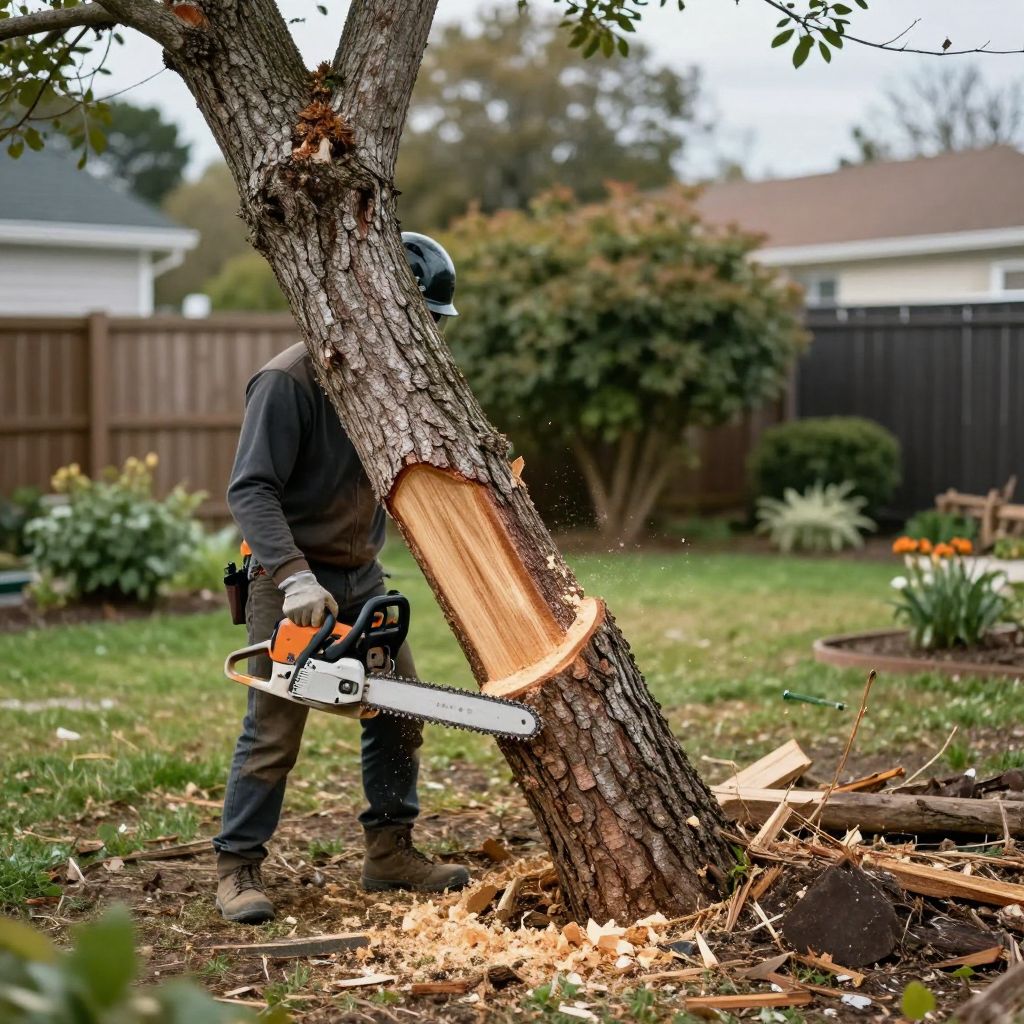
If you’re planning to cut down a tree, the biggest mistake is often not the cut itself—it’s what you do before and during the job. A tree that looks straightforward can hide lean, tension, decay, heavy limbs, or nearby hazards that change everything.
When people ask, “What should I never do when cutting down a tree?” the short answer is: never assume it will fall exactly where you want without a plan, clearance, and the right equipment. Safe tree removal starts with assessing the tree, the space around it, and whether the job is better left to a certified arborist.
Never do this when cutting down a tree?
Never cut a tree without checking for lean, rot, overhead lines, escape routes, and a clear fall zone. Don’t stand in the likely fall path, don’t cut alone if the tree is large or unstable, and don’t use a ladder or power saw above shoulder height. If anything looks risky, stop and call a professional.
Why tree cutting goes wrong so easily
Tree removal is not the same as pruning a branch or taking down a small ornamental shrub. A tree stores weight unevenly, and the trunk can shift suddenly once the cut starts to release tension.
Even a healthy-looking tree may have hidden decay, a split trunk, or dead limbs that break unpredictably. Wind, wet ground, nearby structures, and tangled branches can all make a simple job dangerous.
Common factors that increase risk
- Lean toward a house, fence, driveway, or power line
- Dead or hanging branches that can fall during cutting
- Rot or hollow sections that weaken the trunk
- Limited space for the tree to fall safely
- Slippery or uneven ground around the base
- Windy conditions that change the fall direction
What you should never do before the cut
Before you start, inspect the entire tree and the area around it. Never skip this step, because a poor assessment is one of the main reasons tree removal becomes an emergency.
Never ignore the tree’s lean and crown shape
Look at the trunk from several angles. If the tree leans, the top is heavier on one side, or the canopy is lopsided, the tree may not fall straight down the line you expect.
Also check for broken limbs, cracks in the trunk, mushrooms or conks at the base, and areas where bark is missing or sunken. These can indicate decay or structural weakness.
Never cut near overhead utility lines
If branches or the trunk are near power lines, do not attempt the removal yourself. Electricity can arc, and contact with a line can be fatal. Contact the utility company or a qualified tree service instead.
Never work without planning the escape route
Every person on site should know where to move if the tree shifts unexpectedly. Plan at least two clear escape paths at roughly 45 degrees away from the expected fall line.
- Keep the area free of tools, hoses, toys, and garden furniture
- Move vehicles well away from the work zone
- Keep pets and children indoors
- Make sure no one stands behind the tree or directly downhill
What you should never do while making the cut
The cutting stage is where many accidents happen. Never rush, and never make a cut you do not fully understand.
Never stand directly behind the trunk
Once the tree begins to move, the trunk can kick back, twist, or drop debris. Stand to the side and keep your body out of the fall path at all times.
Never cut from a ladder
Ladders are unstable around chainsaws and falling wood. If the tree is too tall or awkward to reach safely from the ground, that is a sign the job may need professional equipment.
Never use a dull or poorly maintained saw
A dull chain or damaged saw increases kickback risk and makes cuts harder to control. Before starting, check that the chain is sharp, properly tensioned, and lubricated, and that the brake works correctly.
Never cut without personal protective equipment
At minimum, wear eye protection, hearing protection, sturdy gloves, long pants, and boots with good traction. For chainsaw work, protective chaps are strongly recommended.
- Eye protection helps block chips and sawdust
- Ear protection reduces noise exposure
- Gloves improve grip and reduce minor injuries
- Boots help stabilize footing on uneven ground
Never underestimate tension in branches and trunk wood
One of the most dangerous mistakes is assuming the wood will behave predictably. Trees under stress can pinch the saw, spring apart, or shift suddenly as the cut deepens.
If a branch is bent, lodged, or supporting weight, treat it as a tensioned piece of wood. Cut slowly and from a safe position, or stop if you are unsure how the tension is distributed.
Signs of dangerous tension
- Branches bent under heavy load
- Trunk sections compressed on one side and stretched on the other
- Cracks that widen as the cut progresses
- Wood that suddenly settles or creaks
Never forget the stump and roots after the tree is down
Cutting the tree is only part of the job. Never leave a stump in a place where it creates a tripping hazard, interferes with mowing, or encourages regrowth where you do not want it.
Some species send up shoots from the stump or roots. If you are removing a tree because it is diseased, invasive, or damaging nearby structures, plan how you will handle the stump and root system before you begin.
What to do after removal
- Wait until the area is fully safe before approaching the stump.
- Remove loose branches and debris first.
- Inspect the stump for hidden splits or unstable roots.
- Decide whether to grind, dig out, or leave the stump based on your landscape plan.
- Fill and level the area if you want to replant or restore the lawn.
When you should not cut the tree yourself
Some trees are simply too risky for a homeowner to remove safely. Never take on a tree that is close to structures, tangled in utility lines, badly decayed, or too large to control with basic tools.
Professional arborists have climbing gear, rigging systems, and training for complex removals. That matters especially when the tree is over a roof, near a fence, or leaning toward a target you cannot afford to damage.
Call a professional if you notice any of these
- Cracks in the trunk or major limbs
- Signs of hollowing or internal rot
- Large dead limbs overhead
- Limited landing space for the tree
- Nearby power lines or service cables
- Strong wind or unstable soil conditions
Safer alternatives to full removal
Sometimes the best answer is not to cut the tree down at all. If the tree is healthy but poorly placed, selective pruning or crown reduction may solve the problem without the risks of full removal.
If the issue is shade, root competition, or a branch overhanging a path, a qualified arborist can often suggest a less drastic option. That can preserve the tree while improving safety and light.
Consider these options first
- Pruning dead, damaged, or crossing branches
- Reducing weight on one side of the canopy
- Removing a single hazardous limb
- Improving drainage around stressed roots
- Monitoring the tree through the season if the problem is minor
Practical checklist before you start
Use this quick checklist before any tree removal task. If you cannot check every box, pause and reassess.
- Identify the tree and inspect it for decay, cracks, and lean
- Confirm there are no utility lines involved
- Clear the fall zone and two escape routes
- Wear proper protective gear
- Make sure your saw is sharp and in good working order
- Have another adult present if the job is more than a small, simple cut
- Stop if wind, fatigue, or poor visibility makes the job unsafe
Conclusion: the one rule to remember
If you remember only one thing, make it this: never cut down a tree without a clear plan for where it will fall and how you will get out of the way. Most serious mistakes happen when people rush, guess, or ignore warning signs.
Before you cut, inspect the tree, clear the area, and decide honestly whether the job is within your skill level. If you want more help identifying the tree before removal, you may also find this guide useful: how to identify what type of tree it is.