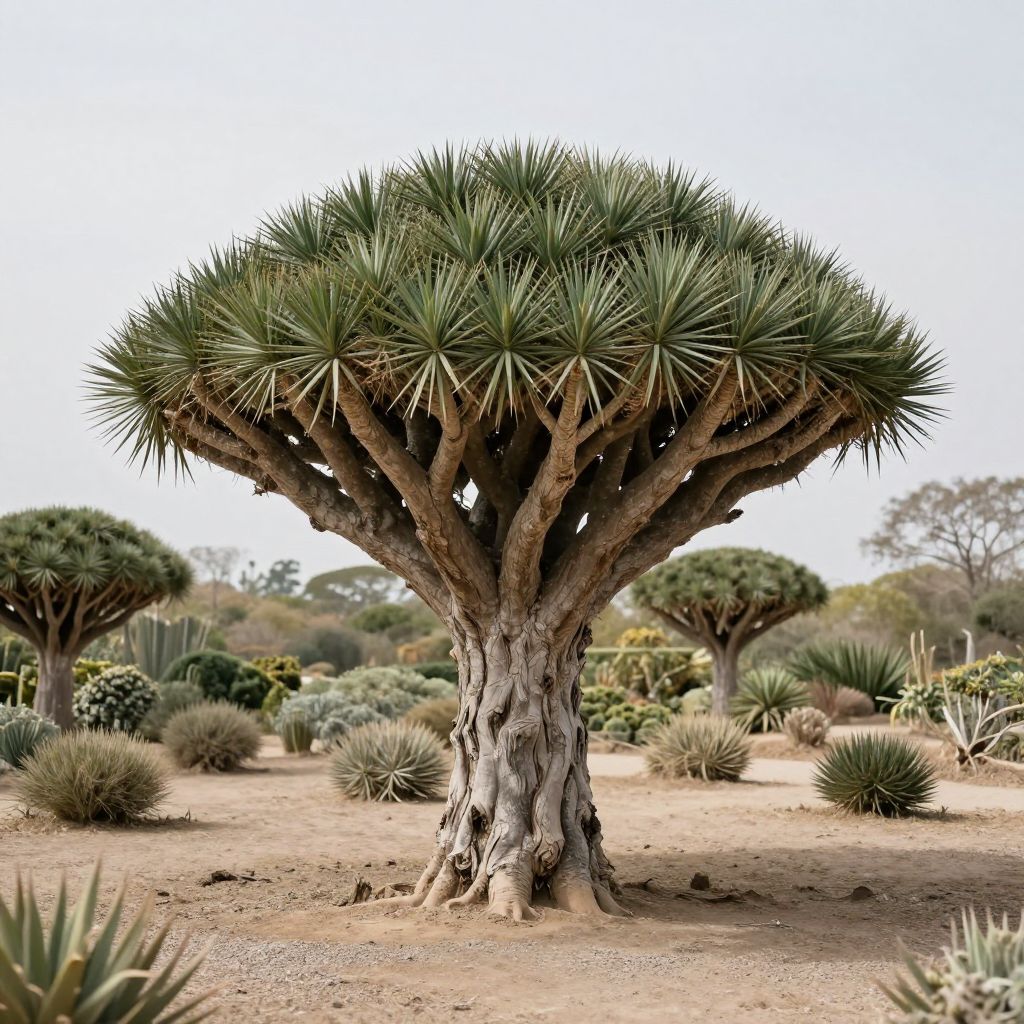
You may be asking, “What are the most unique-looking trees?” The best answer depends on whether you want unusual bark, dramatic flowers, sculptural branches, or a tree that changes its appearance through the seasons. Some trees stand out because of their form, while others look striking up close in the trunk, leaves, or seed pods.
If you’re choosing one for your yard, the trick is matching the tree’s visual appeal to your climate, soil, and available space. A truly unique tree is only worth planting if it can grow well where you live and fit the role you want it to play in the landscape.
What are the most unique-looking trees?
Some of the most unique-looking trees include the paperbark maple, rainbow eucalyptus, monkey puzzle tree, Japanese maple, dragon blood tree, weeping mulberry, bottle tree, and contorted hazel. They stand out for peeling bark, unusual trunk shape, dramatic branching, or colorful foliage. The best choice for you depends on climate, mature size, and maintenance needs.
Why some trees look so unusual
“Unique” can mean several different things in the garden. A tree may look unusual because of its bark, canopy shape, leaf color, flowers, fruit, or the way it grows over time.
Before you buy, decide what kind of visual effect you want. That keeps you from choosing a tree that looks amazing in a nursery photo but becomes too large, too messy, or too tender for your site.
Common traits that make a tree stand out
- Peeling or patterned bark that adds winter interest
- Weeping, twisted, or contorted branches
- Unusual leaf shape or color
- Uncommon flowers or seed pods
- Architectural form that looks sculptural even without leaves
Standout trees to consider for an unusual landscape
Paperbark maple (Acer griseum)
Paperbark maple is prized for cinnamon-colored bark that peels in thin curls, revealing a polished trunk beneath. It is especially attractive in winter, when the bark becomes the main feature.
This is a good choice if you want a smaller ornamental tree with year-round interest. Give it well-drained soil and enough space to show off its layered branching.
Japanese maple (Acer palmatum)
Japanese maple is one of the most versatile unique-looking trees because it can be lace-leaved, deeply dissected, upright, or cascading. Many cultivars have red, orange, or chartreuse foliage that changes with the seasons.
It prefers filtered sun or morning sun with afternoon shade in hotter climates. Too much harsh sun can scorch delicate leaves, especially in dry or windy sites.
Monkey puzzle tree (Araucaria araucana)
Monkey puzzle tree has stiff, spiraled branches and sharply pointed leaves that make it look almost prehistoric. Its form is so distinctive that even young plants draw attention.
This tree needs room, excellent drainage, and a climate suited to its needs. Because of its spiny foliage, place it where people and pets will not brush against it.
Rainbow eucalyptus (Eucalyptus deglupta)
Rainbow eucalyptus is famous for bark that sheds in strips to reveal green, blue, orange, and maroon tones. The colors are strongest on mature trunks in warm, humid climates.
It is not a casual landscape tree for most gardeners. It grows fast, needs warmth, and can become very large, so it’s best for frost-free regions with plenty of space.
Weeping mulberry (Morus alba ‘Pendula’ and related forms)
Weeping mulberry creates a dramatic umbrella-like canopy with cascading branches. Even when it is not in leaf, the structure looks sculptural and eye-catching.
It is often used as a specimen tree in smaller gardens. Prune carefully to maintain its shape, and avoid overfeeding it, which can encourage overly vigorous growth.
Bottle tree (Brachychiton rupestris)
Bottle tree gets its name from its swollen trunk, which stores water and gives the tree a striking silhouette. The trunk alone makes it one of the most unusual-looking trees in warm climates.
It prefers full sun and well-drained soil. In cooler regions, it may need container culture or greenhouse protection rather than open-ground planting.
Dragon blood tree (Dracaena cinnabari)
Dragon blood tree has a dense, umbrella-shaped crown and a highly unusual branching pattern. It is one of the most iconic odd-looking trees in the world.
It is not suitable for most home landscapes because it requires a very specific warm, dry climate. If you live in a mild region, it is more often seen in botanical collections than ordinary gardens.
Contorted hazel (Corylus avellana ‘Contorta’)
Contorted hazel is valued for twisted stems and curled branches that look interesting in every season. In winter, the bare stems are especially decorative.
This tree works well in mixed borders or as a focal point near a path. It tolerates pruning, but the twisted form is part of its appeal, so keep trimming light.
Ginkgo (Ginkgo biloba)
Ginkgo has fan-shaped leaves that turn brilliant yellow in fall, creating a striking seasonal display. Its unusual leaf shape and upright habit make it easy to recognize.
Choose a male tree if you want to avoid the messy fruit produced by female trees. It is a tough urban tree when planted in the right site.
Strawberry tree (Arbutus unedo)
Strawberry tree offers peeling bark, glossy evergreen leaves, bell-shaped flowers, and round red-orange fruits at the same time. That combination gives it a layered, unusual look.
It prefers mild climates and well-drained soil. In the right place, it provides year-round interest without needing heavy pruning.
How to choose the right unusual tree for your garden
A tree can look extraordinary and still be a poor fit for your yard. Start with your climate, then work through size, light, soil, and maintenance.
- Check mature size first. A small nursery tree may eventually outgrow a narrow bed or overhead wires.
- Match the climate. Some unusual trees are only reliable in frost-free or mild regions.
- Assess sun exposure. Many ornamental trees need full sun for best color, while some prefer partial shade.
- Look at drainage. Trees with unusual bark or foliage often fail in soggy soil before they ever show their best features.
- Decide how much maintenance you want. Weeping, contorted, or fast-growing trees may need regular shaping.
Best uses in the landscape
- Specimen tree: one standout tree as a focal point
- Entry planting: a smaller tree near a walkway or front yard
- Winter interest planting: trees with bark, form, or evergreen structure
- Shade with character: unusual canopy shape for a seating area
Planting and care basics for unique-looking trees
Most ornamental trees do best when planted in a hole that is wide, not deep. The root flare should sit at or slightly above the surrounding soil level, especially in heavier soils.
Backfill with native soil unless your soil is extremely poor. Too much compost in the planting hole can create a “pot effect,” where roots stay in the amended area instead of spreading outward.
Watering
Newly planted trees need consistent moisture while roots establish, but not constant saturation. Water deeply, then let the top layer of soil begin to dry before watering again, adjusting for rainfall, heat, and soil type.
Once established, many unique ornamental trees prefer deep, less frequent watering over shallow daily watering. Mulch helps conserve moisture and keeps roots cooler.
Mulching
- Apply 2 to 4 inches of mulch around the root zone
- Keep mulch a few inches away from the trunk
- Refresh mulch as it breaks down
Avoid piling mulch against the trunk. That can trap moisture, invite rot, and encourage pests.
Pruning
Prune only to remove dead, damaged, or crossing branches unless the tree’s shape depends on light training. Overpruning can ruin the natural form that makes these trees special.
For weeping or contorted trees, prune selectively so you preserve the characteristic silhouette. For grafted trees, remove shoots that emerge below the graft union.
Common problems with unusual ornamental trees
Leaf scorch
Leaf scorch often shows up on Japanese maples and other delicate trees in hot sun, wind, or drought. Leaves may brown at the edges even when the tree is alive and healthy overall.
Move container-grown trees to a gentler exposure, water more consistently, and add mulch to reduce stress.
Poor form or weak branching
Some trees lose their distinctive shape if they are planted in too much shade or pruned too heavily. Fast growth can also make branches long and weak.
Give the tree enough light and avoid high-nitrogen feeding unless a soil test shows a real need.
Root stress from poor drainage
Many unique trees fail in waterlogged soil before they ever mature. Symptoms may include yellowing leaves, stunted growth, or dieback.
If your site stays wet, choose a better-drained location, raise the planting area, or select a tree known to tolerate heavier soils.
Pests and diseases
Problems vary by species, but stressed trees are always more vulnerable. Inspect leaves, bark, and branch junctions regularly for insects, cankers, or unusual spotting.
Good airflow, proper spacing, and clean pruning tools help reduce disease pressure. Remove dead wood promptly and avoid wounding the trunk.
How to make a unique tree look its best
The most unusual trees are often most effective when they are given space to be seen. Plant them where light catches the bark, canopy, or foliage, such as near a patio, gate, or open lawn edge.
- Use a simple backdrop so the tree’s form stands out
- Underplant with low-growing companions that do not hide the trunk
- Place lighting where bark texture or branch structure can be seen at dusk
- Keep competing shrubs far enough away to preserve the tree’s outline
If you want year-round impact, choose a tree with more than one feature: bark plus flowers, foliage plus form, or evergreen structure plus seasonal color. That way the tree still earns its place after the bloom period ends.
Final thoughts
The most unique-looking trees are the ones that combine striking form with the right growing conditions for your garden. Whether you want peeling bark, twisting branches, or dramatic foliage, the best choice is the one that can thrive where you live.
Before buying, measure your space, check your soil drainage, and think about the tree’s mature shape. If you’d like help identifying a tree you already have, you may also find this guide useful: what type of tree is this?