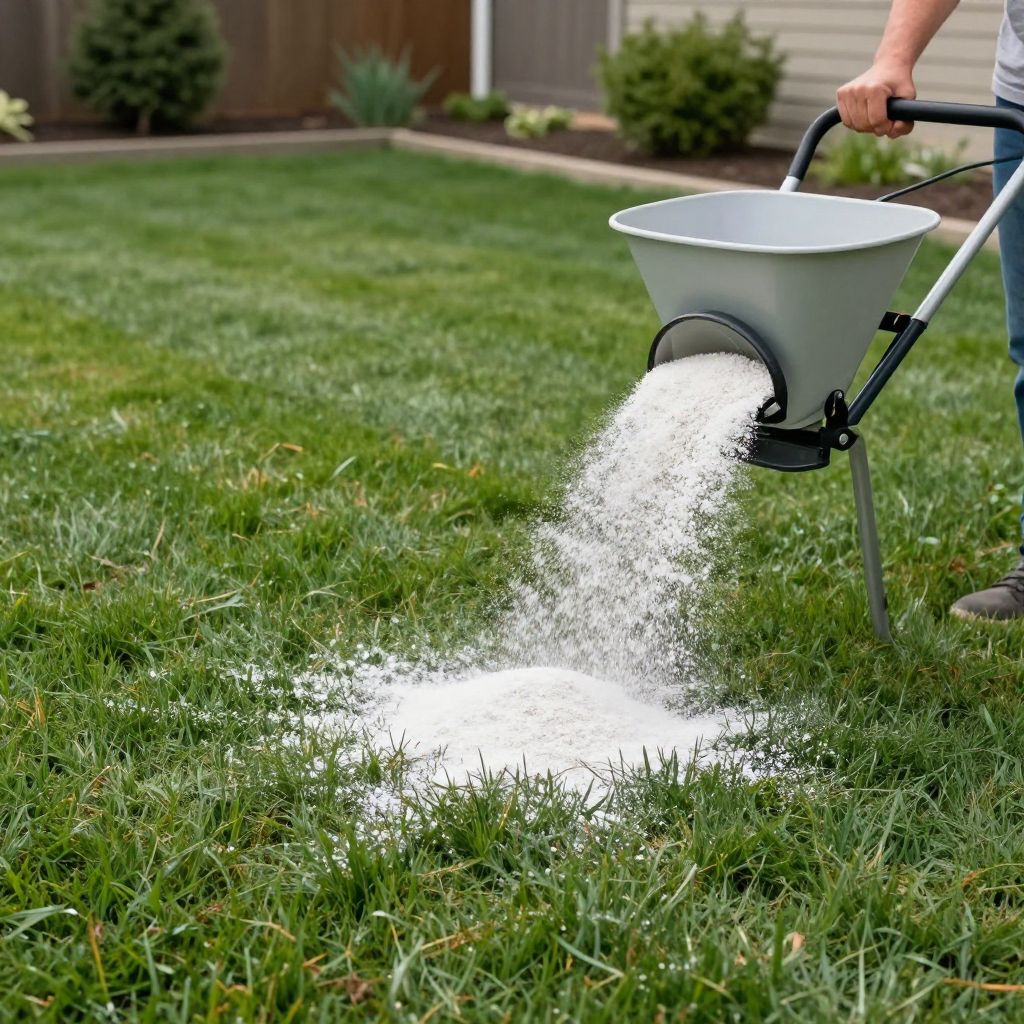
What does lime do for grass? In simple terms, lime helps correct acidic soil so turfgrass can use nutrients more effectively. It does not act like fertilizer, and it will not green up a lawn overnight, but it can improve soil conditions that support thicker, healthier growth over time.
The key is knowing whether your lawn actually needs lime. The right approach depends on your soil pH, grass type, and local conditions, so testing first is always better than guessing.
What does lime do for grass?
Lime raises soil pH when soil is too acidic, making nutrients like nitrogen, phosphorus, and potassium more available to grass roots. It can also improve microbial activity and root growth in very acidic soils. Lime is a soil amendment, not a quick fix, and it should be used only when a soil test shows a need.
Why soil pH matters for a lawn
Grass grows best when soil pH is in a range where roots can absorb nutrients efficiently. If soil is too acidic, turf may struggle even when you fertilize correctly.
Signs your lawn may have acidic soil
- Grass looks thin or pale despite regular care
- Moss is spreading in shaded or damp areas
- Weeds are taking over weak turf
- Fertilizer seems to have little effect
- Soil test results show low pH
These symptoms can also come from poor drainage, compaction, shade, or low fertility, so do not assume lime is the answer without testing.
What lime does not do
- It does not replace fertilizer
- It does not fix compacted soil
- It does not solve drainage problems
- It does not kill weeds or moss directly
- It does not work instantly
How to tell if your grass needs lime
The most reliable way to know is a soil test. Many extension services and garden centers offer testing that reports pH and nutrient levels, which is much more useful than guessing from lawn appearance alone.
How to test your soil
- Collect small soil samples from several spots in the lawn.
- Mix them together in a clean container.
- Remove leaves, roots, and stones.
- Send the sample to a soil lab or use a reliable test kit.
- Check the pH recommendation for turfgrass in your area.
If your test shows acidic soil, the report may also suggest how much lime to apply. That recommendation is more accurate than any general rule because soil texture and current pH affect the amount needed.
Types of lime used on lawns
Not all lime products are the same. The best choice depends on how quickly you need results and what your soil test recommends.
Common lime products
- Calcitic lime — mainly calcium carbonate; commonly used to raise pH
- Dolomitic lime — contains calcium and magnesium; useful if soil is low in magnesium
- Pelletized lime — easier to spread evenly and less dusty
- Ground agricultural lime — traditional form, often economical for larger lawns
Choose the product based on your soil test, not just convenience. If magnesium is already adequate, dolomitic lime may not be necessary.
When to apply lime to grass
Lime can be applied at several times of year, but the best timing depends on your climate and lawn care routine. Many gardeners apply it in fall or early spring when soil conditions are workable and rainfall can help it move into the root zone.
Seasonal timing tips
- Fall: often a good time because lime has months to react before peak growing season
- Spring: workable if the lawn is dry enough to spread product evenly
- During drought: avoid applying if the lawn is stressed and irrigation is limited
- Before heavy rain: avoid application if runoff is likely
If you overseed or fertilize, follow the timing on your soil test and product labels. Lime is usually best applied separately from major lawn renovation work unless your soil report says otherwise.
How to apply lime correctly
Even application matters. Uneven spreading can create patches of over-limed and under-limed soil, which leads to inconsistent turf growth.
Step-by-step application guide
- Mow the lawn if needed, then remove heavy thatch or debris.
- Calibrate a broadcast or drop spreader according to the product label.
- Apply half the amount in one direction.
- Apply the other half at a right angle for more even coverage.
- Water lightly if the label recommends it and rainfall is not expected.
Wear gloves and avoid spreading on windy days. Keep lime off sidewalks, driveways, and hard surfaces where it can be tracked or washed away.
How much lime should you use?
There is no universal amount that works for every lawn. Soil type, current pH, and the lime product all matter. Always follow your soil test recommendation and the product label. Applying too much lime can push pH too high and create nutrient problems of its own.
How long lime takes to work
Lime works gradually. Fine-textured products react faster than coarse ones, but visible lawn improvement usually takes weeks to months, not days. In some soils, the full benefit may take a season or longer.
What to expect after application
- Soil pH begins shifting slowly
- Root access to nutrients improves over time
- Grass may look healthier after consistent care, not from lime alone
- Follow-up soil testing may be needed later to confirm changes
If your lawn is weak because of shade, compaction, pests, or poor drainage, lime will not fix those issues by itself. Address the underlying problem too.
Common mistakes to avoid
Many lawn problems come from using lime when it is not needed, or applying it incorrectly. A careful approach saves time and protects your soil.
- Skipping soil testing and applying lime “just in case”
- Using lime to replace fertilizer
- Applying too much at once
- Spreading unevenly by hand without a spreader
- Ignoring drainage, compaction, or shade issues
- Expecting immediate color change
When lime is not the right solution
Some lawns do not need lime at all. If your soil test shows neutral or alkaline pH, adding lime can make nutrient uptake worse rather than better.
Situations where lime may be unnecessary
- Soil pH is already in the recommended range for turf
- The lawn is thin because of drought stress
- Compacted soil is restricting roots
- Shade is too dense for the grass type
- Drainage is poor and roots are staying wet
In those cases, focus on aeration, watering practices, pruning nearby trees, improving drainage, or reseeding with a grass better suited to your site.
How lime fits into overall lawn care
Lime works best as part of a broader lawn care plan. Healthy turf depends on the right soil pH, sensible mowing, proper watering, and fertility matched to your grass type.
Good lawn care habits that support lime’s benefits
- Mow at the correct height for your grass type
- Water deeply but not too often, when the lawn actually needs it
- Aerate compacted soil when appropriate
- Feed with fertilizer based on soil test results
- Overseed thin areas with suitable turfgrass
These practices help grass make better use of the improved soil conditions that lime can create.
Quick troubleshooting guide
If you applied lime and do not see the results you expected, the problem may be timing, amount, or an issue unrelated to pH.
If the lawn still looks weak
- Check whether the soil test recommended a second application later
- Look for compaction or poor drainage
- Inspect for insects, disease, or thatch buildup
- Confirm you are using the right fertilizer for your grass
- Re-test soil before adding more lime
If the lawn turns patchy or shows nutrient deficiency symptoms after liming, stop adding amendments and test the soil again. Over-liming can create new problems that take time to correct.
Conclusion
So, what does lime do for grass? It raises acidic soil pH so turf can use nutrients more effectively, but only when your lawn actually needs it. Test your soil first, choose the right lime product, and apply it evenly according to the lab or label recommendation.
For more practical lawn care help, you may also want to read about soil testing and basic lawn maintenance before making your next soil amendment decision.
Leave a Reply