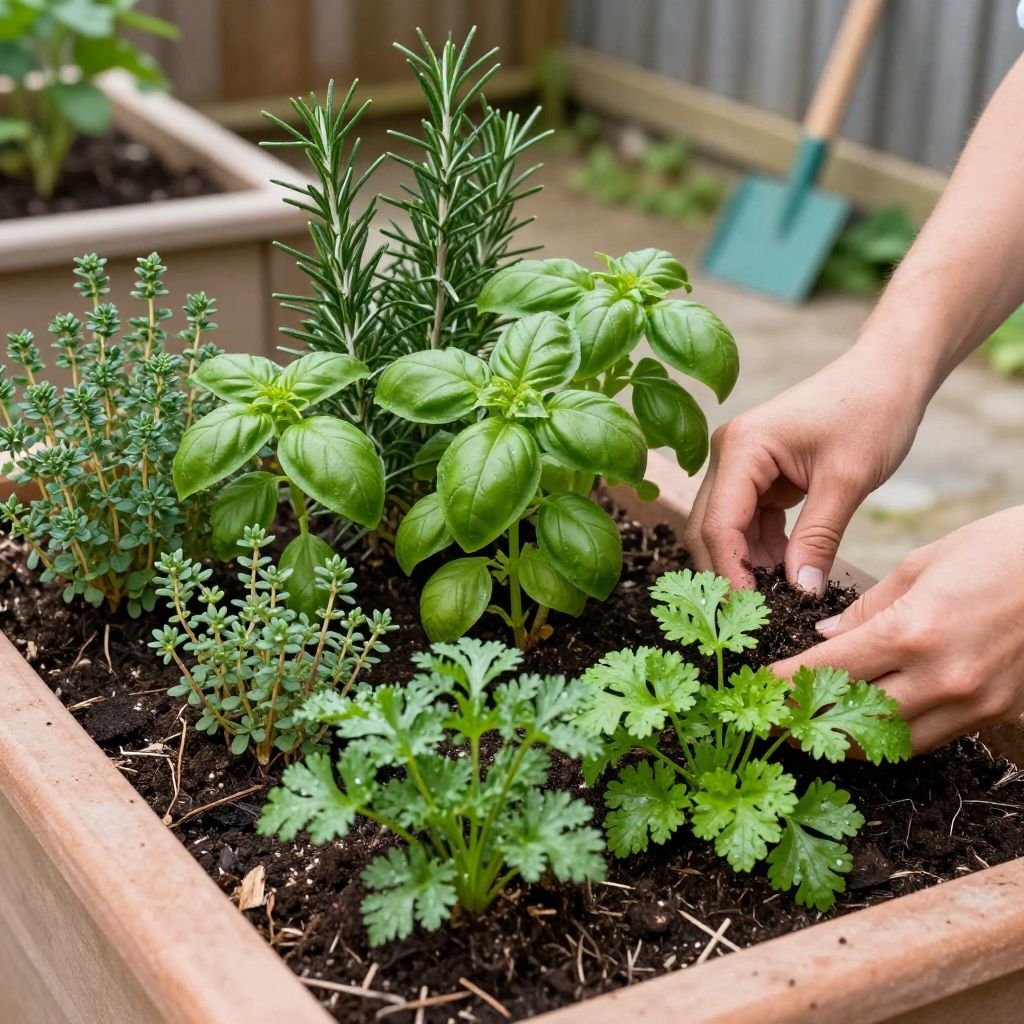
Trying to figure out what herbs grow well together can save you space, simplify care, and help your garden look fuller and more productive. The trick is matching herbs with similar sunlight, water, and soil needs instead of planting random favorites side by side.
Most common culinary herbs prefer full sun, sharp drainage, and soil that is not overly rich. Once you group herbs by growth habit and moisture preference, you can build containers, raised beds, or borders that are easier to maintain and less likely to fail.
What herbs grow well together?
Herbs grow well together when they need the same light, water, and soil conditions. Mediterranean herbs such as rosemary, thyme, oregano, sage, and marjoram usually pair well because they like full sun and drier soil. Moisture-loving herbs such as parsley, cilantro, chives, dill, and basil can also be grouped together if you keep the soil more evenly moist.
Group herbs by growing needs, not just by taste
The best herb combinations are based on plant care, not flavor pairings. If you mix a drought-tolerant herb with a thirsty one, one of them will usually struggle.
Dry, sunny herb combinations
- Rosemary and thyme
- Oregano and sage
- Thyme, oregano, and marjoram
- Rosemary, sage, and thyme in larger containers or raised beds
These herbs prefer full sun, excellent drainage, and soil that dries slightly between waterings. They are a strong choice for hot patios, gravel beds, and raised planters with sandy or gritty soil.
Moisture-loving herb combinations
- Basil and parsley
- Parsley, cilantro, and chives
- Dill and cilantro
- Basil, parsley, and chives in a mixed container
These herbs do better with richer soil and more consistent moisture than Mediterranean herbs. They still need drainage, but they are more forgiving of regular watering and slightly more fertile soil.
Herbs that usually do not grow well together
Some herbs can share a bed, but they are not ideal companions. The main problem is different water needs, though growth habits can also create trouble.
Common mismatches to avoid
- Rosemary with basil — rosemary wants drier soil; basil prefers steadier moisture.
- Sage with cilantro — sage dislikes wet feet; cilantro declines in hot, dry conditions.
- Thyme with parsley — thyme is happier in leaner, drier soil than parsley.
- Mint with almost everything — mint spreads aggressively and can crowd out slower herbs.
These combinations can work temporarily in a large container if you manage watering carefully, but they are not the easiest setup for beginners.
How to plan a successful herb grouping
Before planting, look at the mature size of each herb and how quickly it spreads. A good herb group has similar care needs and enough room for air circulation.
- Choose herbs with the same sun exposure. Most culinary herbs need at least 6 hours of sun, but some tolerate light afternoon shade in hot climates.
- Match water preferences. Put dry-soil herbs together and moisture-loving herbs together.
- Check mature size. Give larger herbs like rosemary room to grow without shading smaller herbs.
- Use the right soil. Drainage matters more than heavy feeding for most herbs.
- Plan for harvesting. Place herbs you cut often at the front or edge for easy access.
Best containers for mixed herbs
Containers work well when you want to separate herb groups by water needs. Use pots with drainage holes and a diameter wide enough to avoid overcrowding.
- Small herbs together: a pot about 12 to 16 inches wide can suit a few compact herbs if they are not large growers.
- Larger herbs: rosemary, sage, or mint usually need more room on their own or in a larger planter.
- Shallow-rooted herbs: chives and thyme can fit into smaller containers if drainage is excellent.
If you are unsure, choose a larger container rather than a tight one. Crowding makes watering harder and increases disease risk.
Soil, compost, and drainage for herb companions
Most herbs do best in well-drained soil. Rich, heavy soil can cause weak growth, root problems, and fewer aromatic leaves in some herbs.
For dry-loving herbs
Use a leaner mix with good drainage. A raised bed or potting mix amended with grit, coarse sand, or perlite can help prevent soggy roots. Avoid excessive compost if your soil already holds moisture well.
For moisture-loving herbs
Use a fertile but free-draining mix. A little compost helps retain moisture and nutrients, especially for basil, parsley, and cilantro. Even so, the soil should never stay waterlogged.
Drainage is the key factor for nearly all herbs. If water sits around the roots, even tough herbs can decline quickly.
Sunlight and spacing tips
Sunlight affects both growth and flavor. Many herbs become leggy and less aromatic when they do not get enough light.
- Full sun suits rosemary, thyme, oregano, sage, basil, and dill in most climates.
- Light shade can help parsley, cilantro, and chives in hot weather.
- Space herbs so air can move between them, especially in humid areas.
Good spacing helps reduce fungal disease and keeps one vigorous plant from shading out the rest. Trim back fast growers before they take over the whole container or bed.
Watering mixed herb plantings
When herbs share a container or bed, water according to the most moisture-sensitive plant in the group. That is why matching herbs is so important.
Practical watering approach
- Check the soil with your finger before watering.
- Water when the top inch or two feels dry for most mixed herb plantings.
- Water deeply, then let excess drain away.
- Reduce watering in cool or cloudy weather.
For Mediterranean herbs, let the soil dry more between waterings. For basil, parsley, and cilantro, keep moisture more even but never soggy.
Pruning and harvesting to keep herbs healthy
Regular harvesting helps many herbs grow bushier and prevents flowering too early. That said, each herb has its own growth pattern.
Simple pruning rules
- Pinch basil above a leaf pair to encourage branching.
- Trim thyme and oregano lightly to keep them compact.
- Harvest parsley and cilantro from the outer stems first.
- Cut chives near the base and leave enough growth for regrowth.
- Remove flower stalks from herbs you want to keep producing leaves.
Do not cut woody herbs like rosemary or sage back into old bare stems unless you are sure there is green growth below. They recover better from light, regular trimming than from severe pruning.
Common problems when herbs are planted together
Even well-matched herbs can run into trouble if conditions change. Watch for these common issues.
Yellowing leaves
Yellow leaves often mean overwatering, poor drainage, or nutrient imbalance. Check the soil first before adding fertilizer.
Leggy growth
Long, weak stems usually mean not enough light. Move the planting to a sunnier spot or thin nearby plants that are shading it.
Powdery mildew and fungal spots
These problems are more likely when plants are crowded or watered overhead. Improve airflow, water at the soil level, and remove badly affected leaves.
Aphids and other soft-bodied pests
Soft new growth on basil, dill, cilantro, and parsley can attract aphids. A strong spray of water can knock them off, and frequent harvesting often helps keep growth healthy.
Good herb combinations for different garden situations
If you want a simple starting point, choose one of these practical groupings and adjust for your climate.
Sunny, dry border or raised bed
- Rosemary
- Thyme
- Oregano
- Sage
Kitchen container with regular watering
- Basil
- Parsley
- Chives
Cool-season herb patch
- Cilantro
- Parsley
- Dill
- Chives
If your climate is hot, cilantro and dill may bolt quickly, so give them morning sun and some afternoon protection. In cooler regions, they often last longer and can share space more easily.
Indoor versus outdoor herb groupings
Indoor herbs usually need more light than people expect. A bright south- or west-facing window may work for some herbs, but many indoor growers still need supplemental light.
Indoors
Keep herbs with similar water needs together so you do not overwater one while trying to help another. Small pots dry out faster indoors, especially near heat vents.
Outdoors
Outdoor herbs face wind, rain, and temperature swings, so drainage and spacing matter even more. In rainy climates, dry-loving herbs often do better in raised beds or containers.
Final practical advice
The easiest way to answer what herbs grow well together is to group them by moisture needs: rosemary, thyme, oregano, and sage together; basil, parsley, cilantro, chives, and dill together. Start with one compatible group, watch how it grows in your conditions, and adjust the mix next season if needed.
If you want to plan a fuller herb garden, you may also enjoy reading about container gardening basics and how to choose the right soil mix for herbs.