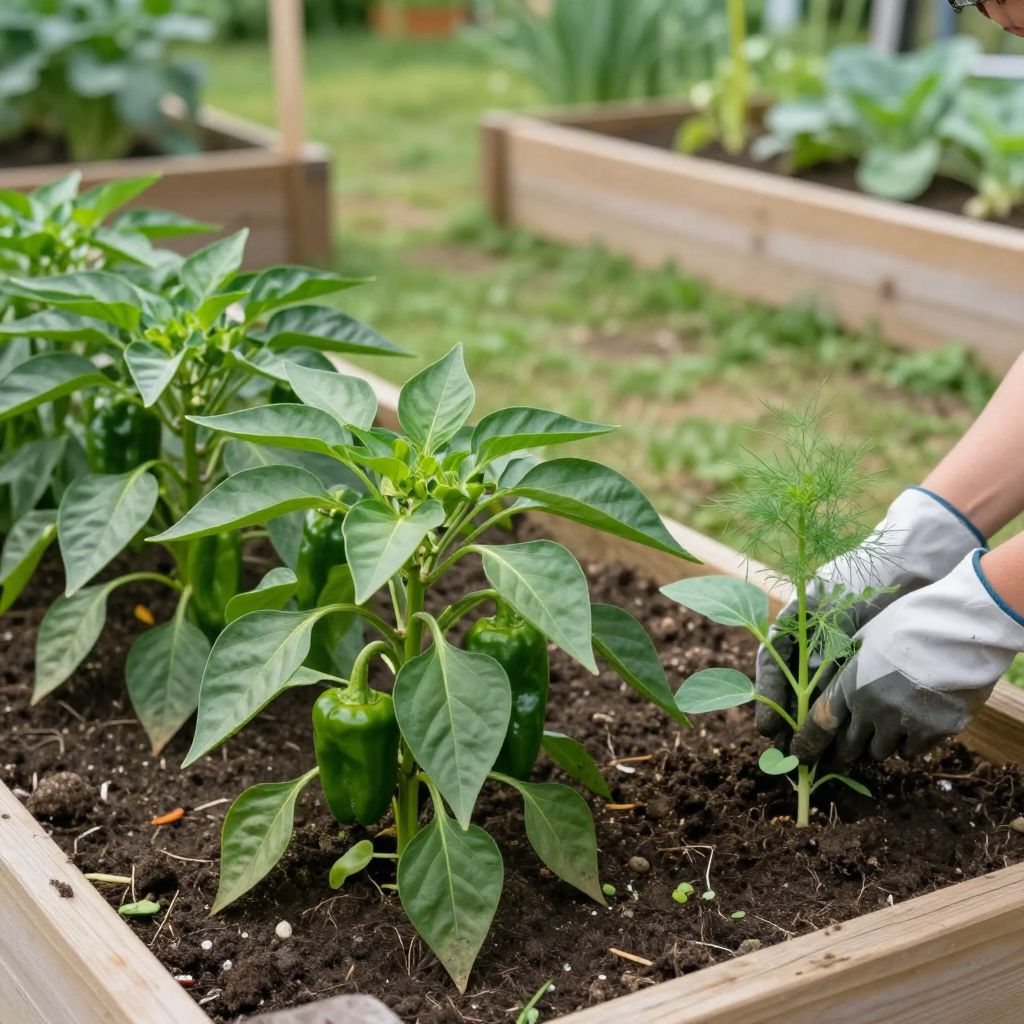
Wondering what not to plant with peppers? The short answer is: avoid neighbors that compete too heavily for light, water, and nutrients, and be cautious with plants that share the same pests or diseases. The best companions for peppers are usually low-competition, compatible crops that fit your garden’s sun, spacing, and airflow.
Peppers can do well in mixed beds, but the wrong plant choices can reduce airflow, increase pest pressure, or stunt growth. If you want healthier plants and better harvests, it helps to know which crops to keep away from peppers and why.
What not to plant with peppers?
Don’t plant peppers too close to crops that compete aggressively, shade them, or attract the same pests and diseases. Avoid placing peppers beside fennel, brassicas that need lots of space, and other heavy feeders in cramped beds. Also be careful with nearby plants that encourage aphids, whiteflies, or fungal problems through crowding and poor airflow.
Plants to avoid near peppers
1. Fennel
Fennel is one of the most commonly recommended plants to keep away from peppers. It can inhibit the growth of many garden vegetables and is best grown in its own space, away from your main vegetable beds.
If you want to grow fennel, give it a separate area or container so it does not interfere with peppers and other crops.
2. Brassicas in tight spaces
Cabbage, broccoli, cauliflower, kale, and related brassicas are not always “bad” companions, but they can be poor neighbors in a small bed. They are often hungry, space-hogging crops that can crowd peppers and reduce airflow.
In cool climates, brassicas may also be grown in the same season as peppers, which makes bed planning tricky. If space is limited, separate them so peppers still get full sun and enough room to dry after rain or watering.
3. Tall, shading plants
Peppers need strong sun to flower and ripen well. Avoid planting them where taller crops will shade them for much of the day, especially in summer.
- Sunflowers
- Sweet corn
- Tall tomatoes trained loosely nearby
- Large trellised crops that cast afternoon shade
Some of these can work at a distance, but in a small garden they may reduce pepper performance if they block light or airflow.
4. Heavy-feeding, sprawling crops in crowded beds
Peppers are moderate feeders and dislike direct competition from aggressive growers. Avoid cramming them beside sprawling crops that quickly take over the bed and make maintenance difficult.
- Squash and pumpkins
- Melons
- Large potatoes in close quarters
- Any crop with dense vines that smother nearby plants
The issue is not always chemical incompatibility. More often, the problem is root competition, reduced access to water, and blocked airflow.
5. Plants that invite the same pests
Peppers can be bothered by aphids, whiteflies, thrips, spider mites, and flea beetles. If a nearby crop is already attracting or harboring these pests, your peppers may suffer too.
Be especially cautious with overcrowded beds and stressed plants. Pests often move from one host to another when conditions are hot, dry, or cramped.
Why some plant combinations fail
Most bad pepper pairings fail for practical reasons rather than mysterious incompatibility. The main problems are competition, shade, and disease spread.
Competition for roots and nutrients
Peppers grow best in loose, fertile soil with steady moisture. If nearby plants have large root systems or are very hungry, peppers may grow slowly, flower poorly, or produce fewer fruits.
Poor airflow
When plants are packed too tightly, leaves stay damp longer after rain or watering. That can increase the risk of fungal issues and make it harder to spot pests early.
Shared disease pressure
Some crops can share soil-borne problems or become magnets for insects that later move to peppers. Rotating crops and keeping beds clean helps reduce this risk.
Good planting distances for peppers
Even good companions can become a problem if they are too close. Pepper spacing depends on variety, climate, and whether you are growing in raised beds, containers, or open ground.
- Allow enough room for mature plants to spread without touching constantly.
- Keep taller plants to the north side of the bed in the Northern Hemisphere when possible, so they do not shade peppers.
- Leave space for airflow and easy access for staking, pruning, and harvesting.
Tip: If you are unsure, give peppers more room than you think they need. Slightly wider spacing is usually better than crowding in a mixed bed.
What to plant instead near peppers
If you are rethinking your layout, choose companions that stay relatively compact and do not compete too aggressively. Good neighbors often include herbs, flowers, and shallow-rooted vegetables that fit the same sunny conditions.
- Basil
- Onions
- Garlic
- Carrots
- Leaf lettuce
- Marigolds
- Calendula
These are not magic pest solutions, but they are often easier to manage alongside peppers than bulky or aggressive crops.
How to set up a pepper bed for success
Choose the right site
Peppers need full sun in most climates, meaning at least 6 to 8 hours of direct light. In very hot regions, a little afternoon protection can help prevent stress, but they still need bright conditions.
Prepare the soil
Work in compost to improve structure and moisture retention, especially if your soil is sandy or poor. The goal is loose, well-drained soil that holds enough moisture without staying soggy.
Peppers dislike waterlogged roots, so avoid low spots where water collects after rain. If drainage is poor, raised beds or mounded rows can help.
Mulch carefully
A light mulch can help keep soil moisture more even and reduce weeds. Keep mulch a few inches away from the stem so the base of the plant stays dry and airy.
Common mistakes when planting peppers with other crops
- Crowding too many crops into one bed. This is the fastest way to reduce pepper growth and increase disease problems.
- Letting tall plants shade peppers. Peppers need sun to ripen well.
- Mixing peppers with very thirsty or very hungry crops. Shared beds need extra attention to moisture and soil fertility.
- Ignoring airflow. Dense plantings can trap humidity and invite fungal issues.
- Forgetting crop rotation. Repeating the same families in the same soil can build pest and disease pressure over time.
How to troubleshoot a pepper bed that is already crowded
If your peppers are already planted near the wrong neighbors, you still have options. Small changes can improve the growing conditions quickly.
- Remove weeds and any extra seedlings competing at the base of the plants.
- Thin or prune nearby plants that are blocking light or airflow.
- Water at the soil level instead of overhead whenever possible.
- Check leaves regularly for aphids, mites, and whiteflies.
- Add support if peppers are flopping into neighboring plants.
- Move container-grown peppers to a sunnier, less crowded spot if needed.
If the bed remains too tight, consider transplanting one crop to a different location in the next season. Peppers usually perform better when they are not forced to compete.
Indoor and container growing considerations
In containers, the same rules apply even more strongly. Pot-grown peppers have limited root space, so avoid pairing them with large or fast-growing plants in the same container unless the container is very large and you know the plants will stay compact.
For indoor growing, prioritize light, airflow, and clean pots. Crowding is especially risky indoors because humidity can build up and pests can spread quickly from one plant to another.
Final advice for better pepper harvests
When planning what not to plant with peppers, think less about strict “bad pairings” and more about space, sun, water, and airflow. Keep peppers away from fennel, crowded brassicas, tall shading crops, and aggressive spreaders, and you will avoid many of the most common problems.
For more success, map your bed before planting and leave room for peppers to grow into their full size. If you want to keep improving your vegetable layout, related reading on crop spacing and companion planting can help you build a healthier garden season after season.