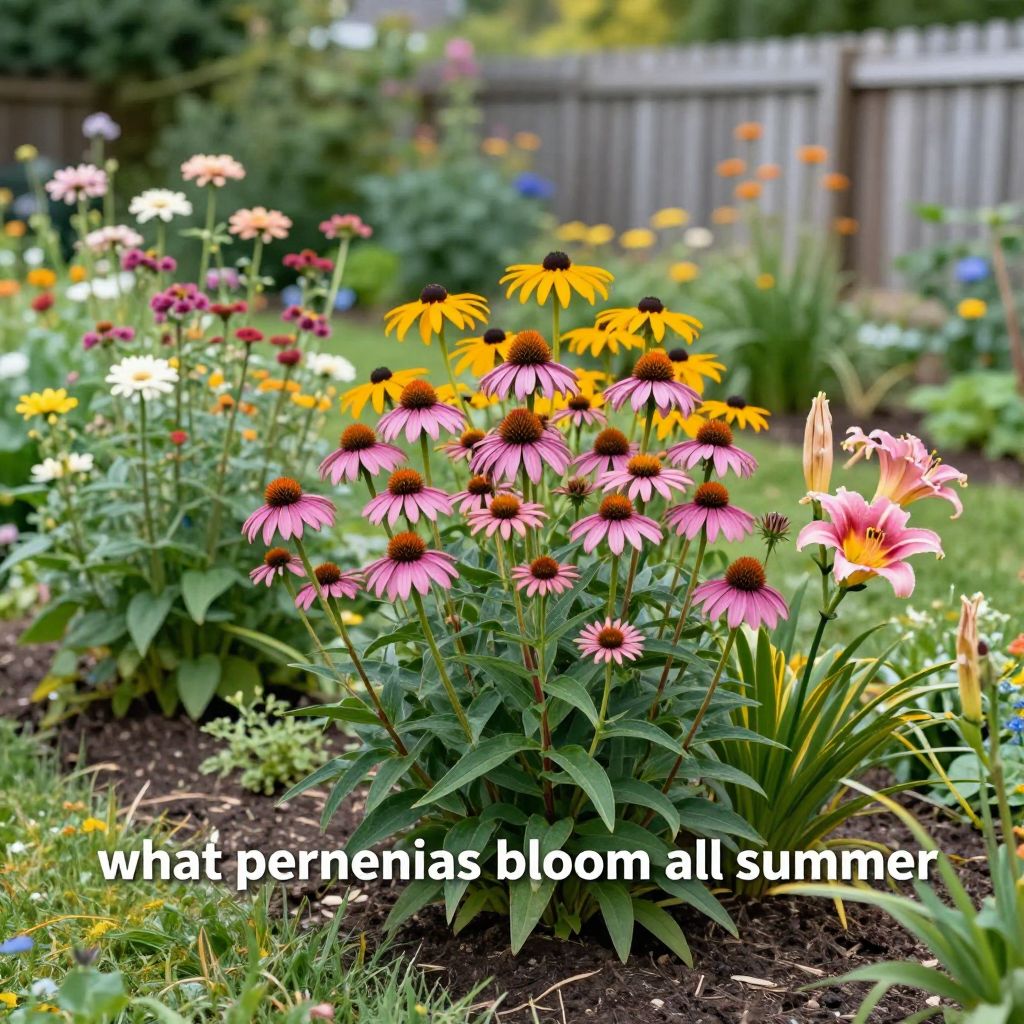
Wondering what perennials bloom all summer and still look good when the heat sets in? The best choices are long-blooming, repeat-blooming, or heat-tolerant perennials that keep producing flowers with the right light, soil, and deadheading. A few will bloom for months on their own, while others need simple maintenance to stay in flower.
If you choose the right plants for your climate and give them steady care, you can build a border that stays colorful from late spring into fall. The key is matching each perennial to your sun, soil, and moisture conditions rather than expecting every plant to bloom nonstop everywhere.
What perennials bloom all summer?
Perennials that bloom all summer usually include varieties of coneflower, black-eyed Susan, daylily, catmint, salvia, coreopsis, blanket flower, yarrow, Shasta daisy, and bee balm. Most flower best in full sun and well-drained soil, and many continue blooming longer if you deadhead spent flowers and avoid overfeeding them.
Best long-blooming perennials for summer color
Not every perennial blooms for the entire season in every garden, but these are among the most reliable for long summer display. Some are true repeat bloomers; others flower in waves if you keep them tidy.
Full-sun favorites
- Coneflower (Echinacea spp.) – Tough, drought-tolerant, and attractive to pollinators. Many varieties bloom for weeks and may rebloom after deadheading.
- Black-eyed Susan (Rudbeckia hirta and related species) – Bright yellow flowers that often bloom from midsummer into early fall.
- Coreopsis (Coreopsis spp.) – Fine-textured foliage and cheerful flowers that can keep going for a long stretch, especially with deadheading.
- Blanket flower (Gaillardia spp.) – Heat-loving and excellent in poor to average soil; it often blooms through hot weather.
- Yarrow (Achillea millefolium) – Flat flower clusters, strong stems, and good drought tolerance once established.
- Shasta daisy (Leucanthemum x superbum) – Classic summer flowers that can rebloom if trimmed after the first flush.
Perennials that handle heat and keep flowering
- Catmint (Nepeta spp.) – One of the easiest long-blooming perennials for sunny, well-drained beds.
- Salvia (Salvia nemorosa and similar hardy salvias) – Spikes of color that can repeat bloom after cutting back spent stems.
- Bee balm (Monarda spp.) – A pollinator favorite that blooms in summer, especially in moist soil and good air circulation.
- Daylily (Hemerocallis spp.) – Each flower lasts a day, but many plants produce buds over a long season.
- Hardy geranium (Geranium spp.) – Some types bloom in waves through summer, especially in cooler climates.
Best choices for part shade
- Astilbe – Feathery plumes that prefer consistent moisture and partial shade; bloom time is usually seasonal rather than nonstop.
- Heuchera – Grown more for foliage, but some types produce airy flower spikes for much of summer.
- Japanese anemone – Often blooms late summer into fall, making it useful for extending the season.
If you want the longest possible display, mix several of these together. That way, one plant starts as another finishes, and your garden never looks empty.
How do you keep summer-blooming perennials flowering longer?
The most effective way to extend bloom time is to give plants enough sun, remove faded flowers, water deeply during dry spells, and avoid too much nitrogen fertilizer. Healthy roots and good drainage matter just as much as deadheading, because stressed plants often stop blooming early.
1. Plant them in the right light
Most long-blooming perennials need at least 6 hours of direct sun per day. In very hot climates, some afternoon shade can help flowers last longer and reduce stress.
Shade-loving perennials can still bloom well, but they usually won’t flower as heavily in deep shade. If a plant is stretching, leaning, or producing few blooms, it may need more light.
2. Improve soil before planting
Perennials bloom best in soil that drains well but still holds enough moisture for roots. Work in compost before planting to improve structure, especially in heavy clay or very sandy soil.
- In clay soil, compost helps loosen and aerate the root zone.
- In sandy soil, compost improves moisture retention and nutrient holding.
- Avoid planting in spots where water stands after rain, unless the perennial specifically likes moist soil.
3. Water deeply, not constantly
Newly planted perennials need regular watering while they establish roots. Once established, many summer bloomers prefer deep, occasional watering rather than light daily sprinkling.
As a general rule, water when the top few inches of soil dry out, then soak the root zone thoroughly. Mulch can help conserve moisture, but keep it a few inches away from the crown to prevent rot.
4. Deadhead spent flowers
Removing faded blooms often encourages more buds, especially on coreopsis, salvia, catmint, Shasta daisy, and some coneflowers. Use clean pruners or snips and cut back to a healthy set of leaves or side shoots.
Not every perennial needs deadheading, but many look tidier and bloom longer when you do it. If you want seed heads for birds or winter interest, leave a few flowers standing at the end of the season.
5. Cut back after the first flush
Some perennials respond to a light haircut after their first bloom cycle. Trim back leggy stems by about one-third if the plant looks tired, and water afterward if the soil is dry.
This is especially useful for catmint, hardy geranium, and some salvias. The plant may pause briefly, then push fresh growth and more flowers.
How to design a summer-long perennial border
A good perennial bed is built in layers of bloom time, height, and texture. If you only plant one or two species, the show may fade quickly. A mixed border gives you color from early summer through late summer and beyond.
Use a simple planting formula
- Choose 3 to 5 main perennials that bloom for a long time.
- Add 2 to 3 plants with later bloom times to extend the season.
- Include foliage plants or grasses for texture between bloom cycles.
- Repeat the same plants in groups for a more cohesive look.
For example, you might combine catmint, coneflower, and black-eyed Susan in a sunny bed, then add daylilies and yarrow for extra color and structure. In part shade, try hardy geranium, astilbe, and Japanese anemone.
Think about height and spacing
Tall plants belong toward the back of borders or in the center of island beds, while shorter perennials work well along edges. Give each plant enough room to mature, because crowded plants often have fewer flowers and more disease problems.
Spacing depends on the plant, but good airflow is always important. If leaves stay wet for long periods, fungal diseases become more likely.
Common problems that shorten bloom time
Even strong perennials can stop flowering early if conditions are off. Most problems are fixable once you identify the cause.
Too much shade
Plants may grow tall and leafy but produce few flowers. Move them to a sunnier spot if possible, or thin nearby shrubs and trees to increase light.
Too much fertilizer
High-nitrogen fertilizer can produce lush foliage at the expense of flowers. Most perennial beds do better with compost and only modest feeding, if any.
Poor drainage
Roots that sit in wet soil can rot, weakening the plant and reducing bloom. If drainage is poor, consider raised beds, mounding soil, or choosing moisture-tolerant species.
Skipping deadheading
Some plants naturally stop once they’ve set seed. Remove spent flowers regularly to encourage more buds and keep the plant from putting energy into seed production too soon.
Heat and drought stress
During extreme heat, even tough perennials may pause blooming. Mulch, deep watering, and afternoon shade in hot climates can help reduce stress.
Pests and diseases to watch for
Most summer-blooming perennials are fairly low-maintenance, but a few common issues can reduce flowering or damage foliage.
- Aphids may cluster on tender stems and buds. A strong spray of water often helps, and beneficial insects usually follow.
- Powdery mildew can affect bee balm, phlox, and some other perennials in humid conditions. Improve airflow and avoid wetting foliage late in the day.
- Slugs and snails may chew young growth in damp, shaded beds.
- Root rot is more likely in heavy, poorly drained soil or containers without proper drainage holes.
Healthy spacing, clean tools, and watering at the soil line go a long way toward prevention. If a plant repeatedly struggles in the same spot, the site may be the problem rather than the plant.
Can you grow long-blooming perennials in containers?
Yes, but containers dry out faster than garden beds, so choose compact varieties and use pots with drainage holes. Container-grown perennials usually need more frequent watering, especially in hot weather and windy locations.
Use a high-quality potting mix, not garden soil, and refresh the top layer of compost each season if needed. In cold climates, some container perennials need winter protection because roots are more exposed than in the ground.
Propagation and dividing for more blooms
Many perennials bloom better after division because older clumps can become crowded and less vigorous. Dividing also gives you more plants for other parts of the garden.
- Divide spring- or summer-blooming perennials when they are not in active bloom, unless the plant type suggests otherwise.
- Replant divisions promptly and water them well.
- Use a sharp spade or garden fork to separate healthy sections with roots attached.
Some perennials, such as daylilies and hardy geraniums, are especially easy to divide. Others prefer to be left alone longer, so check the needs of the specific plant before digging.
Practical maintenance checklist for summer bloom
- Give each plant enough sun for its type.
- Water deeply during dry weather.
- Mulch to conserve moisture and reduce weeds.
- Deadhead regularly where it helps rebloom.
- Cut back tired stems after the first flush if the plant responds well.
- Watch for pests, mildew, and crowding.
- Divide overcrowded clumps when flowering declines.
Conclusion
If you want to know what perennials bloom all summer, start with reliable plants like coneflower, black-eyed Susan, coreopsis, catmint, salvia, and blanket flower, then match them to your light and soil. Choose a few favorites, plant them in a sunny, well-drained spot, and keep them deadheaded and watered through dry spells for the best display.
For more practical plant-picking ideas, you may also want to read about choosing drought-tolerant perennials for sunny borders and how to deadhead flowers to encourage more blooms.