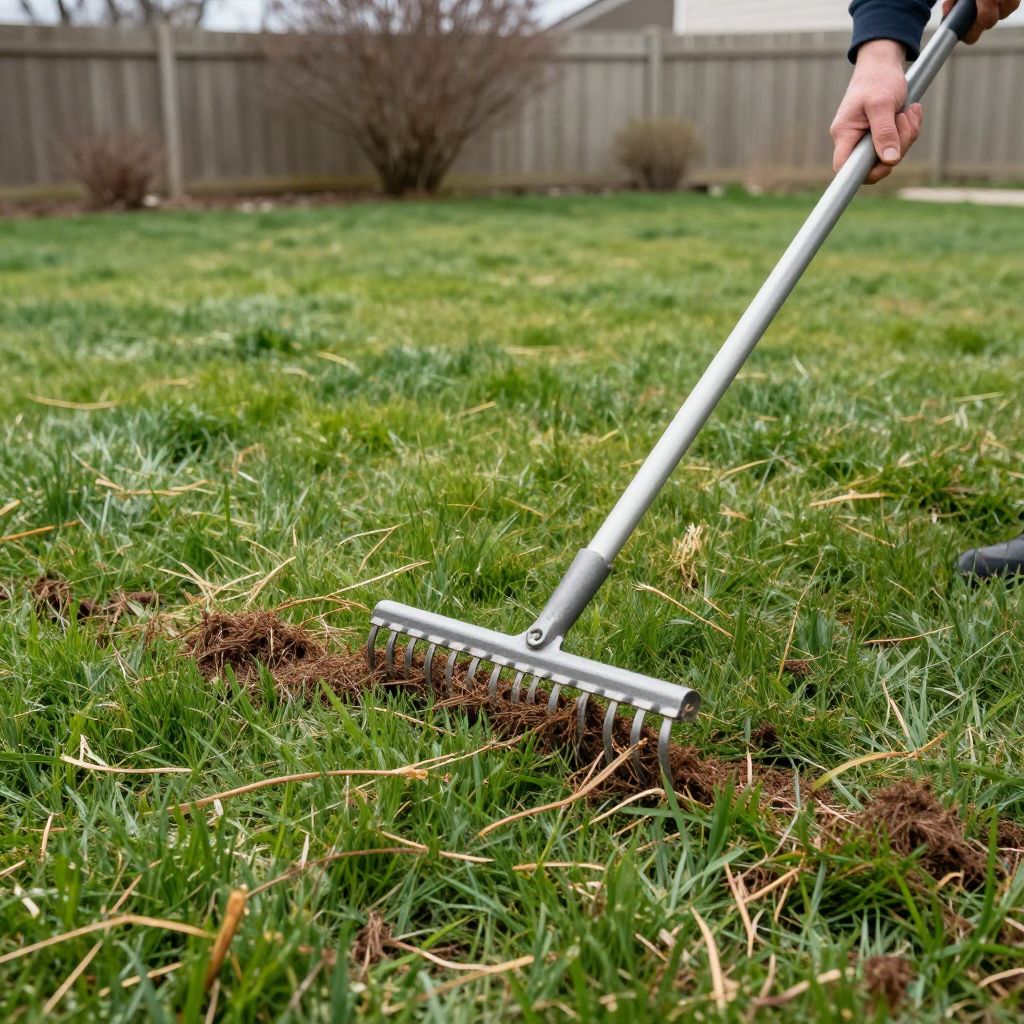
When should I dethatch my lawn? The best time is when your grass is actively growing and can recover quickly after the thatch is removed. For most lawns, that means late spring to early summer for warm-season grasses and early fall for cool-season grasses.
Dethatching at the wrong time can stress the lawn more than the thatch itself. The goal is to remove the spongy layer of dead stems and roots without slowing recovery, so timing matters as much as technique.
When should I dethatch my lawn?
Dethatch when your grass is in its strongest growth phase, the soil is not excessively wet or dry, and the lawn has enough time to regrow before heat, drought, or winter stress. Cool-season grasses usually respond best in early fall, while warm-season grasses are often dethatched in late spring through early summer.
What is thatch, and when does it become a problem?
Thatch is the layer of dead and living stems, stolons, rhizomes, and roots that builds up between the green grass and the soil surface. A thin layer is normal and even helpful, but too much can block water, air, and nutrients from reaching the root zone.
How much thatch is too much?
A thatch layer under about 1/2 inch is usually not a concern for most lawns. If it is thicker than that, especially if it feels spongy underfoot or causes water to bead up and run off, dethatching may help.
Before you grab a rake or machine, confirm that thatch is the real issue. Sometimes poor drainage, compacted soil, or shallow roots create similar symptoms.
Best season for dethatching by grass type
The right timing depends on the type of grass you grow and your local climate. If you are not sure what you have, look at whether your lawn greens up in cool weather or thrives in summer heat.
Cool-season grasses
Examples include Kentucky bluegrass, perennial ryegrass, and tall fescue. These grasses usually recover best from dethatching in early fall, when temperatures are cooler and the lawn is actively growing.
Fall dethatching gives the grass time to heal before winter and often pairs well with overseeding and topdressing if needed.
Warm-season grasses
Examples include Bermudagrass, zoysiagrass, centipedegrass, and St. Augustinegrass. These lawns are usually best dethatched in late spring to early summer, after they have fully greened up and are growing vigorously.
Avoid dethatching warm-season lawns too early in spring, when growth is still slow, or too late in the season, when recovery may be limited.
When not to dethatch
- During drought or water restrictions
- When the lawn is heat-stressed or dormant
- When the soil is saturated and muddy
- Right before extreme cold or frost
- When the lawn is already thin, diseased, or newly seeded
How to tell if your lawn actually needs dethatching
Not every lawn needs dethatching. In many cases, aeration, better mowing habits, or improved watering will solve the problem more effectively.
Simple checks you can do
- Use a trowel or spade to cut a small wedge from the lawn.
- Measure the brown, fibrous layer above the soil.
- Look for water pooling or running off instead of soaking in.
- Check whether grass feels springy and matted rather than upright.
- Inspect the lawn after rain or irrigation for slow drying and poor infiltration.
If the thatch is thin but the soil below is hard and compacted, aeration may be more useful than dethatching. If the lawn has both compaction and thatch, you may need both treatments, but usually not on the same day.
How to dethatch a lawn safely
You can dethatch a small lawn by hand with a dethatching rake. Larger lawns are often easier with a powered dethatcher or vertical mower, but these tools can be aggressive, so use them carefully.
Step-by-step dethatching process
- Mow the lawn slightly lower than usual, but do not scalp it.
- Water lightly a day or two before if the soil is dry, so the turf is resilient but not soggy.
- Set the dethatcher to a shallow setting for the first pass.
- Run the tool over the lawn in one direction, then make a second pass at a right angle if needed.
- Rake up loosened debris promptly so it does not smother the grass.
- Water the lawn afterward and monitor recovery over the next 1 to 3 weeks.
What to do after dethatching
- Water deeply enough to help the grass recover, but avoid keeping the surface constantly wet.
- Apply seed only if your grass type and season allow overseeding.
- Topdress lightly with compost if your lawn benefits from improved soil structure.
- Delay heavy foot traffic until new growth fills in.
Do not dethatch too aggressively. Removing too much living tissue can leave bare patches, invite weeds, and slow recovery. If the lawn is already stressed, a lighter pass is safer than a deep one.
Common mistakes to avoid
Dethatching at the wrong time
Timing is the most common mistake. A lawn that is dormant, heat-stressed, or entering winter will struggle to heal after dethatching.
Confusing thatch with compaction
Thatch sits above the soil; compaction is a soil problem below the surface. If water cannot penetrate because the soil is tight and hard, dethatching alone will not fix it.
Using the wrong tool setting
Deep machine settings can tear up healthy turf. Start shallow and increase only if the thatch layer truly requires it.
Skipping cleanup
Leaving the loosened debris on the lawn can block light and air. Always remove the material after dethatching.
Should you dethatch, aerate, or both?
Choose the treatment based on the problem you see. Thatch problems call for dethatching, while compacted soil calls for core aeration. If both are present, many lawns benefit from aeration first or from a carefully timed combination during active growth.
- Dethatch if the lawn has a thick spongy layer above the soil.
- Aerate if the soil is hard, dense, or waterlogged at the surface.
- Overseed after if the lawn is thin and the season supports germination.
For many home lawns, improving mowing height, reducing excess nitrogen, and watering deeply but less often can slow thatch buildup over time.
How to prevent thatch from coming back
Prevention is easier than repeated dethatching. Healthy turf naturally breaks down organic matter, but some growing conditions encourage thatch to build faster than it decomposes.
Helpful maintenance habits
- Mow at the correct height for your grass type.
- Never remove more than one-third of the leaf blade at a time.
- Avoid excessive nitrogen fertilization, which can push fast top growth.
- Water deeply and infrequently rather than shallowly every day.
- Collect clippings if they are heavy enough to mat, especially after wet mowing.
- Improve drainage in low spots where the lawn stays wet.
Lawns with vigorous spreading grasses, frequent fertilization, or repeated shallow watering are more likely to develop thatch. A balanced maintenance routine usually reduces the need for future dethatching.
What to expect after dethatching
It is normal for the lawn to look rough for a short time after dethatching. You may see brown debris, temporary thinning, and exposed soil in spots where the thatch was thickest.
Most lawns begin to recover within a couple of weeks if the timing was right and growing conditions are favorable. If the lawn does not rebound, the issue may be compaction, disease, poor irrigation, or a grass type that was dethatched too aggressively.
Quick answer for busy gardeners
If you are wondering when should I dethatch my lawn, aim for the season when your grass is growing fastest: early fall for cool-season grasses and late spring to early summer for warm-season grasses. Avoid dethatching during drought, dormancy, or extreme heat, and only do it when the thatch layer is truly thick enough to justify the stress.
For more lawn care help, you may also want to read about how to aerate a lawn and the best mowing height for healthy grass to keep thatch from building up again.