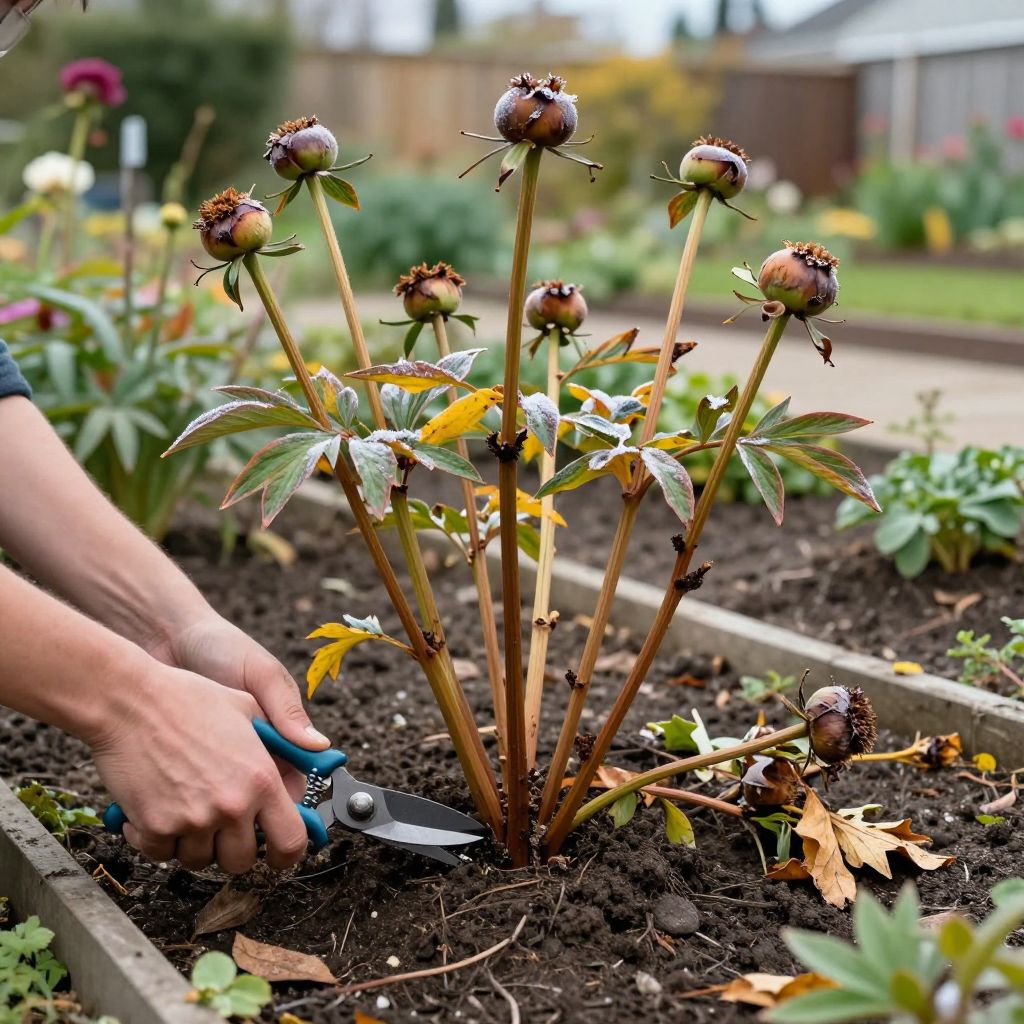
If you’re wondering when to cut back peonies, the short answer is: wait until the foliage has died back naturally in fall, then remove the stems at ground level. Cutting too early can weaken the plant because the leaves are still feeding the roots for next year’s flowers.
The exact timing depends on your climate and the type of peony, but the same basic rule applies to herbaceous peonies, tree peonies, and intersectional peonies: let the plant finish its season, then tidy it up at the right time for health and disease prevention.
When to cut back peonies?
Cut back herbaceous peonies in late fall after frost has blackened the foliage, usually once the leaves have yellowed and collapsed. In most gardens, this is the safest time because the plant has already stored energy in its roots. Tree peonies are not cut to the ground; intersectional peonies are cut back like herbaceous peonies.
Why timing matters
Peony leaves are not just decoration. After flowering, they keep photosynthesizing and sending energy back into the crown and roots for next year’s blooms.
If you cut them back too soon, you may reduce flowering the following season and leave the plant less vigorous. Waiting also helps you avoid spreading fungal diseases that can overwinter on dead foliage.
What happens if you cut peonies too early?
- The plant may store less energy for next year.
- Flower buds can be fewer or smaller the following season.
- Fresh cuts can expose the crown to unnecessary stress.
Seasonal timing by peony type
Herbaceous peonies
Herbaceous peonies die back to the ground each year. Cut them back after the first hard frost or once the foliage has turned brown or blackened and looks spent.
If your area has a long, mild autumn, you can wait until the leaves are clearly declining rather than cutting by calendar date alone.
Intersectional peonies
Intersectional peonies, often called Itoh peonies, also die back in autumn. Treat them like herbaceous peonies and remove the stems after frost when the top growth has finished naturally.
Tree peonies
Tree peonies are different. Do not cut them to the ground in fall. They keep woody stems above the soil and only need light cleanup of dead, damaged, or crossing stems.
If you need to prune a tree peony, do it sparingly and at the right time for your climate, usually after flowering or during dormancy, depending on the reason for pruning.
How to cut back peonies step by step
- Wait until the foliage has naturally declined in fall.
- Choose a dry day if possible to reduce disease spread.
- Use clean, sharp pruners or garden shears.
- Cut herbaceous and intersectional peony stems down to 1 to 2 inches above the soil.
- Collect and remove all cut foliage from the bed.
- Dispose of any diseased leaves in the trash, not the compost pile.
Clean tools matter. Wipe blades with alcohol or a disinfectant between plants if you’ve seen spots, mildew, or stem rot.
What to do before cutting back
Before you prune, take a quick look at the plant’s overall health. Yellowing from age is normal in fall, but spotting, blackened stems, or a powdery coating may signal disease that needs extra cleanup.
- Check for botrytis blight, which can cause gray mold, stem collapse, or blotchy leaves.
- Look for insect damage, though peonies are generally not heavy pest targets.
- Remove fallen leaves around the base so disease has fewer places to overwinter.
How growing conditions affect cutting back
Local weather changes the timing more than the calendar does. In colder regions, peonies usually decline earlier and can be cut back sooner after frost. In warmer climates, foliage may stay green longer, so wait until the plant finishes naturally.
If your garden has poor air circulation or frequent rain, disease pressure is higher. In those conditions, it’s especially important to remove old foliage promptly once it dies back.
Sun, soil, and drainage
Peonies bloom best in full sun, though they can tolerate light afternoon shade in hotter climates. They prefer fertile, well-drained soil and dislike sitting in wet ground.
Good drainage helps the crown stay healthy through winter. If your soil stays soggy, improve it with compost and consider raising the bed slightly rather than relying on heavy pruning alone.
Should you cut peonies back in summer?
Usually, no. After flowering, leave the foliage in place unless it is diseased or badly damaged. The leaves are still working for the plant, and removing them too soon can reduce next year’s performance.
You can deadhead spent blooms in early summer if you want the plant to look tidier, but that is different from cutting the whole plant back. Deadhead by removing the faded flower head and a short section of stem, leaving the leaves intact.
Common mistakes to avoid
- Cutting back too early while leaves are still green and active.
- Leaving diseased foliage on the ground through winter.
- Confusing tree peonies with herbaceous peonies and cutting woody stems to the soil.
- Using dull, dirty tools that can crush stems and spread disease.
- Mulching too deeply over the crown, which can trap moisture and encourage rot.
How to care for peonies after cutting them back
Once the plant is cut back, tidy the area and keep the crown lightly protected through winter if your climate calls for it. A thin layer of compost around, not over, the crown can help improve soil over time.
If you mulch, keep it shallow and pulled back from the crown. Too much mulch can hold excess moisture and invite rot, especially in heavy soil.
Fall cleanup checklist
- Remove all dead stems and leaves.
- Clear fallen debris from the bed.
- Inspect the crown for soft or damaged tissue.
- Add a light compost topdressing if your soil needs improvement.
- Mark the plant if you want to avoid digging into it during winter or early spring.
Can you divide or move peonies at the same time?
Fall is often the best time to move or divide herbaceous peonies, but only if necessary. Peonies prefer to stay put and may take a season or two to settle after transplanting.
If you do divide them, make sure each division has at least three to five healthy eyes and a good root section. Replant at the correct depth, usually with the eyes no more than 1 to 2 inches below the soil surface.
What if your peony doesn’t die back cleanly?
Sometimes peony foliage stays green longer than expected, especially in mild autumns. That’s normal. Wait until the plant naturally fades unless disease is forcing the issue.
If stems are collapsing or leaves are badly spotted before frost, remove the affected parts sooner and discard them. In that case, sanitation is more important than waiting for a perfect seasonal cue.
Quick answer for busy gardeners
If you only remember one thing: cut back herbaceous and intersectional peonies in late fall after frost, when the foliage has died back naturally. Leave tree peonies mostly alone except for dead or damaged wood. Clean up all debris to reduce disease and protect next year’s bloom.
For more seasonal plant-care guidance, you may also want to read related gardening advice on pruning and fall cleanup in your garden.