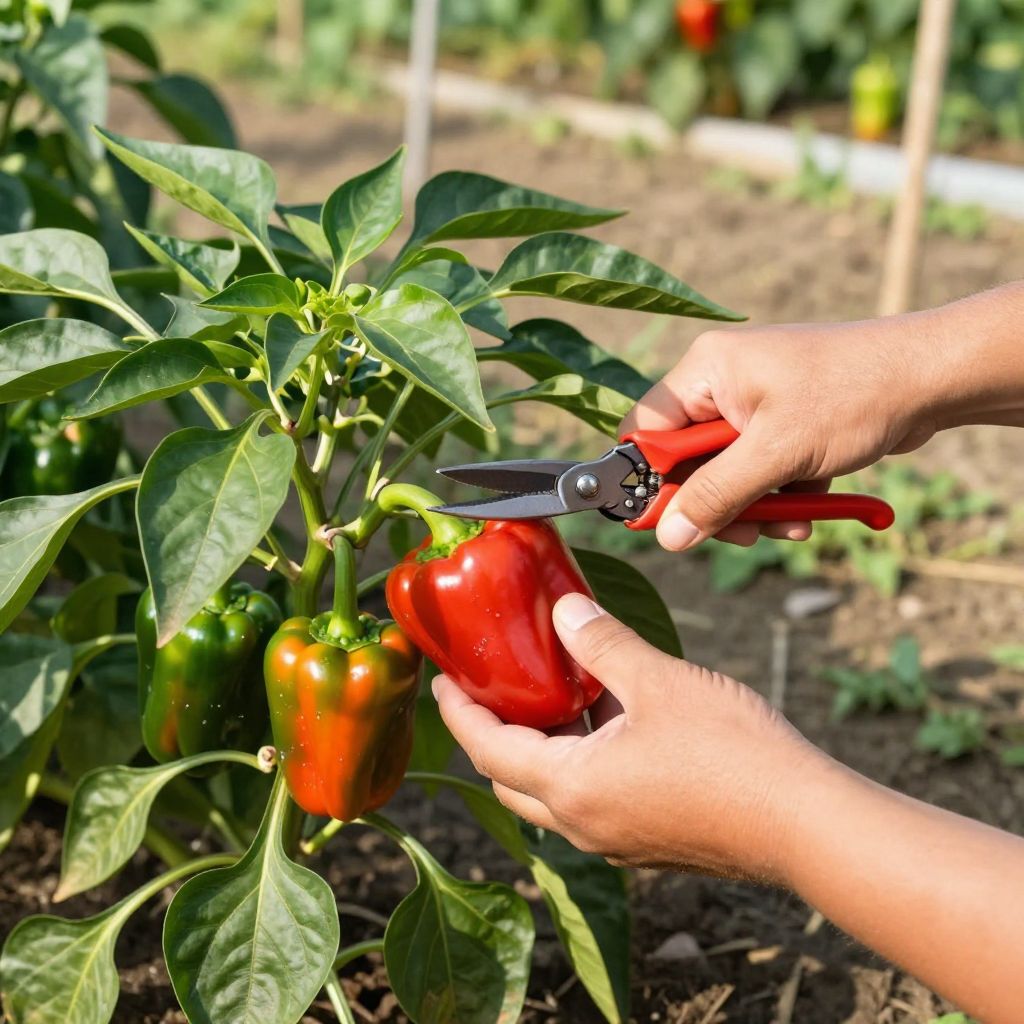
Wondering when to harvest bell peppers so they’re crisp, sweet, and fully developed? The best time depends on the variety, your climate, and whether you want green peppers or fully colored ripe fruit. Bell peppers can be picked at several stages, but timing affects flavor, texture, and how long the plant keeps producing.
If you harvest too early, peppers may taste bitter or underdeveloped. If you wait too long, they can become softer, more vulnerable to pests, and may slow the plant’s next flush of flowers. The good news is that bell peppers give clear visual cues when they’re ready.
When to harvest bell peppers?
Harvest bell peppers when they are firm, full-sized, and have reached the color you want. Green bells are usually picked at mature size before full color change, while red, yellow, orange, or purple peppers should be left on the plant until they fully color up and feel heavy, glossy, and crisp.
How to tell bell peppers are ready
Bell peppers do not all ripen the same way, so use several signs together rather than relying on size alone. A pepper may look large enough but still be immature if it has not developed a firm, glossy skin and thick walls.
Key ripeness signs
- Size: The pepper has reached the typical size for its variety.
- Shape: It looks fully rounded and well-filled, not thin or flattened.
- Skin: The surface is smooth and glossy rather than dull.
- Firmness: It feels solid when gently squeezed.
- Color: It matches the stage you want, whether green or fully ripe color.
- Stem attachment: The stem is still green and healthy, not shriveled.
For green bell peppers, harvest when they are full-sized and firm, even if they are still green. For colored bells, wait until the fruit has turned fully red, yellow, orange, or another mature color depending on the cultivar. Colored peppers often taste sweeter and less grassy than green ones.
Green vs. fully ripe bell peppers
- Green peppers: Harvest earlier for a firmer texture and more savory flavor.
- Fully colored peppers: Leave on the plant longer for sweeter flavor and richer aroma.
Many gardeners pick some peppers green and leave others to color up later. This is a practical way to keep the plant productive while still enjoying the sweeter fully ripe fruits.
How long do bell peppers take to mature?
Bell peppers usually need a long warm season, often around 60 to 90 days from transplanting to first harvest, depending on the variety and growing conditions. Cool weather, low light, or stress from drought can slow ripening noticeably.
If you started plants from seed, total time to harvest can be much longer because seedlings need time indoors before transplanting. In cooler climates, peppers may stay green longer or fail to fully color before frost, so harvesting at the green stage is often the safest option.
What affects ripening time
- Air temperature
- Sunlight exposure
- Soil fertility
- Water consistency
- Plant age and overall health
- Whether the plant is carrying many fruits at once
Warm days and mild nights help peppers ripen faster. If nights are cool, fruit maturation often slows even when the plant still looks healthy.
How to harvest bell peppers correctly
Use clean scissors, pruners, or a sharp knife to cut peppers from the plant. Tugging by hand can tear stems or damage nearby branches, which may reduce future flowering and fruit set.
- Hold the pepper gently in one hand.
- Locate the short stem just above the fruit.
- Cut the stem, leaving a small stub attached to the pepper.
- Place harvested peppers in a basket or shallow container to avoid bruising.
Do not twist hard or pull peppers off the plant. A clean cut is better for the plant and helps the fruit store more neatly.
Best time of day to pick
Harvest in the morning or during cooler parts of the day if possible. Peppers are often firmer then, and you’ll reduce wilting after picking. Avoid harvesting when plants are wet from rain or overhead watering if you can, since wet fruit stores less well.
Should you wait for full color?
That depends on your goal. If you want the sweetest flavor and richest color, wait for full ripeness. If you want a firmer pepper for slicing or cooking, or if the season is ending, picking at mature green is perfectly fine.
In many gardens, leaving peppers on the plant longer can encourage better flavor, but it may also reduce the plant’s energy for producing new flowers. If the plant is heavily loaded, removing some mature fruit can help it keep producing.
When to pick early
- The first frost is approaching.
- The plant is slowing down in cool weather.
- Pests or disease are starting to affect the fruit.
- You need to encourage the plant to redirect energy into new growth.
Common mistakes when harvesting bell peppers
Many harvest problems come from waiting too long or picking too early. A few simple adjustments can improve both flavor and plant performance.
1. Harvesting before the fruit is mature
Small, underfilled peppers may not have developed their full flavor or thickness. Give the fruit time to size up unless weather or pest pressure forces an early harvest.
2. Leaving fruit on too long
Overripe peppers can become softer and more prone to insect damage or rot. They may also slow the plant’s next round of flowering.
3. Pulling fruit off by hand
This can break branches or strip bark at the stem junction. Use a cutting tool whenever possible.
4. Ignoring plant stress
If the plant is wilting, yellowing, or dropping flowers, fruit may not ripen well. Address watering, soil drainage, and pest issues so the plant can finish the season strongly.
What to do if peppers won’t ripen
Sometimes bell peppers stay green for a long time, especially in short-season climates or during cool spells. If that happens, focus on improving growing conditions and prioritize the fruit already on the plant.
Helpful fixes
- Give full sun: Bell peppers need strong light to ripen well.
- Keep soil evenly moist: Irregular watering can slow growth and reduce fruit quality.
- Avoid excess nitrogen: Too much leafy growth can delay fruiting.
- Thin crowded fruit: Fewer peppers may ripen faster than many small ones.
- Mulch lightly: Mulch can help stabilize soil moisture in warm weather.
If frost is near and fruit is still green, you can harvest mature green peppers and let them finish coloring indoors only if they are already close to ripeness. Most fully green peppers will not ripen much after being picked, so don’t expect dramatic color change off the plant.
How harvesting affects future production
Picking peppers regularly often encourages the plant to keep producing. Once a fruit is mature, removing it can reduce the plant’s load and allow more energy to go into new flowers and fruit set.
This is especially useful in long seasons. A plant that is allowed to hold too many mature peppers may slow down, while a plant harvested consistently can keep producing for weeks or even months, depending on weather and care.
Best practice for ongoing harvests
- Check plants every few days during peak season.
- Harvest mature fruit promptly.
- Remove damaged or diseased peppers right away.
- Support plants with stakes or cages if heavy fruit bends branches.
Storing bell peppers after harvest
Freshly picked bell peppers keep best when handled gently and stored cool. Avoid leaving them in hot sun or a closed car, where they can soften quickly.
For short-term storage, place unwashed peppers in the refrigerator crisper drawer. Keep them dry and separate from fruit that gives off a lot of ethylene, which can shorten storage life.
Signs a harvested pepper is past its best
- Wrinkled skin
- Soft spots
- Dark mold near the stem
- Slime or strong off odor
Final harvest checklist
Before you pick, ask yourself a few quick questions: Is the pepper full-sized? Is the skin glossy and firm? Is the color where you want it? If yes, it’s time to harvest.
- Use a clean cutting tool.
- Leave a short stem attached to the fruit.
- Handle peppers gently to avoid bruising.
- Pick regularly to encourage more fruiting.
If you want to keep learning about pepper care, it also helps to read about growing bell peppers and harvesting vegetables at the right stage so you can time your crop more confidently next season.