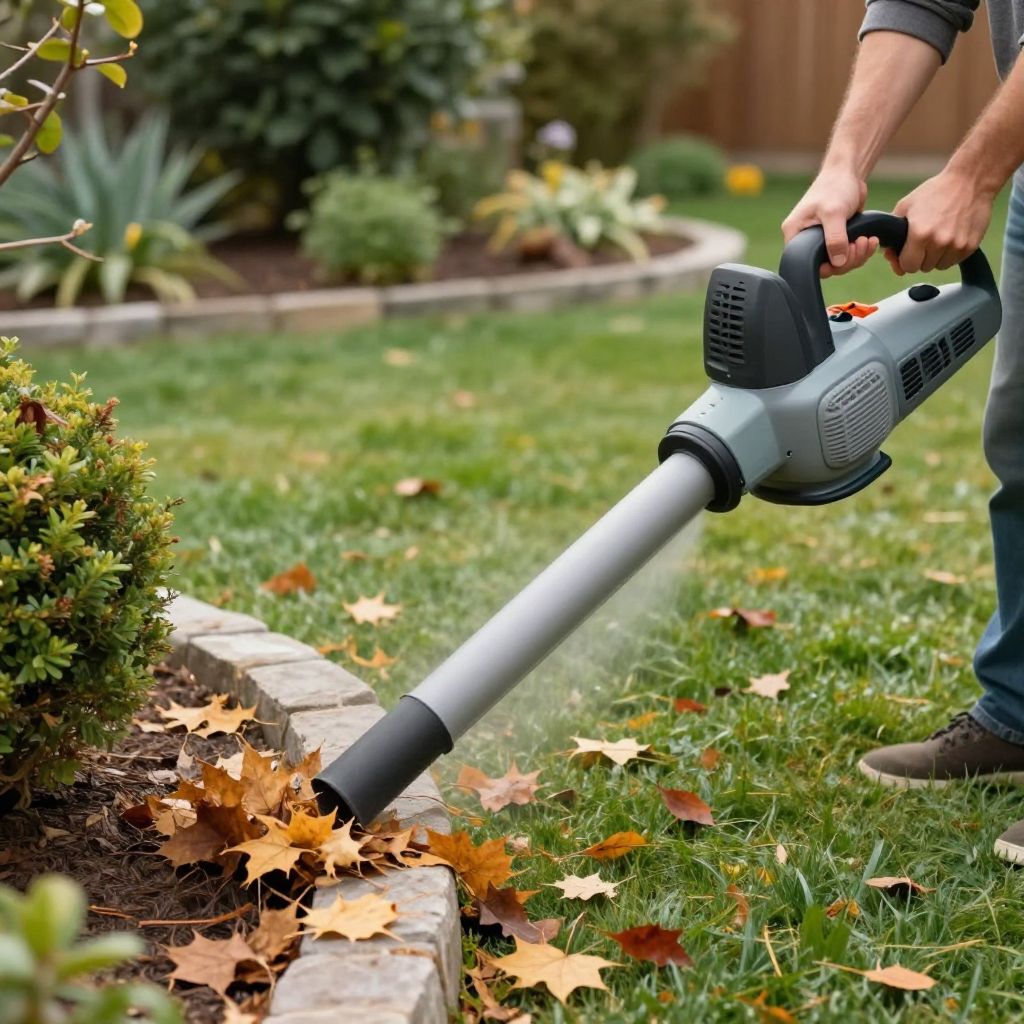
If you’ve been comparing leaf blowers, you may be wondering, what is CFM on a leaf blower and why does it matter for your yard work? CFM is one of the main numbers that tells you how much air the tool can move, which affects how well it clears leaves, grass clippings, and light debris.
Understanding CFM helps you choose the right blower for your garden size, surface type, and cleanup tasks. It also helps you avoid buying a machine that is too weak for wet leaves or unnecessarily powerful for delicate beds, mulch, and patio cleanup.
What is CFM on a leaf blower?
CFM means cubic feet per minute, a measure of how much air a leaf blower moves in one minute. In gardening terms, higher CFM usually means the blower can move a larger volume of leaves and debris, while lower CFM is better for lighter cleanup and more controlled use around plants.
Why CFM matters in the garden
When you’re cleaning a garden, driveway, path, or lawn, CFM affects how quickly debris lifts and moves. It is especially important when you’re dealing with damp leaves, pine needles, or heavier debris that tends to stick to the ground.
CFM vs. airspeed
Many shoppers also see MPH listed for leaf blowers. That number describes airspeed, while CFM describes air volume.
- CFM = how much air the blower moves
- MPH = how fast that air comes out
For garden cleanup, both matter. A blower with high MPH but low CFM may feel strong in a narrow stream, but it may not move a wide pile of leaves efficiently. A blower with good CFM can shift more material at once, which is useful for larger lawns and leaf-heavy seasons.
What CFM means for different garden tasks
- Light patio cleanup: Lower CFM can be enough for dust, dry grass clippings, and small leaf fragments.
- General yard work: Moderate CFM is usually a good fit for mixed seasonal debris.
- Large leaf piles: Higher CFM helps move leaves across open lawn areas more efficiently.
- Wet or matted leaves: Higher CFM is often more useful than speed alone, though very wet leaves may still need raking first.
How to choose the right CFM for your garden
The best CFM depends on the size of your property, the type of debris you clean up, and how careful you need to be around beds and borders. A huge blower is not always the best choice if you mostly tidy small spaces or work near tender plants.
Match the blower to the job
- Small gardens, courtyards, and patios: Choose a blower with enough CFM for light debris, but not so much that it scatters mulch or soil.
- Average suburban yards: Look for a balanced model that can handle leaves, clippings, and seasonal cleanup without being hard to control.
- Large properties or heavy leaf fall: Higher CFM is useful for moving bigger volumes of debris across open spaces.
- Delicate planting areas: Prioritize control. Too much airflow can damage seedlings, dislodge mulch, and expose roots.
Consider the surface you’re cleaning
Different garden surfaces respond differently to airflow. On gravel, a powerful blower can send stones flying. On bark mulch, too much CFM can expose soil and disturb plant roots. On lawns, higher CFM can help gather leaves without repeated passes.
- Grass: Moderate to high CFM helps move leaves without excessive passes.
- Mulch beds: Use lower airflow and a careful angle to avoid stripping mulch away.
- Gravel paths: Use caution; lower airflow and a wider nozzle setting may help reduce stone scatter.
- Decks and patios: Lower to moderate CFM is often enough and easier to control around pots and furniture.
How CFM affects plant beds and landscaping
In a garden setting, the wrong airflow can do more than move leaves. It can damage young plants, dry out the surface of the soil, and disturb beneficial mulch that helps conserve moisture and suppress weeds.
Protecting plants while using a blower
- Keep the nozzle pointed low and away from stems and crowns.
- Stand back from seedlings, annuals, and newly planted perennials.
- Use short bursts instead of long continuous blasts near beds.
- Work from the edge of the bed toward open ground so debris moves away from plants.
If you use a blower near shrubs or groundcovers, check afterward for exposed roots, scattered mulch, or bent stems. A quick hand tidy-up is often better than forcing the blower to do all the work.
How to read leaf blower specs without getting confused
CFM is useful, but it should not be read alone. A blower’s overall performance depends on the balance of CFM, MPH, nozzle design, and whether the machine is handheld, backpack-style, corded, battery-powered, or gas-powered.
What to look for on the label
- CFM: Air volume
- MPH: Airspeed
- Weight: Important if you’ll carry it for long cleanup sessions
- Power source: Affects runtime, noise, and convenience
- Nozzle shape: Can influence how concentrated the airflow feels
Manufacturers sometimes quote maximum CFM under ideal conditions. Real-world performance can feel different once you attach a nozzle or use the blower in a tight garden space. That is why it helps to think about the actual job, not just the biggest number on the box.
A practical way to compare models
- Decide where you’ll use the blower most often.
- Estimate the type of debris you handle most: dry leaves, wet leaves, grass clippings, or mixed debris.
- Choose a model with enough CFM for that task, then check whether the weight and control feel manageable.
- If possible, test the blower or read reviews that mention real garden use, not just raw specs.
Common mistakes gardeners make with CFM
One of the biggest mistakes is assuming that higher CFM always means better. In a garden, more airflow can create new problems if you are trying to protect mulch, keep soil in place, or work around small plants.
Mistakes to avoid
- Choosing too much power: This can blow away mulch, expose roots, and scatter debris into beds.
- Ignoring wet conditions: Wet leaves are heavier and often need more than a light-duty blower.
- Using the blower too close to plants: Strong airflow can bend stems and damage flowers.
- Focusing only on CFM: If the airspeed is too low, the blower may still struggle with stuck debris.
- Forgetting comfort: A heavy blower can be tiring, especially during seasonal cleanup.
When a blower is not the best tool
Even a good leaf blower has limits. In some gardening situations, a rake, broom, or hand tool is gentler and more effective.
Use a different tool when:
- You are cleaning around tiny seedlings or freshly sown areas.
- Mulch needs to stay exactly in place.
- Leaves are wet, matted, or stuck in groundcover.
- You are working in a small enclosed space where debris will blow back at you.
For garden beds, a light rake often gives you more control than a high-CFM blower. For patios and hard surfaces, a blower can save time, but it should still be used with care near potted plants and loose soil.
Seasonal considerations for garden cleanup
The right CFM can feel different from season to season. In autumn, you may need more power for heavy leaf fall. In spring and summer, lighter cleanup may be enough for grass clippings, pollen, or small twigs.
Adapting to weather and moisture
- Dry, breezy days: Lower CFM may work well, but watch for debris blowing into beds.
- Wet mornings: Leaves cling more tightly, so you may need more airflow or a different tool.
- After pruning: Twigs and clippings may be easier to move with moderate CFM on hard surfaces.
- During drought: Be careful not to blast dry soil or mulch out of place.
If you garden in a windy area, timing matters as much as CFM. Try to clean up when the wind is calm so you are not fighting the weather or sending debris back into your beds.
Simple guide to using a leaf blower well
Good technique can make a modest-CFM blower work better and help a high-CFM blower stay controlled. The goal is to move debris efficiently without disturbing the landscape.
Step-by-step cleanup approach
- Start on hard surfaces or open lawn areas before moving to beds.
- Work in one direction so debris gathers in a manageable pile.
- Use short bursts instead of holding the trigger down constantly.
- Keep the nozzle low and angled so you push debris forward, not upward.
- Finish with hand cleanup around plants, edges, and tight corners.
This method reduces the chance of blowing leaves back over areas you already cleaned. It also helps you avoid overworking delicate parts of the garden.
Conclusion: choosing CFM with your garden in mind
What is CFM on a leaf blower? It is the air volume rating that helps you judge how much debris the tool can move. For gardening, the best choice is the one that matches your yard size, surface type, and how careful you need to be around plants.
Before you buy or use a blower, look at the whole job: the leaves, the beds, the mulch, and the weather. If you want to keep improving your garden maintenance routine, consider reading more about how to choose a leaf blower and mulch basics for healthier beds.