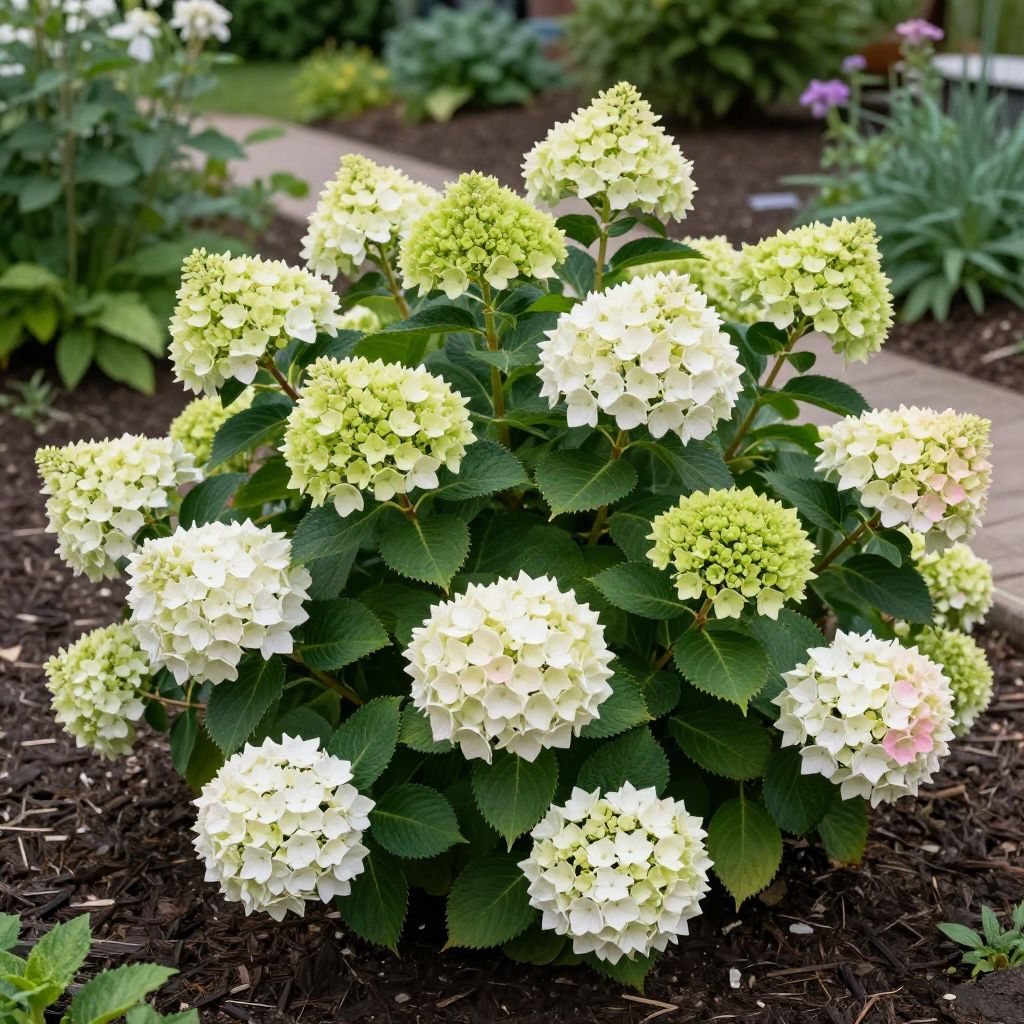
When do Limelight hydrangeas bloom? If you’re waiting for those big, pale-green flower heads to open, timing matters. Hydrangea paniculata ‘Limelight’ is known for blooming later than many shrubs, and its flowers change color as the season progresses.
The good news is that once established, Limelight hydrangeas are reliable bloomers when they get enough sun, moisture, and proper pruning. Here’s what to expect through the season, plus how to encourage strong flowering in your own garden.
When do Limelight hydrangeas bloom?
Limelight hydrangeas typically bloom in mid to late summer, with flowers opening on new growth rather than old wood. In many climates, buds begin to show in early summer, blooms peak from July through September, and flower heads may persist into fall as they age from green to white, pink, and eventually deeper rose tones.
What the bloom cycle looks like through the season
Knowing the bloom sequence helps you tell whether your plant is on track. Limelight hydrangeas do not usually flower in spring like some shrubs; they wait until the plant has put on fresh growth for the year.
Early season: leaf growth first
In spring, focus on new stems and leaves. A healthy plant will often look quiet at first, then begin pushing vigorous green growth as temperatures warm.
Midsummer: buds and first flowers
Flower buds form on the current season’s stems, and the first blooms often open in midsummer. In cooler regions, this may be later than in warmer areas.
Late summer into fall: color change
As the flowers mature, the panicles usually shift from lime green to creamy white, then blush pink or rose. This color change is normal and one reason the shrub is so popular in mixed borders and foundation plantings.
Why your Limelight hydrangea may bloom later or less heavily
Bloom time can vary with climate, sun exposure, pruning, and plant age. If your shrub is growing well but not flowering on schedule, one of these factors is usually involved.
1. Too much shade
Limelight hydrangeas bloom best with morning sun and afternoon shade, or at least several hours of direct light. In too much shade, plants may grow leafy and tall but produce fewer flowers.
2. Heavy pruning at the wrong time
Because this hydrangea blooms on new wood, it can handle pruning better than old-wood types. Even so, cutting it back too hard or too late in spring can reduce flowering or delay it.
3. Too much nitrogen
Excess fertilizer, especially high-nitrogen lawn fertilizer drifting into the root zone, can push leafy growth at the expense of blooms. A balanced approach is better than trying to “force” flowers.
4. Plant stress
Drought, poor drainage, root damage, or transplant shock can all slow blooming. A stressed shrub may survive, but it may bloom sparsely until it settles in.
5. Young plant age
Recently planted shrubs often need a season or two to establish before they flower heavily. A young Limelight may bloom lightly at first and improve as roots spread.
Best growing conditions for strong flowering
Limelight hydrangeas are fairly adaptable, but bloom performance improves when you match the plant to the site. Good conditions usually matter more than a complicated care routine.
Sunlight
Give the shrub enough light to support flowering. In hotter climates, some afternoon shade helps protect blooms and foliage from stress. In cooler climates, more sun is often beneficial.
Soil
Use soil that drains well but stays evenly moist. Hydrangeas dislike soggy roots, but they also struggle in dry, compacted ground. Adding compost at planting can improve structure and moisture retention.
Water
Water deeply during dry spells, especially during the first year after planting and during bud formation. The goal is consistent moisture, not constantly wet soil. Mulch helps reduce swings between dry and saturated conditions.
Mulch
Apply 2 to 3 inches of organic mulch around the root zone, keeping it a few inches away from the stems. Mulch helps conserve moisture, moderate soil temperature, and reduce weed competition.
How to encourage blooming each year
If you want dependable flowers, a few simple habits make a big difference. These steps are especially useful for young plants or shrubs that have bloomed poorly in the past.
- Plant in the right light. Choose a site with morning sun and some protection from harsh afternoon heat if your summers are intense.
- Improve the soil before planting. Mix in compost if the soil is poor, heavy, or fast-draining.
- Water consistently. Keep the root zone evenly moist during establishment and during hot, dry weather.
- Prune at the right time. Prune in late winter or very early spring, before strong new growth begins.
- Avoid overfertilizing. Use only modest feeding if your soil is already reasonably fertile.
Pruning tips that support bloom
Limelight hydrangea can be shaped in late winter or early spring. Remove dead wood, thin crowded stems, and shorten stems if needed to control size. Avoid waiting until new growth is well underway, since that can remove developing flower shoots and delay bloom.
Deadheading and cleanup
Spent blooms can be left on the shrub for winter interest, then removed in late winter if desired. This does not usually affect the current year’s bloom because the plant flowers on new growth.
How climate affects bloom timing
Bloom timing is not identical everywhere. Your local weather pattern can shift flowering by several weeks, even when the plant is healthy.
- Cooler regions: bloom may start later in summer and peak in late summer.
- Warmer regions: bloom may begin earlier, but afternoon heat and drought can shorten flower life if the plant is stressed.
- Short growing seasons: buds may form later, so consistent sun and moisture become even more important.
If your plant is in a colder climate, spring may arrive slowly and flowering may seem delayed. That does not necessarily mean there is a problem.
Common problems that affect flowering
When a Limelight hydrangea fails to bloom well, the issue is often environmental rather than disease-related. Start by checking the site and recent care before assuming the shrub is unhealthy.
Few or no blooms
Look for too much shade, late pruning, drought stress, or excess fertilizer. Also consider whether the plant is still establishing after transplanting.
Weak stems that flop
Large flower heads can bend stems, especially in rich soil or partial shade. A well-spaced plant with moderate growth is less likely to collapse. If needed, use discreet support early in the season.
Browned or scorched blooms
Heat, wind, and drought can shorten bloom life. Deep watering and mulch help, but in very hot sites, some afternoon shade may be the best fix.
Leaf spots or mildew
These are usually secondary issues and are more likely when airflow is poor or foliage stays wet. Space plants properly and water at the base rather than overhead.
Pests and diseases to watch for
Limelight hydrangeas are generally manageable in the home landscape, but it still helps to inspect them regularly. Catching problems early keeps the plant focused on growth and flowering.
- Aphids: may cluster on soft new growth and distort leaves.
- Spider mites: more likely in hot, dry conditions; leaves may look dusty or stippled.
- Powdery mildew: can appear in humid conditions or where airflow is poor.
- Root stress from poor drainage: can weaken the plant and reduce bloom quality.
Most issues improve with better cultural care: correct watering, enough light, good spacing, and removal of badly damaged stems if needed.
Can you propagate Limelight hydrangea?
Yes, many gardeners propagate hydrangeas from softwood or semi-ripe cuttings, though success depends on timing and conditions. If you try it, take healthy, non-flowering shoots during active growth and keep them evenly moist in a sheltered spot. Propagation is useful if you want more plants, but it will not speed up bloom on the parent shrub.
What to do if your plant is not blooming yet
If your Limelight hydrangea is healthy but not flowering, work through this quick checklist before making major changes.
- Is it getting at least part sun?
- Was it pruned too late in spring?
- Has it had enough water during dry weather?
- Has fertilizer been kept moderate?
- Is the plant still young or recently transplanted?
If the answer to most of these is yes, the shrub may simply need another season to settle in. Patience is often the missing ingredient with newly planted hydrangeas.
Using Limelight hydrangeas in the landscape
Because the bloom period is long and the flower color changes over time, Limelight hydrangeas work well as focal points, hedge plantings, and mixed borders. Their late-summer flowers are especially valuable when many spring-blooming shrubs are finished.
Give them room to mature so air can move around the plant and so the stems are not crowded by neighboring shrubs or perennials. Better spacing usually means better flowering and fewer disease issues.
Conclusion: the simple formula for better blooms
When do Limelight hydrangeas bloom? Most bloom in mid to late summer, then continue into fall if conditions are good. For the best display, give the shrub enough sun, steady moisture, and late-winter pruning rather than heavy spring cutting.
If you want to keep learning, a good next step is reading more about hydrangea pruning and choosing the right planting site so your shrub can bloom at its best year after year.