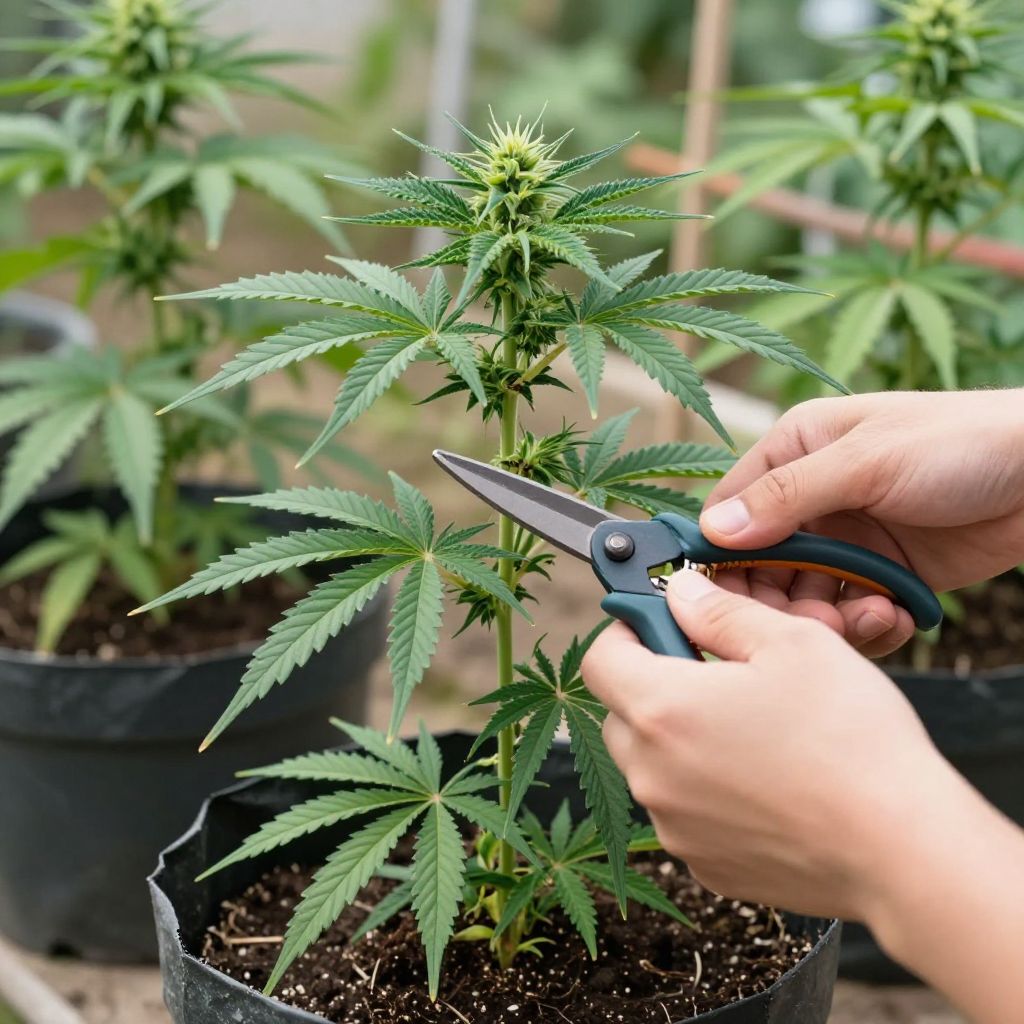
Wondering when to top weed plants for the best shape, size, and flowering results? The right timing depends on the plant’s growth stage, health, and whether you’re growing indoors or outdoors. Topping too early can slow recovery, while topping too late can stress a plant that is already setting flowers.
Used correctly, topping is a simple pruning technique that encourages bushier growth and can improve light penetration and airflow. The key is to wait until the plant is vigorous, then make clean cuts at the right node and give it time to recover before any further training.
When to top weed plants?
Top weed plants when they are healthy, actively growing, and have developed enough nodes to recover from pruning. For many cannabis plants, that means waiting until the plant has several established nodes and a strong root system, then topping during vegetative growth rather than after flowering has begun.
What topping does to a weed plant
Topping removes the main growing tip, which shifts the plant’s energy into side branches. Instead of one dominant central cola, you get a more even canopy with multiple main stems.
This can help you manage height, improve light distribution, and create a fuller plant. It is not a fix for weak plants, though, so timing and plant health matter more than the cut itself.
Why timing matters
- Too early: seedlings may stall or recover slowly.
- Too late: flowering plants may be stressed and yield may be reduced.
- Just right: vigorous vegetative growth allows fast healing and branching.
Best stage for topping cannabis plants
In general, top cannabis plants during the vegetative stage after they have several nodes and are growing strongly. Many growers wait until the plant is well established rather than topping very young seedlings.
A practical rule is to top only when the plant has enough growth to spare and can quickly replace the removed tip with healthy side shoots. If the plant is slow, pale, droopy, or recently transplanted, wait.
Signs your plant is ready
- Leaves are upright and turgid, not limp or curled from stress.
- The stem is sturdy enough to handle pruning.
- New growth is coming in steadily.
- The plant has recovered from transplanting, pest damage, or nutrient issues.
Seasonal timing: indoor vs. outdoor plants
Indoor growing
Indoor growers can top based on plant size and health rather than the calendar. Because you control light and temperature, the best time is usually during active vegetative growth, with enough time left for recovery before switching to flowering.
Give the plant a few days to a week of calm growth after topping before making more major training changes. If the plant is already stressed by heat, low humidity, poor light, or root problems, delay pruning.
Outdoor growing
Outdoor plants are tied to the season and local day length. Top earlier in the vegetative period so the plant has time to branch out before flowering starts naturally in late summer or early fall, depending on your climate.
If you live in a short-season area, avoid late topping because the plant may not have enough time to recover and build new growth before flowering. In long-season climates, you may have more flexibility, but recovery time still matters.
How to top weed plants step by step
- Inspect the plant first. Make sure it is healthy, upright, and actively growing.
- Choose the node. Decide where you want the new main branches to form.
- Use clean, sharp tools. Sterilized scissors or pruning shears help reduce the risk of disease.
- Make a clean cut. Remove the main tip just above a node so the lower growth can take over.
- Watch the recovery. Keep conditions stable and avoid additional stress for several days.
Clean cuts heal better than crushed or torn stems. If you are unsure, cut less rather than more; you can always train the plant further later.
How much to remove
Usually, topping means removing the top growing tip only, not large sections of the plant. The goal is to redirect growth, not to heavily prune the entire plant at once.
Conditions that help a topped plant recover
A topped plant recovers best when it has consistent light, moderate watering, and stable temperatures. Healthy roots and good drainage matter just as much as the cut itself.
- Light: keep the plant in strong, appropriate light so new shoots develop evenly.
- Water: water when the growing medium begins to dry slightly, not on a fixed calendar.
- Drainage: use a well-draining mix so roots do not stay waterlogged.
- Nutrition: avoid overfeeding immediately after topping; let the plant resume growth first.
In containers, drainage holes are essential. In garden beds, loose soil with organic matter helps roots stay oxygenated and supports faster recovery.
Common mistakes to avoid
Topping a stressed plant
If the plant is already struggling from transplant shock, pests, heat, nutrient imbalance, or overwatering, topping can make recovery harder. Fix the underlying problem first.
Topping during flowering
Once flowering is underway, major pruning is usually a poor choice. The plant is shifting energy into buds, and topping can interrupt that process.
Using dull or dirty tools
Dull tools can tear tissue, and dirty tools can spread disease. Clean blades before and after use, especially if you are working with multiple plants.
Removing too much at once
Heavy pruning can slow growth and reduce vigor. If you want a shorter, bushier plant, topping once and then training the new branches is often safer than repeated hard cuts.
How often can you top a weed plant?
You can top more than once, but only if the plant is healthy and has fully recovered from the previous cut. Many growers top once, then use other training methods to shape the canopy.
Repeated topping should be done carefully. If the plant is slow to rebound, stop pruning and let it rebuild strength before making more cuts.
Topping vs. other training methods
Topping is one way to shape cannabis, but it is not the only one. Depending on your goals, you may combine it with other low-stress training methods.
- Topping: removes the main tip to encourage branching.
- Low-stress training: bends and secures stems to spread the canopy.
- Fimming: a less precise cut that can create multiple new tops, though results are less predictable.
- Pruning lower growth: can improve airflow and focus energy on stronger upper sites.
If you are new to growing, topping once and then using gentle training is often easier to manage than aggressive pruning techniques.
Troubleshooting after topping
Plant looks droopy
Some droop right after topping is normal. If it lasts more than a short period, check watering, root health, and environmental stress.
New growth is slow
Slow regrowth can mean the plant was topped too early, is underfed, or is not getting enough light. Make sure the plant has stable conditions and avoid making more cuts.
Leaves yellow or curl
That usually points to a separate issue such as overwatering, nutrient imbalance, heat stress, or pests. Topping is rarely the root cause by itself.
Uneven canopy
If one side grows faster, use gentle training to balance the branches rather than topping again immediately. A little patience often produces a better shape than repeated cutting.
Quick guide: when not to top
- When the plant is a weak seedling.
- When it is recovering from transplant shock.
- When pests or disease are active.
- When flowering has already started.
- When the plant is heat-stressed, underwatered, or overwatered.
Final takeaway
The best time to top weed plants is during vigorous vegetative growth, after the plant is healthy enough to recover quickly. If you wait for strong, established growth and avoid topping during stress or flowering, you give the plant the best chance to branch well and stay productive.
If you want to refine your plant shape further, consider reading more about low-stress training and pruning basics for cannabis so you can combine techniques with confidence.