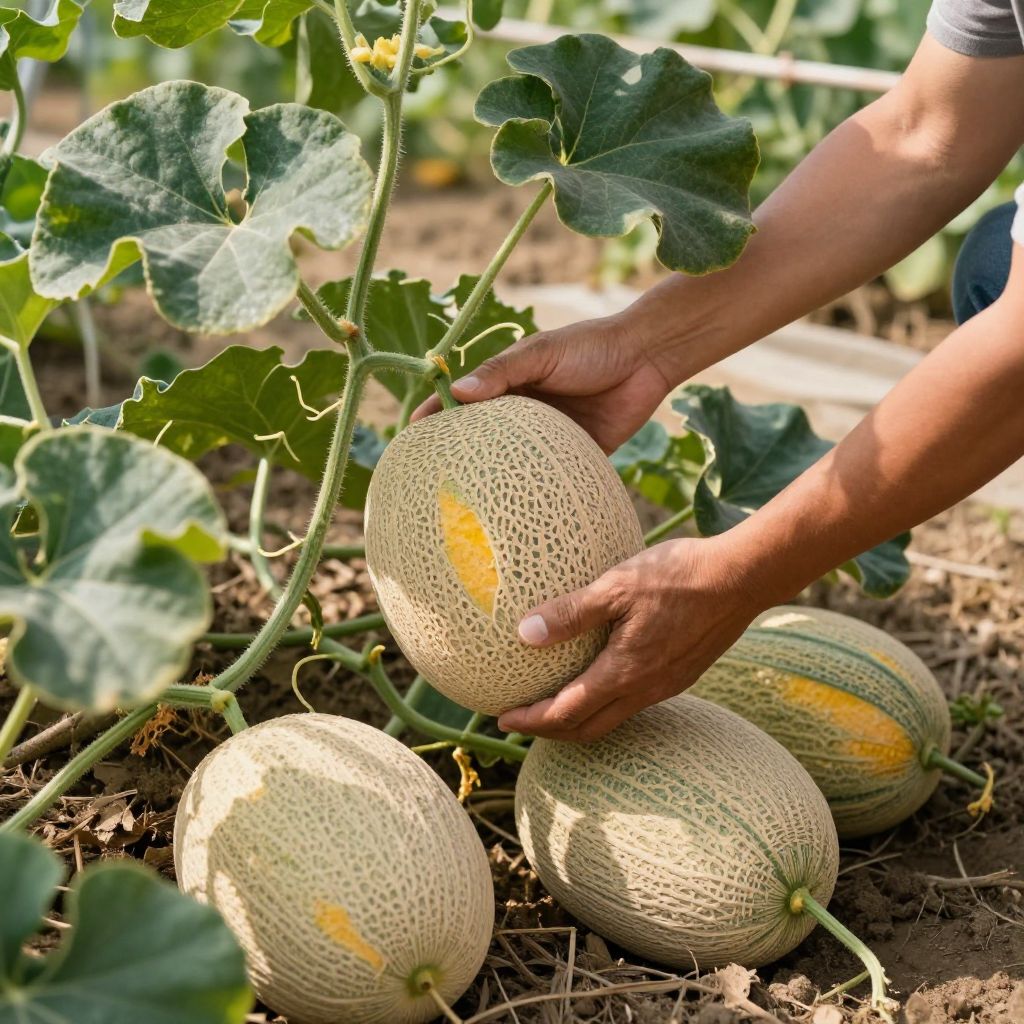
Wondering when to pick cantaloupe so it’s sweet, fragrant, and not overripe? Timing matters more than the calendar, because cantaloupes ripen on the vine and can go from perfect to mushy quickly.
The good news is that a few clear signs tell you when the melon is ready. With the right growing conditions and a little daily checking near harvest time, you can pick cantaloupe at peak flavor instead of guessing.
When to pick cantaloupe?
Pick cantaloupe when the fruit has a strong sweet aroma, the rind changes from greenish to tan or buff, the netting becomes prominent, and the stem begins to crack or slip with gentle pressure. A ripe cantaloupe usually comes away easily with a slight twist, but it should not be falling off on its own.
How to tell a cantaloupe is ripe
Cantaloupe ripens best on the vine, so visual cues and touch matter more than days alone. Check several fruits, because melons on the same plant can mature at different times.
Key ripeness signs
- Color change: The background skin shifts from green to tan, cream, or golden buff, depending on the variety.
- Aroma: A ripe melon smells sweet and musky at the blossom end.
- Stem slip: The stem begins to separate from the fruit, often with a small crack where it meets the melon.
- Texture: The netting looks raised and well defined, and the rind may feel slightly less firm.
- Weight: The melon feels heavy for its size.
What not to rely on
- Do not judge ripeness by size alone.
- Do not assume all melons on one vine ripen at the same time.
- Do not wait until the fruit is extremely soft; that often means it is overripe.
Seasonal timing: how long cantaloupe takes to mature
Most cantaloupe varieties need roughly 70 to 100 days from planting to harvest, but weather and growing conditions can shorten or lengthen that window. Warm, sunny weather speeds ripening, while cool nights and cloudy stretches slow it down.
If you started from seed, count from sowing or transplanting according to the variety information on the packet. If you bought transplants, the harvest clock is usually closer to the transplant date than the seed date.
Climate and season matter
- Warm regions: Melons often ripen faster and may need more frequent checking near harvest.
- Cooler regions: Fruits may take longer, and late-season melons may not fully sweeten before frost.
- Short seasons: Choose earlier-maturing varieties and use row covers or black mulch to help warm the soil early in the season.
Growing conditions that improve flavor and harvest timing
Healthy, stress-free plants produce better fruit. Cantaloupe needs full sun, warm soil, steady moisture, and good drainage to ripen properly.
Sunlight and temperature
Give cantaloupe at least 6 to 8 hours of direct sun daily. The vines grow best in warm conditions, and cool, shaded sites often delay maturity and reduce sweetness.
Soil and drainage
Use loose, fertile soil that drains well. Heavy, waterlogged soil can slow growth and increase disease risk, especially if the roots stay cold and wet.
Mixing in compost before planting helps improve soil structure and moisture retention without making the bed soggy. A slightly raised bed is often helpful in gardens with poor drainage.
Watering for better fruit
Water deeply and consistently while the vines are growing and setting fruit. Uneven watering can lead to poor fruit development, splitting, or bland flavor.
As fruit nears maturity, avoid soaking the bed excessively. Consistent moisture is still important, but overly wet soil right before harvest can reduce flavor and encourage rot.
Step-by-step: how to harvest cantaloupe correctly
Harvesting carefully helps preserve flavor and prevents damage to the vine and fruit. Check melons every day or two once they begin showing ripening signs.
- Look for the first signs of color change and aroma.
- Gently lift the melon and inspect the stem attachment.
- Test for “slip” by twisting lightly; a ripe melon should release with little effort.
- Cut the stem if it does not separate cleanly, leaving a short stem stub if possible.
- Handle the fruit gently and keep it out of direct sun after picking.
Important: Do not yank the melon off the vine. Rough pulling can tear the fruit, damage the plant, and shorten storage life.
What if the cantaloupe won’t slip?
Some ripe cantaloupes do not separate as cleanly as others, especially in dry weather or with certain varieties. If the fruit smells sweet, has changed color, and feels mature, it may be ready even if the stem is still holding firmly.
In that case, use clean pruners or a knife to cut the stem close to the fruit. Avoid forcing it, because bruising can invite decay.
What if you pick cantaloupe too early?
Unlike some fruits, cantaloupe does not become much sweeter after harvest. If you pick it too soon, it may soften a little, but the flavor usually stays bland.
Signs it was picked early
- Little or no aroma
- Green background color
- Hard rind with little give
- Dry, undeveloped flavor
If the melon is only slightly underripe, let it sit at room temperature for a short time and check again. If it was picked very early, there is usually no way to fully improve the sweetness.
Common problems that affect harvest quality
Several garden issues can change when cantaloupe ripens or how good it tastes. Catching these problems early helps you decide whether to wait, harvest, or adjust care for the rest of the crop.
Uneven ripening
Melons on the same vine may mature at different rates. This is normal, so inspect each fruit individually rather than harvesting the whole plant at once.
Cracked or split fruit
Sudden heavy watering after a dry spell can cause fruit to split. If you notice cracking, harvest the melon soon if it is otherwise ripe, because damaged fruit deteriorates quickly.
Poor sweetness
Too much shade, overcrowding, nutrient imbalance, or cool weather can all reduce sugar development. If the plant looks healthy but the fruit tastes dull, the issue may be growing conditions rather than harvest timing alone.
Pests and disease
Squash bugs, cucumber beetles, powdery mildew, and vine decline can weaken plants before fruit fully matures. Healthy foliage helps the plant finish ripening the crop, so manage problems early with good spacing, air circulation, and prompt removal of badly diseased leaves when appropriate.
Practical tips for better cantaloupe harvests next season
If you want more reliable harvest timing, start with the planting site and variety choice. Small improvements in setup can make ripening much easier to judge.
- Choose a sunny, warm location with well-drained soil.
- Use compost to build fertile, loose soil.
- Space plants so vines have room to spread and air can move through them.
- Keep soil moisture even from flowering through fruit fill.
- Watch fruit closely during the final ripening stage.
- Grow varieties suited to your local season length and summer heat.
Harvest and storage basics
Once picked, cantaloupe is best eaten soon. A ripe melon can hold for a short time at room temperature, but it generally loses quality faster than many other fruits.
If you need to store it briefly, keep whole melons in a cool place out of direct sun. After cutting, refrigerate the pieces promptly in a covered container.
Quick harvest checklist
Before you pick, run through this simple check:
- Has the rind changed from green to tan or buff?
- Does the melon smell sweet at the blossom end?
- Does it feel heavy for its size?
- Has the stem started to crack or slip?
- Does it release easily with a gentle twist?
If most of these answers are yes, your cantaloupe is likely ready.
For more help with growing healthy summer fruit, you may also want to read about how to grow melons in the home garden and common vegetable garden pests and disease prevention.
Leave a Reply