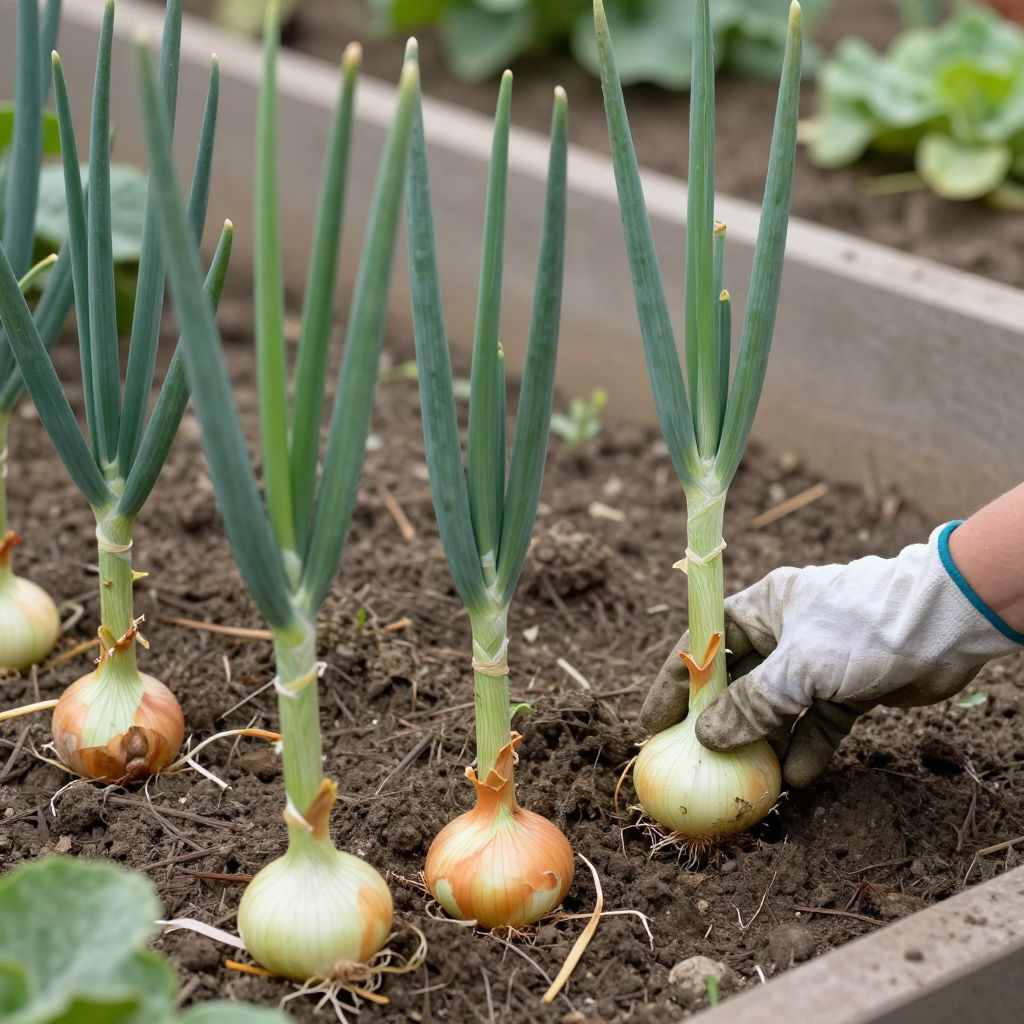
Wondering when to pick onions so they store well and taste their best? The right harvest time depends on the onion’s maturity, the weather, and whether you want fresh bulbs or long-storing ones. Pick too early and the bulbs may be small and soft; wait too long and they can split, rot, or sprout again.
With a few simple signs, you can harvest onions confidently. The key is to watch the tops, the necks, and the bulb size rather than relying only on the calendar.
When to pick onions?
Pick onions when most of the tops have naturally fallen over and begun to dry, the necks have softened, and the bulbs have reached a usable size. For storage onions, wait until about half to three-quarters of the tops are down; for scallions or green onions, harvest much earlier while the stems are still tender.
How to tell onions are ready to harvest
Onions give several clear signals when they are mature. The exact timing varies by variety, planting date, and climate, but the plant itself is usually the best guide.
Look for these signs
- Tops begin to yellow and flop over naturally, not from disease or damage.
- The neck just above the bulb feels soft and starts to dry.
- The bulb has reached a good size for the variety you planted.
- The outer skin starts to papery-dry and tighten around the bulb.
If the tops are still upright and thick green, the onion is still actively growing. If you harvest then, the bulb may be underdeveloped and store poorly.
What the tops are telling you
Many gardeners wait for the tops to fall over before lifting onions. That is a useful sign, but not the only one. A few plants may topple early because of wind, pests, or disease, so check the neck and bulb size before harvesting the whole crop.
For most bulbing onions, the best harvest window begins when roughly half the patch has naturally bent over. You can then decide whether to lift a few for fresh use or wait a bit longer for better storage quality.
Harvest timing by onion type
Different onion types are picked at different stages. Knowing which kind you planted helps you avoid harvesting too early or too late.
Green onions and scallions
Harvest green onions when the stems are pencil-thick or larger, depending on your preference. They do not need to form bulbs. You can pull them anytime after they have enough size for eating.
Bunching onions
Bunching onions are usually harvested young and tender. They are often picked before a true bulb forms, so the timing is more flexible than for storage onions.
Bulbing onions
Bulbing onions are the ones most gardeners mean when asking when to pick onions. These should stay in the ground until the bulb has sized up and the tops begin to die back naturally. Early harvest is fine for fresh use, but storage onions need full maturity.
Seasonal timing and climate factors
The season for picking onions depends on when you planted them and how quickly they mature in your area. In cool climates, onions may size up slowly and be ready later in summer. In warmer regions, they can mature earlier, especially if spring temperatures rise quickly.
Day length also matters. Some onions are short-day, some long-day, and some intermediate. If the variety is mismatched to your latitude, bulbs may not size up properly, which changes the harvest timing and final bulb size.
Why weather changes the harvest window
- Cool, wet weather can slow ripening and increase rot risk.
- Hot, dry weather can speed curing once the tops begin to fall.
- Heavy rain near harvest can encourage splitting or fungal problems.
- Late-season drought can cause bulbs to stop sizing up early.
If your onions are close to ready and a long wet spell is coming, it is often better to harvest a little early than risk decay in the ground.
How to harvest onions correctly
Once the onions are ready, lift them carefully so you do not bruise the bulbs. Bruises and cuts can shorten storage life and invite rot.
- Choose a dry day if possible.
- Loosen the soil beside each bulb with a fork or hand trowel.
- Lift the onion gently by the base or loosened roots, not by the green top.
- Shake off loose soil, but do not wash the bulbs if you plan to store them.
- Lay them out in a single layer to cure.
A garden fork is useful in heavier soil, but keep it a few inches away from the bulbs so you do not nick them. In loose soil, you may be able to pull onions by hand once the roots release easily.
Curing onions for storage
Curing is the drying period that helps onions store well. Freshly harvested onions should dry until the necks and outer skins are fully dry and papery.
How to cure them
- Spread onions in a dry, airy spot out of direct rain.
- Keep them shaded from intense sun if temperatures are very high.
- Allow good airflow around each bulb.
- Let them dry until the necks are tight and the outer skins rustle.
Depending on conditions, curing may take one to several weeks. The goal is a dry neck and a firm, papery wrapper. If the neck stays thick and soft, the onion is not ready for long storage.
Signs curing is complete
- The tops are fully dry.
- The necks are sealed and no longer soft.
- The outer layers are papery and dry to the touch.
- Roots are shriveled and dry.
After curing, trim the tops if desired, leaving a short neck, or braid onions with flexible tops if the variety and drying stage allow it.
What happens if you pick onions too early or too late?
Timing matters because onion quality changes quickly near maturity. A slightly early harvest is usually better than a very late one, especially if weather is turning wet.
If you pick too early
- Bulbs may be smaller than expected.
- Outer skins may not have formed fully.
- Storage life is usually shorter.
- The flavor may be milder and less developed.
If you pick too late
- Bulbs can split or crack.
- They may start to regrow after rain or warm spells.
- Rot risk increases in wet soil.
- Outer skins may loosen or break down.
If a few onions have already split, use those first. They are usually best eaten soon rather than stored.
Common problems that affect harvest timing
Sometimes onions do not follow the textbook signs. A few common issues can make tops fall early or bulbs fail to size up properly.
Disease or rot
If tops collapse while the foliage is still green and the neck feels mushy, disease may be the cause rather than maturity. In that case, harvest promptly and inspect the bulb. Discard any onion that is soft, moldy, or foul-smelling.
Onion maggots and other pests
Underground pests can weaken plants and make them topple sooner than expected. If you notice stunting, yellowing, or damaged bulbs, lift a sample to check for larvae or rot. Affected onions should be used quickly and not stored.
Nutrient or water stress
Onions need steady growth early in the season to make good bulbs. If they were stressed by poor soil, crowding, or inconsistent watering, they may mature unevenly. In that case, judge readiness by the best-developed bulbs rather than the whole bed at once.
How to store onions after picking
Only store onions that are fully cured and undamaged. Good storage starts with good harvest timing.
- Choose firm bulbs with dry necks.
- Remove any onion with cuts, soft spots, or rot.
- Store in a cool, dry, well-ventilated place.
- Keep them away from damp basements or sealed plastic bags.
Check stored onions regularly. Use any that begin to soften, sprout, or show mold before the problem spreads.
Quick checklist for deciding when to pick onions
- Are the tops falling over naturally?
- Has most of the foliage yellowed and dried?
- Is the neck soft and starting to dry?
- Has the bulb reached a good harvest size?
- Is the weather turning wet or stormy?
If you answer yes to most of these, your onions are likely ready or very close.
Conclusion
The best answer to when to pick onions is simple: harvest when the tops fall naturally, the necks soften, and the bulbs have reached usable size. For storage onions, wait for fuller maturity; for green onions, pick young and tender. If you are unsure, lift one or two test bulbs first and judge the rest of the row from there.
For more practical harvest advice, you may also want to read related gardening guides on how to cure onions for storage and growing onions in raised beds if those topics match your garden setup.
Leave a Reply